Kaifeng's iconic laminated flatbread, coated on both faces with hulled white sesame seeds and scented with five-spice. A sandy oil-paste filling is folded into the dough dozens of times to create thin, separating strata; the cake is first griddle-crisped then oven-finished to a burnished gold. Eaten as breakfast or a late-night snack alongside oil tea.




Kaifeng was the Northern Song capital Bianjing, and Meng Yuanlao's 《Dongjing Menghua Lu》 (1147) records that the city's flatbread stalls sold a sesame-coated variety called 'xinyang manma' (新样满麻—new-style full sesame). Post-Song bakers in Kaifeng are said to have evolved this heritage into the double-sesame laminated format: coating both faces with hulled sesame kernels rather than the original single-layer application, and incorporating a multi-folded oil-paste interior. The snack was later listed among China's Ten Regional Famous Snacks.
The sesame crust shatters at first bite into a scatter of toasted kernels; beneath it, dozens of papery, oil-scented strata crumble softly. Five-spice warmth blooms slowly and lingers long after the last flake dissolves.
Hulled sesame seeds undergo Maillard browning and lipid oxidation during baking, releasing pyrazines and 2-acetylpyridine that build the characteristic roasted nutty aroma. The layered interior relies on the oil paste (yousu) principle: hot oil coats flour proteins and interrupts gluten network formation, yielding a sandy, freely separating structure rather than a cohesive one. Repeated folding creates dozens of thin moisture-sealed membranes; oven heat drives rapid steam expansion between layers, producing distinct, airy strata.
Variations
Sweet variant fills with sesame paste and sugar instead of five-spice oil paste. Thin-crust version (薄火烧) is pressed flatter and cooked faster for a cracker-like snap. Modern interpretations blend black and white sesame for visual contrast.
On the Palate
Where Double-Sesame Griddle Cake sits in the Chinese flavor cloud
Ingredients
Serves 4How it's made
7 steps · 1 hour
- 130 min
Soak sesame seeds in cold water for 30 minutes; rub between palms to loosen hulls, rinse thoroughly, spread on cloth and drain
- 210 min
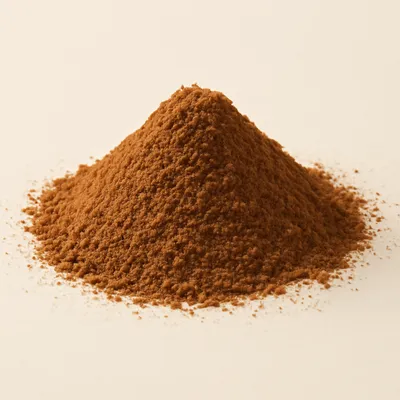
Make oil paste: heat 60 ml vegetable oil until shimmering, pour over 150 g flour mixed with five-spice powder and half the salt; stir into sandy crumbs; spread flat to cool
Watch outPour shimmering-hot oil over the flour for the oil paste and stir to sandy crumbs — the heat is what breaks the gluten for flaky layers; lukewarm oil leaves it doughy and dense.
- 328 min
Combine remaining 350 g flour with warm water, remaining salt, and 20 ml oil; knead 8 minutes until smooth and supple; cover and rest 20 minutes
- 415 min
Roll dough into a large rectangle; spread oil paste evenly across the surface; fold into thirds, roll flat; repeat once more to build layers
- 510 min
Divide into 8 equal portions; press each into a disc about 1 cm thick; brush both surfaces with water and press firmly into the drained sesame seeds, coating the top face more generously
- 68 min
Heat a dry cast-iron griddle over medium-low heat; cook cakes 4 minutes per side until pale golden and set
- 710 min
Transfer to a 220°C oven and bake 8–10 minutes until deep golden and crisp; serve immediately with oil tea
Watch outBake at 220°C until deep golden and crisp — pull it while pale and the layers stay soft instead of shattering.
Archive tool suggestions — not reviewed
These legacy suggestions have not been evidence-reviewed and are not presented as required tools.


