
One of the simplest and most homely of Cantonese tong sui: chunks of sweet potato simmered in a clear ginger-and-rock-sugar syrup until tender. The broth is thin, clean and amber, warmed through with bruised ginger, and the sweet potato is soft and sweet with its skin slipping off in the pot. It is a humble everyday dessert, especially loved in cold weather, when the ginger makes it a warming bowl said to chase off the chill.
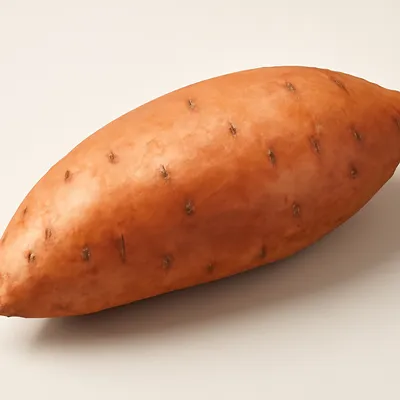



Sweet potato ginger soup sits at the plainest end of the Lingnan tong sui (糖水) tradition of Guangdong and Hong Kong, the broad family of everyday sweet soups simmered from beans, grains, fruits and roots. It has no recorded inventor or date — it is a household sweet made from two cheap, year-round staples, the sweet potato (番薯), introduced to China from the Americas and naturalized in the southern provinces from the late Ming onward, and ginger, long valued in Cantonese cooking and folk wisdom as a warming ingredient. Eaten as a winter warmer and an after-meal sweet, it belongs to the same plain-tong-sui company as red bean soup and mung bean soup.
The pleasure is in its plainness. The broth is thin and translucent — not a thick purée but a clear, light syrup — sweet and clean with the warming, slightly spicy lift of ginger running all the way through. The sweet potato comes in soft, melting chunks that hold their shape but yield at the touch of a spoon, with the dense, honeyed sweetness of the root; orange-fleshed varieties give a deeper colour and richer taste, yellow ones a chestnut-like sweetness. Eaten hot, the ginger leaves a pleasant warmth at the back of the throat — comforting rather than complex.
Three small things separate a good bowl from a dull one. First, the sweet potato is cut into even chunks and added to water that is brought up gently, so the pieces cook through evenly to soft without falling apart into mush; sweet potato is dense with starch and natural sugars, which sweeten the broth as it simmers. Second, the ginger is bruised or sliced and simmered for the whole cook so its pungent gingerol leaches into the syrup, giving the warming heat; bashing the ginger opens it up to release more flavour. Third, rock or slab sugar is preferred over white sugar for a rounder, clearer sweetness, and is added partway so the broth stays clean rather than cloying. A low, steady simmer — not a hard boil that would break the potato — keeps the chunks intact.
Variations
The simplest version is just sweet potato, ginger and rock sugar, but the bowl takes additions easily. Common ones are a splash of coconut milk for richness, sago pearls or tang yuan dropped in for chew, dried tangerine peel or pandan leaf for fragrance, or a handful of mung beans or red beans; some cooks add taro alongside the sweet potato. The sweet potato variety changes the character — orange, yellow or purple flesh each give their own colour and sweetness. It is taken hot as a winter warmer; the ginger can be turned up for a more pronounced heat.
On the Palate
Where Sweet Potato Ginger Soup sits in the Chinese flavor cloud
Ingredients
Serves 4How it's made
6 steps · 10 min
- 18 min
Peel the sweet potatoes and cut into even, bite-sized chunks; rinse off surface starch.
- 22 min
Bash or slice the ginger so it will release its flavour.
- 35 min
Put the ginger in a pot with the water and bring to a gentle boil.
- 418 min
Add the sweet potato chunks and lower to a steady simmer; cook 15–20 minutes until the pieces are soft but still holding their shape.
Watch outSimmer the sweet potato just until soft but still holding its shape, 15 to 20 minutes — bring it up gently and don't overcook, or the pieces break down into mush.
- 55 min
Add the rock or slab sugar and simmer a few minutes more until dissolved and the broth tastes clean and sweet.
Watch outAdd the rock sugar only after the potato is soft and simmer a few minutes to dissolve — sugar added early can keep the potato firm and slow to cook through.
- 62 min
Taste and adjust the sweetness; ladle into bowls and serve hot.
Archive tool suggestions — not reviewed
These legacy suggestions have not been evidence-reviewed and are not presented as required tools.


