A Tujia-rooted landmark dish from Qianjiang, a mountain district on the Chongqing-Guizhou border, built around fresh chicken offal — gizzards, hearts, intestines, and liver — stir-fried at ferocious heat with aged pickled chili and pickled radish. The defining flavors are penetratingly sour and fiercely spicy, cutting through the richness of the offal without a trace of gaminess. Served sizzling in a cast-iron pot over fried potato strips, with a portable burner beneath so diners eat it as a rolling hot-pot alongside rice. In 2021 its traditional production technique was inscribed on Chongqing's Fifth Batch of Municipal Intangible Cultural Heritage.





The dish traces to the salt-trade hub of Zhuoshui Ancient Town on the Apeng River in Qianjiang, a transfer point for goods moving among Sichuan, Hunan, and Guizhou in the mid-18th century. Porters who worked the docks collected discarded chicken offal from merchants; according to local tradition, a salt merchant named Xie Shuping (谢树平) was the one who cooked it for them, using large quantities of Tujia-style pickled chili and pickled radish over ferocious heat to suppress the gaminess and coax out a sour, bright flavor. Acid to cut the funk, chili heat to warm bodies in the cold mountain air — the combination became embedded in local Tujia cooking. In the early 1990s, Changming Jiza (长明鸡杂) at 969 Jiefang Road in Qianjiang brought the dish to a wider restaurant public; owner Chen Qiuping recalls customers gathering around a charcoal brazier, propping three stones over the coals, and stir-frying offal with pickled vegetables in a ceramic basin. Word spread rapidly across Chongqing and beyond. In 2021 the dish's traditional production technique was formally inscribed on Chongqing's Fifth Batch of Municipal Intangible Cultural Heritage under the category of Traditional Crafts.
Gizzards are scored in a chrysanthemum-flower cut and curl into tight rosettes the moment they hit the smoking wok — chewy-crisp at the edge, yielding at the center. Intestines are silky-tender, liver velvety and just pink inside. The base note through every bite is a slow, deep fermented sourness from aged pickled chili and radish; above it, dried chili blazes and Sichuan peppercorn hums a low electric tingle. The flavor sequence is unhurried — first sour, then hot, then numbing — no single element dominates. Potato strips underneath soak up the orange-red spiced oil and go translucent-golden, giving each mouthful a starchy counterweight.
Two factors define the dish: ferocious heat and aged brine. Chicken offal must hit oil at 200°C or above so that surface proteins coagulate instantly, trapping juices inside and triggering the Maillard reaction that gives gizzards their roasty caramelized aroma. Drop the heat and the offal weeps, toughens, and turns gamey. Equally critical is the old-mother brine (老母子水) in which the pickled chili and radish ferment — Qianjiang restaurants use crocks that have been running for decades, charged with more than ten plant-root aromatics and malt sugar (麻糖) to sharpen the crunch and deepen the acidity. The lactic acid produced during fermentation neutralizes the trimethylamine compounds responsible for offal's characteristic funk, which is why the sourness isn't decoration but structural to making the dish edible. Before cooking, a brief baking-soda-and-beer marinade raises the pH of the muscle fibers, partly dissolving connective tissue so that gizzards snap rather than chew — the same alkaline-tenderizing principle used in velveting.
Variations
The strictest Qianjiang standard admits only offal and pickled vegetables — no potato base, no added water, oil only — preserving a dry, intensely concentrated finish. The far more common restaurant version layers fried potato strips at the bottom of the iron pot, with lotus root, konjac, or tofu sometimes added so diners can simmer the base in the spiced broth left behind. Chains outside Qianjiang often swap aged pickled chili for fresh green chili, gaining sharp heat but losing the layered lactic sourness that makes the original distinctive. In Tujia and Miao villages deeper in the Wuling range, a variant uses fermented chili paste (糟辣椒) or wild spicebush berry (木姜子), producing a more complex, faintly musky acid.
On the Palate
Where Qianjiang Chicken Offal sits in the Chinese flavor cloud
Ingredients
Serves 4

How it's made
7 steps · 30 min
- 120 min
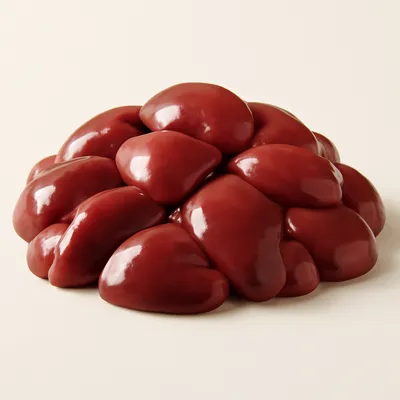
Prepare the offal: score gizzards in a chrysanthemum-flower cut (crosshatch both sides without cutting through), cut intestines into 5 cm lengths and rinse inside-out, slice liver 5 mm thick, halve hearts lengthwise. Combine all offal with a pinch of baking soda and 100 ml beer; massage and marinate 20 minutes to eliminate gaminess. Drain, then toss with salt, white pepper, and 1 tbsp cornstarch.
- 210 min
Prepare aromatics and potato base: cut pickled chili into sections, slice pickled ginger, shred pickled radish, smash garlic cloves, cut scallions into 4 cm lengths, bias-cut celery. Cut potato into 1 cm sticks and deep-fry in 180°C oil until golden and crisp; drain and spread over the bottom of the serving iron pot.
- 33 min
Blanch the offal: bring a pot of water to a boil, splash in Shaoxing wine, blanch the offal for about 1 minute until just cooked through. Drain and shake off excess water — a dry surface is essential for the subsequent sear.
Watch outShake the blanched offal really dry before it hits the wok — a wet surface steams instead of searing and turns the offal gamey and tough.
- 43 min
Build the spice base: heat a wok until smoking, add rapeseed oil, then fry dried chili sections and Sichuan peppercorn until dark-red and fragrant (about 30 seconds). Add pickled chili, pickled ginger, and garlic; stir-fry on high heat for 1 minute until the oil turns orange-red and the aromas fully bloom.
Watch outFry the dried chili and peppercorns just until dark-red and fragrant, about 30 seconds — push past that and they scorch bitter.
- 53 min
Stir-fry the offal: add the blanched offal to the wok and toss on maximum heat for 2 minutes. Splash light soy sauce around the rim for savour, add a touch of dark soy for colour, then pour Shaoxing wine around the rim of the wok and let it flash off.
Watch outToss the offal on the fiercest heat you have — drop the fire and it weeps water, toughens, and stews grey instead of searing crisp.
- 62 min
Finish with vegetables and brine: add pickled radish shreds, celery, and scallion; stir-fry 1 minute. Season with salt and a small pinch of sugar, then stir in 2 tablespoons of the aged brine liquid from the pickled chili jar to reinforce the lactic sourness. Taste and adjust.
- 72 min
Plate and serve: drizzle a little sesame oil, transfer the finished offal onto the fried potato strips in the iron pot, scatter cilantro on top. Set on a portable burner at low heat and serve immediately; the dish continues to cook gently at the table.


