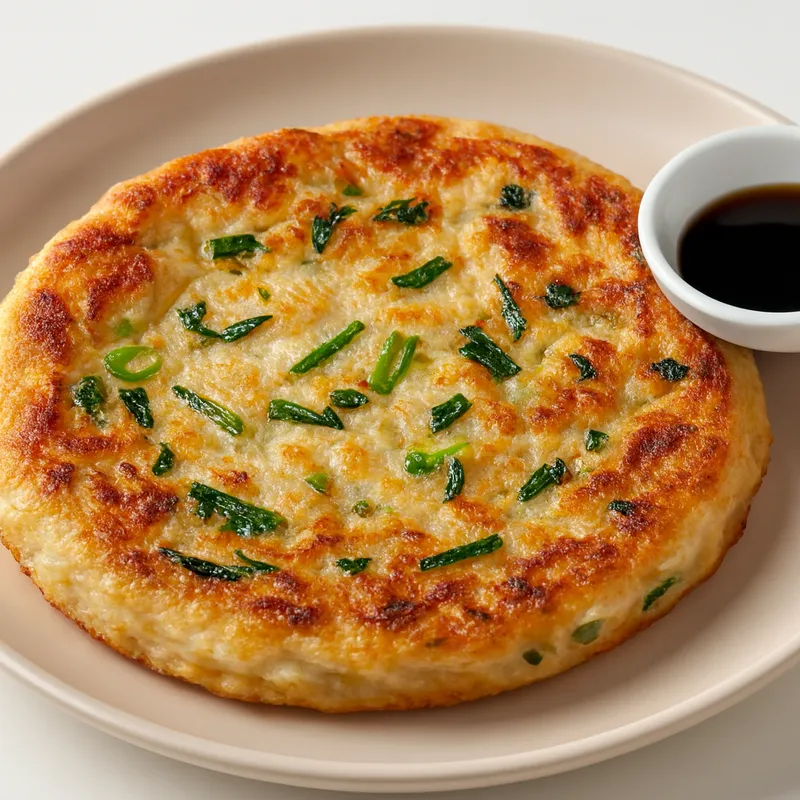
A halal beef snack from the Hui Muslim community of Xiaoquan Town, Deyang, Sichuan, built through four sequential stages: salt-curing, spiced braise, deep-frying in vegetable oil, and a final toss in a complex coating of Sichuan pepper, chili oil, toasted sesame, and powdered medicinal herbs bound with a drizzle of maltose. Despite its name, "fruit juice" (果汁, guǒzhī) contains no fruit whatsoever — it is a phonetic spelling-drift of 裹汁 (guǒzhī, meaning "sauce-coated"), the original name, whose first character was felt to be too complex to write and was quietly replaced by an identical-sounding simpler one. The end result is a room-temperature beef stick that is crisp on the outside, tender inside, numbing-spicy-sweet all at once, and well-suited to baijiu.




Xiaoquan fruit-juice beef grew out of the Hui (Chinese Muslim) community of Xiaoquan Town, which has supported a resident Muslim population since the Tang and Song dynasties. Around the 1920s–30s of the Republican era, a Hui Muslim named Ma Daoyong, living on Xiaoquan's Half-Edge Street (半边街), developed the dish through prolonged experimentation using local yellow-cattle leg meat. He named it 裹汁牛肉 — "sauce-coated beef" — for the final step of coating every stick in seasoning. Because the character 裹 was considered too elaborate, the phonetically identical 果 (fruit) drifted into common written use and stuck. Ma Daoyong later branded the product under his son Ma Changheng's name; "Ma Changheng Fruit-Juice Beef" became the town's most celebrated label. The dish won a prize at a local agricultural products exhibition in 1944 and in 1950 was carried to Korea by a Deyang county delegation as a gift for Chinese People's Volunteer Army soldiers. It is recorded in specialty-food reference works published in the 1980s and 1990s. In 2006 the production craft was inscribed on Deyang City's intangible cultural heritage list.
Pick up a pinky-length stick: the fried surface is hard and snaps cleanly on first bite, then the muscle fibers inside dissolve on the tongue — the local phrase 入口化渣 (melts like slag in the mouth) is precise. Sichuan pepper numbs the lips first; chili oil heat follows a half-second behind; beneath runs a deep chord of herbal spice that is hard to parse into individual notes. The faintest trace of maltose sweetness prevents the heat from turning harsh. The finish lingers. Best eaten at room temperature with baijiu.
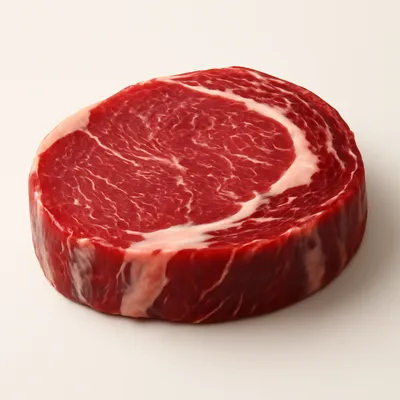
Two stages determine the characteristic texture. In the braise, a vigorous initial boil purges blood and off-odors from the leg meat; a long low-heat simmer then drives the braising liquid deep into the muscle fibers, establishing the base flavor. The braised beef is cut cross-grain into chopstick-thick sticks, deliberately shortening the muscle fibers so that during deep-frying in vegetable oil at roughly 160–170°C, heat penetrates the cut ends rapidly, cooking the interior soft without creating a rubbery core. The spice coat is applied off the heat: Sichuan pepper powder, chili oil, toasted sesame, and a powdered herb blend settle on the warm, drained surface; the small addition of maltose acts as a light adhesive and glaze, locking the coating in place without making the sticks tacky or sticky.
Variations
Several family-line shops still operate in Xiaoquan Town, each guarding a slightly different medicinal-herb spice formula, resulting in modest differences in the balance of numbing heat and herbal depth — but all observe the four-stage process and halal slaughter requirements. Vacuum-packed versions are now widely sold and mailed as Deyang souvenir gifts; the texture softens somewhat in packaging but the flavor survives transit. Some vendors offer a yak-beef edition for a denser, more mineral character suited to visitors arriving from higher-altitude areas.
On the Palate
Where Xiaoquan Glazed Beef sits in the Chinese flavor cloud
Ingredients
Serves 4


How it's made
6 steps · 1 hour 5 min active + 6 hours waiting
- 1240 min
Trim halal-slaughtered beef leg meat of sinew and excess fat; cut into fist-sized chunks. Rub generously with coarse salt until every surface is covered, pack into a container, and leave to cure at room temperature for at least 4 hours (ideally overnight) until the salt has penetrated to the center. Rinse off excess salt and drain well.
Watch outRub coarse salt over every surface and cure until it penetrates to the center — under-cured beef stays bland deep inside.
- 220 min
Place the cured beef in a pot of cold water; bring to a vigorous boil over high heat (武火). Boil for 15–20 minutes, skimming off the grey-brown foam that rises until it runs clear. Lift out the beef, rinse under cold water, and trim away any remaining sinew.
- 3120 min
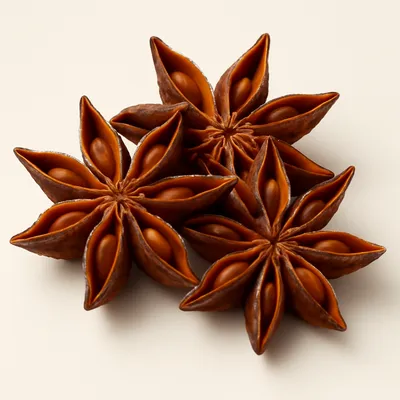
Return the blanched beef to a clean pot with fresh water, star anise, and ginger. Bring to a boil, then reduce to the lowest possible simmer (文火). Cover and braise for 1.5–2 hours until the braising liquid has infused the meat and the beef yields easily to a chopstick pressed into the center. Remove from the liquid and allow to cool completely.
Watch outSkim the grey-brown foam through the hard boil until the water runs clear — this purges the blood; leave it and the braise turns muddy.
- 415 min
Once fully cooled, trim off any remaining sinew or connective tissue. Cut the braised beef across the grain into chopstick-thick sticks about 3 cm long — the cross-cut shortens the muscle fibers and is critical to the final "melts in the mouth" texture. These are the blanks (坯料) for frying.
Watch outCut the braised beef across the grain into chopstick-thick sticks — the cross-cut shortens the fibers, which is what makes it melt in the mouth rather than chew tough.
- 520 min
Heat vegetable oil in a wok or deep pot to 160–170°C (a piece of beef dropped in should sizzle immediately without burning). Fry the beef sticks in batches, turning occasionally, until golden-brown and crisp on all sides and the interior yields to the bite without resistance. Do not crowd the pot. Drain thoroughly on a rack or paper towels.
- 610 min
While the sticks are still warm, transfer to a bowl. Add Sichuan pepper powder, chili oil, toasted sesame seeds, and the blended medicinal-herb spice powder (花椒粉、辣椒油、香料粉). Drizzle with maltose and toss quickly until every stick is evenly coated. Spread out on a plate and let cool to room temperature before serving.