A whole pig's face — ears, snout, jowls, cheeks — prepared across more than a dozen steps and over ten hours until every ribbon of skin trembles with dissolved gelatin, the fat is entirely rendered out, and the sauce has reduced to a deep mahogany lacquer glaze. Qiqihar's most elaborate meat showpiece, eaten on the second day of the second lunar month (龙抬头) and nicknamed 'Grand Marshal of Heaven' after the Pig Marshal of Chinese mythology. The preparation sequence — torch-singe, long cold soak, blanch, deep-fry, braise for three to four hours — strips away every off-note and concentrates the pig's richest collagen surface into something close to pure savor.




Eating pig head as a ritual food on the second day of the second lunar month (龙抬头, 'Dragon's Head Festival') has deep roots across North China, where pig head offerings appear in festival records from multiple northern provinces. Qiqihar's elaborated 扒猪脸 — with its formalized twelve-step process — is locally traced by oral tradition to Qing dynasty imperial kitchens during the Kangxi reign, though documentary evidence for this specific attribution is thin and the claim should be treated as legend. What is certain is that in 1996, Shen Qing and Shen Xiaofeng, chefs at Jinsanyuan Restaurant in Beijing's Chaoyang district, conducted systematic research into regional pig-head preparations across Yangzhou, Shanghai, and Henan before reformulating the dish to reduce fat and increase the protein ratio through a modified preparation sequence. In October 1996, their version was recognized as a Beijing Municipal Scientific and Technological Achievement; in 2000, it received China's first-ever food-dish patent (中国第一道专利菜) from the State Intellectual Property Office, cementing its status as a modern culinary landmark.
The skin is the revelation: it yields with zero resistance, quivering with stored gelatin, dissolving almost entirely on the palate before the meat beneath has even registered. The flavor is deeply savory-sweet with five-spice warmth and a long soy-caramel finish. The braising liquid, reduced to a thick lacquer over the skin surface, is intensely concentrated. A strip of cheek wrapped in a thin pancake with cucumber and scallion adds the crunch and brightness that the rich, yielding meat needs.
The pig's face is the single most collagen-dense surface of the animal: the skin dermis alone contains roughly 25–35% dry-weight collagen (predominantly Type I fibrillar collagen); the ears add cartilage collagen (Type II); the jowl and cheek muscles are laced with connective tissue. During a 3–4 hour braise at 85–95°C, the collagen triple helix thermally unravels into individual gelatin chains, which dissolve into the braising liquid and re-saturate the skin matrix from both sides simultaneously — this molecular re-infiltration is precisely why braised pig-face skin achieves a near-liquid trembling texture unique among pork cuts. The torch-singeing step (喷烤) is a double-function operation: the open flame destroys residual hair follicles and surface keratin, while the intense heat triggers Maillard reaction across the skin, generating hundreds of aromatic melanoidin compounds. The subsequent cold-water soak (2 hours, changed twice) then leaches away these Maillard compounds alongside residual blood and myoglobin — the primary sources of off-flavors — leaving a clean, pale skin surface. When the skin is coated with dark soy sauce and briefly deep-fried at 180°C before braising, the soy sauce's reducing sugars caramelize on contact with the hot oil, creating the characteristic deep-mahogany coloring and a secondary Maillard crust that survives the long braise and concentrates during the final reduction into the lacquer glaze.
Variations
The classic presentation plates the whole glazed face skin-side up, sliced at the table. A wrapping version (卷饼版) serves strips of braised cheek and snout with thin pancakes, cucumber, scallion, and sweet bean sauce — the Peking-duck format applied to pork face. Some Qiqihar versions add dark beer to the braising liquid for additional fermentation-derived Maillard sugars and a hop bitterness that cuts the richness. A simpler home version braises only the jowl (猪颊肉) rather than the whole face, reducing cooking time to 90 minutes.
On the Palate
Where Braised Pig Face sits in the Chinese flavor cloud
Ingredients
Serves 6


How it's made
8 steps · 30 min
- 120 min
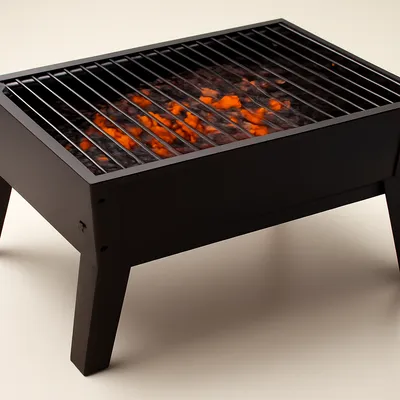
Hold the whole pig face over a gas flame or pass a culinary torch across all surfaces, singeing until every spot of hair is burned off; scrub vigorously with a stiff brush and hot water to reveal clean pale skin. Repeat over any missed areas.
Watch outSinge until every hair root is gone and the scrubbed skin shows pale — a missed patch leaves a stubble you'll feel in the finished bite.
- 2120 min
Submerge the cleaned pig face in a large container of cold water; soak 2 hours, changing the water once halfway through, to draw out residual blood and myoglobin.
- 315 min
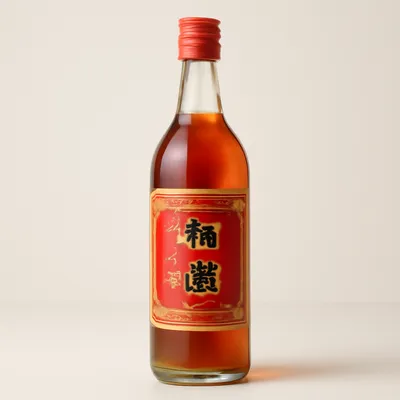
Place pig face in a large pot of cold water with ginger slices and a generous pour of Shaoxing wine; bring to a full boil and blanch 10 minutes, skimming foam; lift out and rinse under running water.
- 48 min
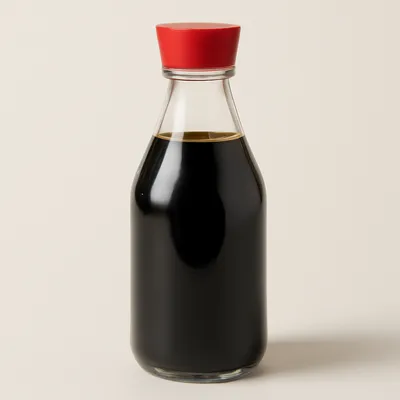
Pat skin completely dry; brush generously with dark soy sauce. Heat oil to 180°C in a wok or deep pot; carefully lower the pig face in skin-side down and fry 2–3 minutes until the skin blisters and turns deep mahogany. Remove and drain.
Watch outFry skin-side down until it blisters and turns deep mahogany — those blisters are what give the braised skin its bubbly, trembling texture.
- 58 min
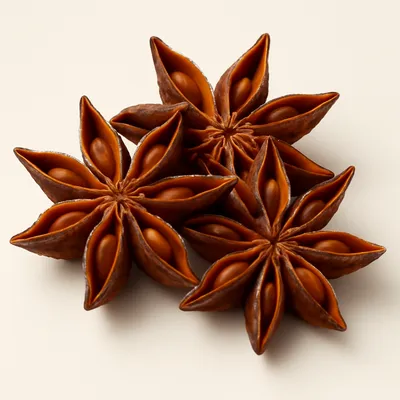
Build the master braising stock in a deep pot: combine light soy sauce, dark soy sauce, rock sugar, Shaoxing wine, water, star anise, cinnamon stick, bay leaves, Sichuan pepper, dried chilli, ginger, and garlic; bring to a boil and stir to dissolve the sugar.
- 6210 min
Submerge the pig face skin-side down in the braising stock, ensuring it is fully covered; return to a simmer, cover tightly, and braise over the lowest possible heat for 3.5 hours, turning once at the halfway mark.
Watch outHold the lowest possible simmer, surface barely moving — a hard boil breaks the skin apart before the collagen turns silky.
- 712 min
Carefully lift the pig face onto a serving plate, skin-side up; strain the braising liquid into a separate saucepan and boil over high heat until reduced to a thick, glossy sauce, about 10 minutes.
Watch outReduce the strained liquid until it thickens and turns glossy — that gelatin-rich glaze is what clings to the face instead of running off.
- 85 min
Pour the reduced glaze over the pig face; serve immediately with thin pancakes, fine cucumber strips, scallion threads, and sweet bean sauce on the side.
Archive tool suggestions — not reviewed
These legacy suggestions have not been evidence-reviewed and are not presented as required tools.