A whole braised pork trotter from the canal town of Zhouzhuang, burnished red-mahogany by hours of soy-and-sugar braising, named in legend for the Ming dynasty's richest merchant and his impromptu wordplay before the emperor.
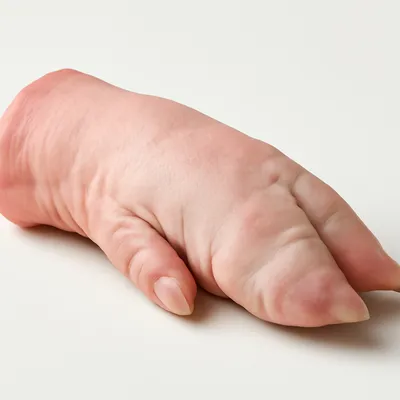
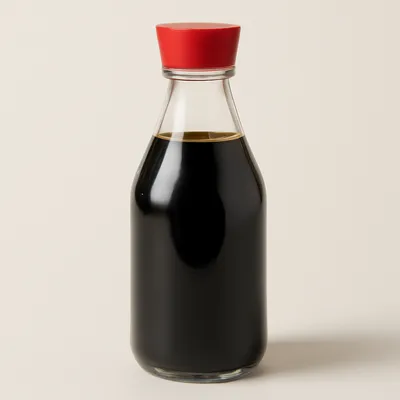


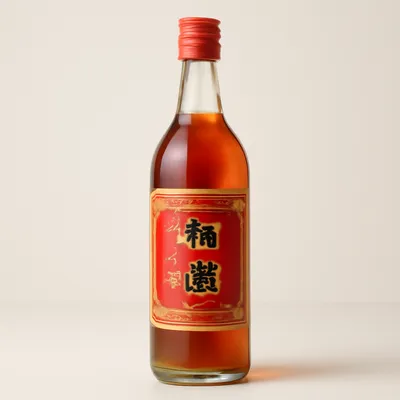
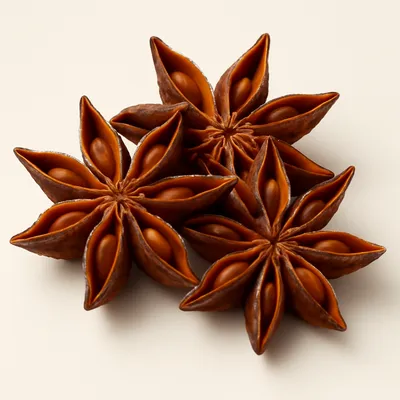
Wansan Trotter takes its name from Shen Wansan (circa 1330–1393), the Ming dynasty merchant from Zhouzhuang who built extraordinary wealth through trade—including the export of Jiangnan silk and goods throughout the region. According to the beloved legend, Emperor Zhu Yuanzhang, arriving at Shen's estate, was presented with a banquet including a large braised pork trotter. The emperor, knowing the dish was made of pork—a homophone of his own surname Zhu—used the fact as a deliberate test. Shen answered instantly: 'This is Wansan Trotter!'—naming the dish for himself to sidestep the dangerous homophone. When pressed on how to eat it, Shen drew the slender central bone from the trotter and used it to cut the meat, demonstrating ingenuity. The name further resonates as 'lift upward' in Suzhou dialect—an auspicious homophone. Historians note candidly that the dish's name and current form date from Zhouzhuang's tourism development in the 1990s rather than any Ming dynasty record; the story is celebrated folk narrative.
The trotter arrives whole, its skin lacquered deep red-brown and trembling at the gentlest touch. Skin and cartilage have become something between gel and silk—richly savory, clinging to each finger. The shank meat is dense enough to slice but soft enough that slices fall apart at the suggestion of chopsticks. The reduced sauce is almost jam-like in its concentrated sweetness and umami.
Pork trotters contain a very high proportion of collagen in their skin, cartilage, and tendons. During the extended braise at 85–95°C for 3–4 hours, this collagen hydrolyzes progressively into gelatin—at first stiffening the skin slightly, then softening it entirely as gelatin dissolves into the braising liquid. The sauce becomes self-thickening: as it reduces and cools, dissolved gelatin restructures into a glossy jam-like coating that needs no starch. Rock sugar contributes sweetness and, during initial high-heat browning, drives Maillard reactions with the pork's free amino acids to build the deep red-brown color and complex caramel-meat aroma.
Variations
Zhouzhuang's commercial shops now vacuum-package whole cooked trotters as a souvenir product—the dominant form most visitors encounter. Restaurant versions vary in sweetness, with local Suzhou shops leaning sweeter and tourist-oriented ones using less sugar. Home cooks across Suzhou and surrounding counties make essentially the same dish under the generic name red-braised trotter, without the Wansan association.
On the Palate
Where Wansan Pork Trotter sits in the Chinese flavor cloud
Ingredients
Serves 4



How it's made
7 steps · 43 min active + 3 hours 30 min waiting
- 110 min
Clean whole pork trotter; use a blowtorch or razor to remove all hairs; score the skin in a crosshatch pattern; rinse thoroughly.
- 210 min
Blanch in boiling water with ginger and Shaoxing wine for 10 minutes; remove and pat completely dry.
- 38 min
Heat oil in wok to 180°C; carefully fry the trotter, turning, until skin blisters and turns golden-brown, about 8 minutes; drain on a rack.
Watch outFry the trotter until the skin blisters and turns golden-brown — those blisters are what let the braise soak in and give the finished skin its bounce.
- 45 min
Transfer trotter to a large clay pot; add dark soy sauce, light soy sauce, rock sugar, Shaoxing wine, star anise, cinnamon, bay leaves, ginger, scallion, and water to just cover.
- 5195 min
Bring to a rolling boil; skim foam; cover and braise at the lowest possible heat 3–4 hours, turning the trotter every hour.
Watch outBraise at the lowest possible heat 3–4 hours — this melts the collagen to gelatin so the sauce self-thickens without any starch.
- 620 min
Remove lid in the final 20 minutes; raise heat to medium; reduce sauce to a glossy syrupy consistency, basting the trotter repeatedly.
Watch outIn the last stretch, reduce to a glossy syrup and baste repeatedly — that clinging glaze is the dissolved gelatin setting; a watery sauce means it needs more reduction.
- 75 min
Transfer to serving platter; pour sauce over; draw the central leg bone cleanly out of the trotter as a table-side presentation flourish before serving.


