A whole duck braised until its skin turns lacquer-dark and its fat-enriched stock becomes a silky glaze, then inverted in a single 大翻勺 motion — the richest and weightiest of Tianjin's Four Great Braises.




Braised whole duck entered Tianjin's 四大扒 repertoire alongside braised whole chicken in the 1830s, when the Four Great Braises became a hallmark of the city's banquet restaurants. Duck's richer fat content — its subcutaneous layer is far denser than chicken's — made it the more prized of the two birds: during braising, the rendered duck fat enriched the stock, creating a deeper-flavored sauce that chicken could not match. In formal multi-course banquets, a whole duck and a whole chicken were often paired symmetrically as a display of the kitchen's 大翻勺 mastery.
The skin is glossy and yielding, with rendered duck fat pooling in the braising glaze; the meat is denser than chicken, mineral-rich, and carries the long-braised stock deep into its fibers — richer, darker, and more gamey-sweet than the chicken version.
Duck subcutaneous fat — predominantly oleic and palmitoleic acids — begins rendering at 40–50°C, steadily enriching the braising liquid throughout the long simmer. Duck myoglobin content is 2–3 times higher than chicken's, producing a deeper red-to-dark color in the cooked meat. The fat-enriched, starch-thickened sauce forms a higher-viscosity glaze that creates the characteristic lacquer-like surface. Because a whole duck is heavier and more unwieldy than a chicken, the 大翻勺 demands more force and a wider arc — considered the more demanding test of Tianjin chef technique.
Variations
Some chefs stuff the duck cavity with dried mushrooms, lotus seeds, or chestnuts before braising, perfuming the meat from within. A lighter soy version (白扒) omits dark soy for a paler glaze and cleaner flavor. A tangerine peel variation adds brightness to cut through the richness.
On the Palate
Where Braised Whole Duck sits in the Chinese flavor cloud
Ingredients
Serves 4

How it's made
7 steps · 30 min
- 120 min
Rinse duck inside and out; remove oil glands at the tail and excess fat from the cavity; blanch in boiling water 5 minutes; drain, rinse and pat completely dry
- 225 min
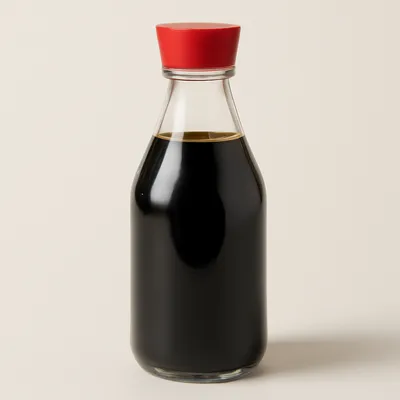
Combine dark soy sauce and maltose; brush the mixture over the entire duck skin; hang or prop the duck to air-dry 20–30 minutes until the skin surface feels tacky
Watch outAir-dry the sugar-coated skin until it feels tacky, not wet — a dry surface is what lets the skin crisp and color in the fry.
- 38 min
Heat oil to 190°C; lower the duck breast-side first into the oil and fry 4–5 minutes, turning carefully, until the skin is golden-brown and sealed; lift out and drain
Watch outOil at 190 degrees and lower the duck breast-first — too cool and the skin sops up oil instead of sealing golden.
- 45 min
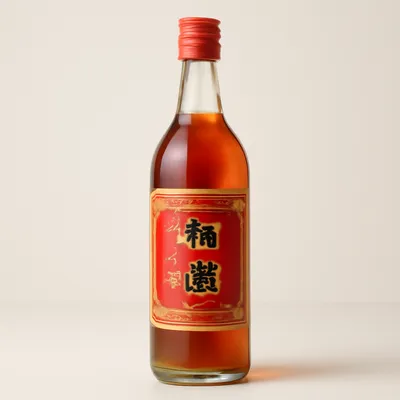
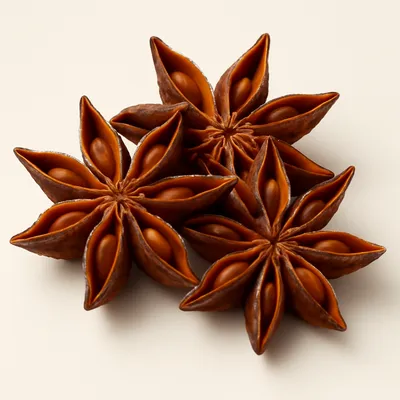
In a wide braising vessel, combine master stock, light soy sauce, rock sugar, Shaoxing wine, scallion, ginger, star anise, and dried tangerine peel; bring to a simmer and stir until the sugar dissolves
- 575 min
Place duck breast-side DOWN in a large flat-bottomed pan (扒勺); pour braising stock to just submerge; simmer on the lowest heat for 70–75 minutes until the leg joint moves freely and the skin feels soft and yielding when pressed
Watch outIt's ready when the leg joint wobbles freely and the skin yields softly to a press — that's collagen fully broken down.
- 68 min
Remove duck carefully; strain braising liquid and reduce by one-quarter over high heat; stir in potato starch slurry until a thick, glossy sauce forms
- 74 min
Perform 大翻勺 to flip the duck breast-side up; slide onto a platter; spoon the sauce over the entire bird so it glistens evenly
Watch outCommit to the big flip in one confident arc — hesitate and the tender skin tears and the glaze breaks.

