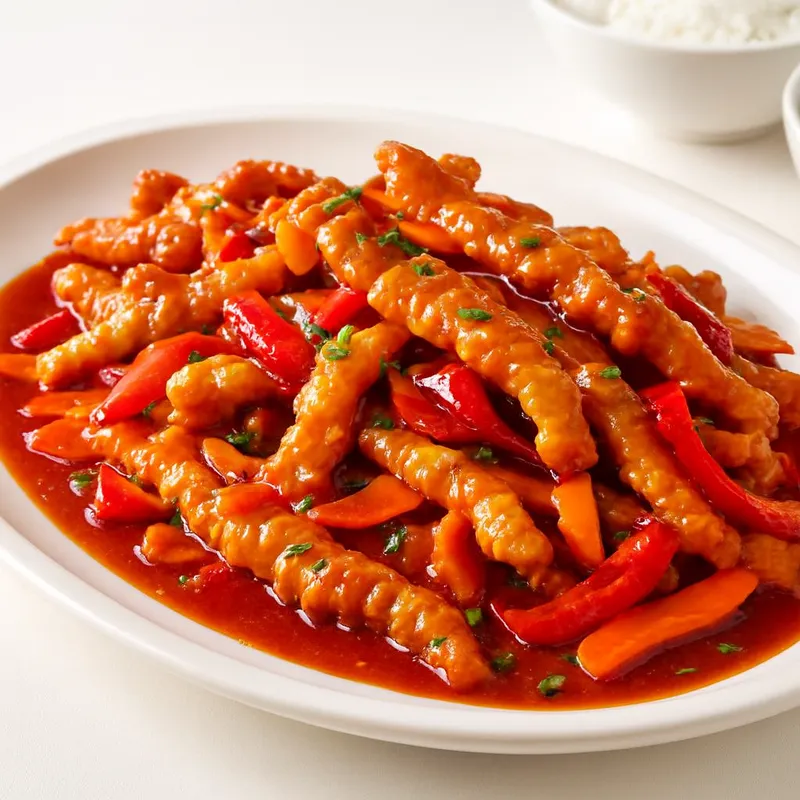
A Sichuan cold plate of brine-cooked pig ear sliced wafer-thin and dressed in red chili oil. The ear is simmered in spiced master stock until tender, chilled firm, then shaved across the grain so each slice shows the pale cartilage running through translucent skin. Tossed with red oil, a little re-cooked sweet soy, garlic and Sichuan peppercorn, it eats cool and crisp-chewy, with the cartilage giving a clean snap inside the soft skin — pungent, lightly sweet, and faintly numbing.




Pig ear is a standard cut in Sichuan's cold-plate and lu-wei (master-stock) repertoire, where economical pork offcuts — ear, tongue, snout, tripe — are brined and dressed cold as drinking food. Dressing them in red oil belongs to the same hong-you ("red-oil") flavor family as the famous offal cold dishes of Republican-era Chengdu, where street vendors turned cheap cuts into prized tapas-style plates. No founding shop or date attaches to ears specifically; the dish is documented as common household and cold-counter fare rather than a single creation, and it sits beside the brined tongue, tripe and trotter of any Sichuan lu-wei stall.
The slices are shaved thin and laid flat, glossy with red oil, a layer of chili sediment pooled at the bottom of the plate. The texture is the point: the skin is soft and gelatin-rich, but the band of cartilage running through it stays crisp, so each slice is soft and snapping at once — cool, springy, never rubbery. The flavor lands savory and a touch sweet from the re-cooked soy, then the red-oil heat, then a slow numbing lift of Sichuan peppercorn. Garlic and cilantro sharpen it; served at room temperature, where the chili aroma reads fullest.
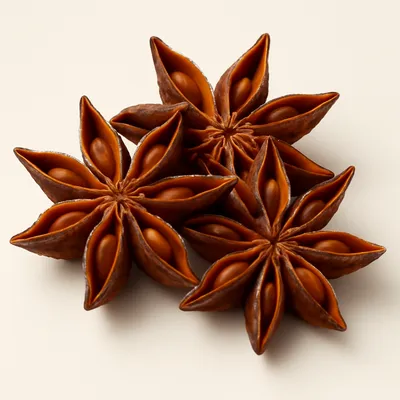
Two stages make the dish: the brine and the dressing. Pig ear is mostly skin, cartilage and connective tissue, so it must be simmered slowly in spiced master stock — star anise, cassia, ginger, scallion, peppercorn — long enough to break the collagen into gelatin and turn the skin tender while the cartilage keeps its crunch; a hard boil only toughens it. The cooked ear is then chilled hard, which sets the gelatin firm so it can be shaved thin and clean across the grain — warm ear tears and will not slice. Cutting across the cartilage, not along it, is what gives every slice that snap inside the soft skin. The dressing is built on the same Sichuan cold-dish base as the white-meat plates: red chili oil (红油) for heat and aroma, re-cooked sweet soy (复制酱油) — soy reduced with sugar and spices — for a rounded salty-sweet body, raw mashed garlic for sharpness, and ground Sichuan peppercorn for the numbing finish; a little of the brine tying the dressing back to the ear.
Variations
The red-oil dressing is the Sichuan standard, but the same brined ear is also cut into a salad with celery, coriander, peppers or wood-ear and tossed in a lighter vinegar-soy dressing (拌猪耳). Some cooks press several cooked ears together while warm into a terrine that sets into a marbled "crystal" loaf (水晶猪耳), then slice it cold. Spicing of the brine varies by household; bird's-eye or pickled chili can replace some of the red oil for a sharper heat. The brined tongue, snout and tripe of the same lu-wei pot are dressed the same way and often share the plate.
On the Palate
Where Pig Ears in Chili Oil sits in the Chinese flavor cloud
Ingredients
Serves 4

How it's made
6 steps · 30 min active + 2 hours waiting
- 115 min
Scrape and clean whole pig ears, then blanch in boiling water with ginger and wine to remove scum; rinse.
- 290 min
Simmer the ears in spiced master stock — star anise, cassia, ginger, scallion, Sichuan peppercorn, soy and salt — at a low bubble for about 1.5 hours until tender but still crisp at the cartilage.
Watch outSimmer at a low bubble about 1.5 hours until the skin is tender but the cartilage still snaps — a hard boil only toughens it and you lose the crunch.
- 360 min
Lift out, cool, then chill thoroughly in the fridge so the ears firm up.
- 410 min
Shave the cold ears into thin slices across the grain, cutting through the cartilage, and arrange on a plate.
Watch outChill the cooked ears hard before slicing — the cold sets the gelatin firm so they shave thin and clean; warm ear just tears and won't slice.
- 55 min
Make the dressing: red chili oil, re-cooked sweet soy, mashed garlic, ground Sichuan peppercorn, a little sesame oil and a spoon of the brine.
- 63 min
Toss the slices with the dressing, scatter with cilantro and toasted sesame, and serve at room temperature.