
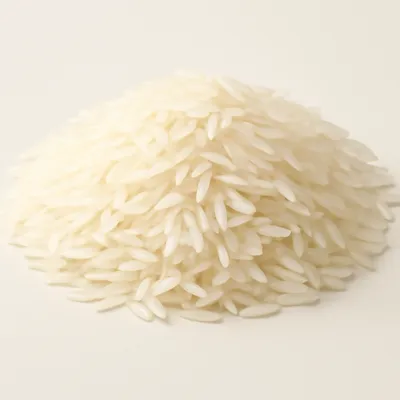
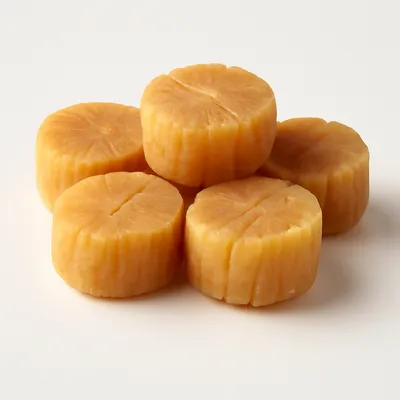
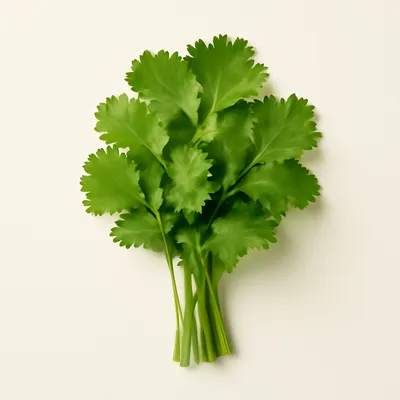
A loose, brothy rice congee cooked to order in a clay pot, the Teochew supper-stall classic. Pre-soaked rice is boiled hard in a sandpot until the grains burst open and bloom but still hold their shape — the porridge stays thin, the rice and the starchy liquor never fully merging the way a slow-simmered Cantonese congee does. Live mud crab cut through the shell, prawns, and sometimes dried scallop go in near the end so their sweetness leaches into the rice without overcooking, and the pot is finished with chopped Chinese celery, coriander, scallion, fried shallots, preserved tianjin cabbage, fish sauce, and white pepper. The sandpot holds so much heat that the congee reaches the table still bubbling. It is one of the icons of the late-night Teochew table.




A Teochew (Chaoshan) folk dish from the eastern coast of Guangdong, with no single inventor — it grew out of the deep-rooted local habit of eating congee, where porridge is called 'mi' (糜) rather than the Cantonese 'zuk' (粥). Chaoshan cooks distinguish plain white congee (白糜) from congee enriched with meat or seafood (芳糜 / 香糜); the seafood sandpot version is the latter taken to its richest. The dish was traditionally cooked in a coarse earthenware pot (砂钵) and later refined in a glazed clay sandpot (砂锅), which is how it took the name 砂锅粥; it lives above all in the region's late-night supper stalls (宵夜档). Three seasonings set the Teochew style apart from any other seafood congee and are treated as non-negotiable: preserved tianjin cabbage (冬菜), fish sauce (鱼露), and white pepper. Eating congee is an old custom across Chaoshan, tied to its rice-farming country and a frugal everyday table.
The first thing you notice is that it is not smooth — you can see and feel every grain. The rice is bloomed and soft but still distinct, suspended in a thin, milky, intensely savory broth rather than dissolved into a paste. The crab and prawn give the whole pot a clean oceanic sweetness that has soaked right into the rice; behind it sits the deep salted funk of the fish sauce and tianjin cabbage, a hit of raw white-pepper heat, and the green lift of celery and coriander, with fried shallots adding a toasty crunch on top. It is hot enough to keep working in the bowl. The crab meat should still be juicy, the prawns barely set; cook them a minute too long and they go cottony and the sweetness boils away.
The dish hinges on stopping the starch short and adding the seafood late. The whole technique turns on how far the rice is cooked: the grains are pre-soaked and boiled hard in the sandpot only until they swell and crack open (米开花 / 米心刚破), at which point cooking stops. This is the opposite of a Cantonese slow congee (老火粥), where porridge is simmered three to four hours and the constant agitation shears the swollen starch granules apart until they gelatinize into a uniform silky colloid with no grain left; the Teochew cook deliberately pulls up before that breakdown, so the grains stay intact and the body stays loose and watery. The seafood goes in only when the rice is nearly there — crab first, then prawns a minute or two later, since the thick shell needs longer — so their glutamate-rich juices leach into the congee while the flesh barely sets. The pre-soaked rice cooks faster and blooms more evenly, and a little peanut oil and salt stirred in cuts the foam that would otherwise boil over. Seasoning is fish sauce, tianjin cabbage, and white pepper, with celery, coriander, scallion and fried shallots scattered off the heat; the glazed sandpot has enough thermal mass to hold the pot at a rolling boil all the way to the table.
Variations
The pot is named for whatever goes in it. Mud-crab congee (膏蟹粥) prizes the orange roe of a fattened female crab; a mixed prawn-and-crab pot (虾蟹粥) is the everyday seafood version; flower crab, clams, dried scallop and other shellfish all appear. Beyond seafood the same Teochew method makes beef congee (牛肉粥), with thin slices slipped in at the very end, and eel congee (鳝鱼粥). Some cooks fry the prawn heads first to draw a red prawn oil that is stirred back in for depth, or finish the pot with a beaten egg swirled through. The constants are the bloomed-but-distinct rice and the trio of fish sauce, tianjin cabbage and white pepper — change those and it stops being a Teochew sandpot congee.
On the Palate
Where Seafood Casserole Congee sits in the Chinese flavor cloud
Ingredients
Serves 3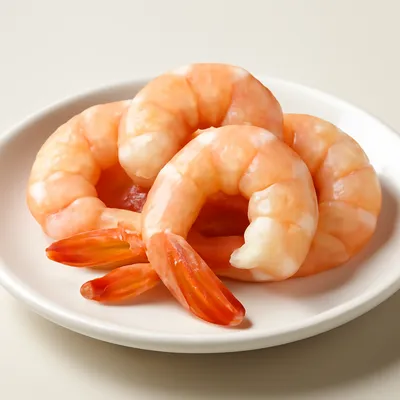
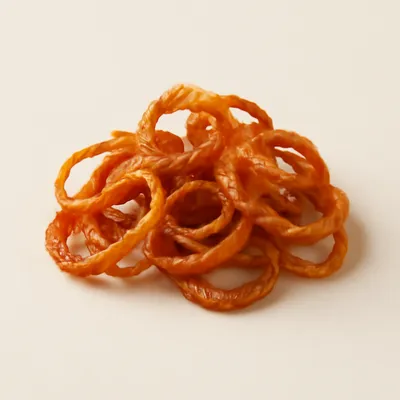
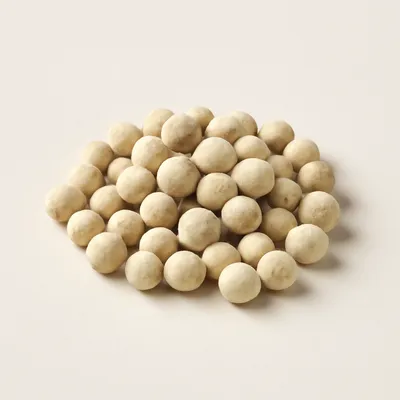
How it's made
7 steps · 40 min
- 130 min
Rinse the rice and soak it for about 30 minutes, then drain and toss it with a little peanut oil and a pinch of salt.
- 212 min
Bring a generous pot of water to a hard boil in a glazed clay sandpot, add the drained rice, and boil over high heat, stirring now and then so it doesn't catch.
- 38 min
Meanwhile clean the seafood: cut the live crab through the shell into pieces, devein the prawns and split their backs, and lightly salt them.
- 42 min
When the rice has just bloomed and cracked open but the grains are still distinct, slide in the crab and ginger and cook a minute or two.
Watch outPull up the moment the grains just bloom and crack but still stand distinct (米开花) — cook past that and the starch shears into a uniform Cantonese-style porridge, not this Teochew loose congee.
- 55 min
Add the prawns and any dried scallop and cook just until the prawns turn and set, keeping the congee loose and adding hot water if it tightens.
Watch outAdd the prawns last and cook only until they just turn and set, keeping the congee loose — overcooked prawns go rubbery and a tight congee loses its clean, brothy character.
- 62 min
Season off the boil with fish sauce, tianjin cabbage and white pepper, taste, then scatter celery, coriander, scallion and fried shallots over.
- 71 min
Carry the sandpot straight to the table while it is still bubbling and ladle out at once.
Archive tool suggestions — not reviewed
These legacy suggestions have not been evidence-reviewed and are not presented as required tools.


