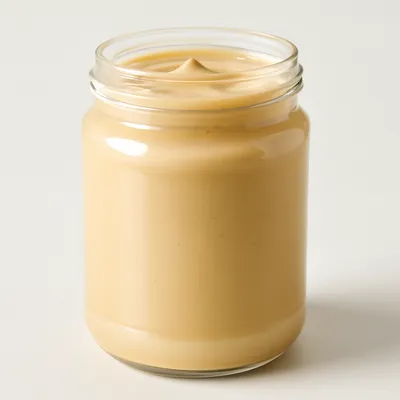



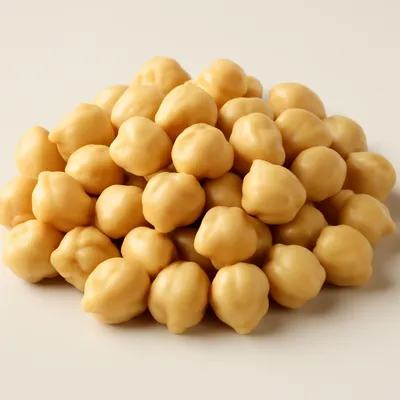
Musabaha is the rustic ancestor of modern blended hummus, and the name comes from misbaha (prayer beads), because the glistening whole chickpeas in tahini resemble a strand of beads — a name rooted in the region's religious vocabulary. It belongs to the ancient Shami (Levantine) breakfast continuum and is distinct enough from the cold whipped hummus dip to warrant its own article: different texture (whole, not pureed), different service (hot, not cold), and a different cultural moment (a brunch dish rather than a mezze dip). The Damascus version is richer, finished with melted butter or ghee, pomegranate molasses, and pistachios or pine nuts.
Warm and saucy rather than stiff and cold — the chickpeas are tender but keep their shape, some crushed to thicken the sauce. The tahini-lemon-garlic is loose and clinging, more dressing than paste. The butter finish makes it rich; a drizzle of pomegranate molasses cuts through. Eaten scooped with warm pita, it is comfort itself.
Cooking the chickpeas until fully tender (soft enough to crush between fingers) is essential — undercooked chickpeas stay mealy. Crushing some of them in the bowl releases their starch, which thickens the surrounding tahini-lemon sauce to a clinging consistency without fully pureeing it. The tahini emulsifies with the lemon juice and the chickpea cooking water (or added warm water) into a loose dressing; the garlic distributes its allicin (formed when garlic is crushed) through the oil-in-water emulsion. Serving warm matters: heat volatilizes the garlic aromatics and keeps the tahini flowing rather than setting tight as it does when cold.
Variations
Some add a swirl of ground cumin. A richer version tops it with spiced ground meat. Musabaha is sometimes called fatteh musabaha when layered over crisp pita.
On the Palate
Where Musabaha sits in the Syrian flavor cloud
Ingredients
Serves 4
How it's made
5 steps · 30 min
- 13 min
Drain a 400g tin of chickpeas (or use 250g dried, soaked overnight and boiled until very tender, about 1 hour); reserve 100ml of the cooking liquid.
Watch outCook the chickpeas until they crush easily between two fingers — undercooked they stay mealy and the whole dish tastes chalky.
- 22 min
While still warm, place two-thirds of the chickpeas in a wide bowl and roughly crush half of them with a fork or potato masher — leave the rest whole.
- 33 min
In a small bowl, whisk 5 tbsp tahini with the juice of 1 lemon, 2 crushed garlic cloves, 1/2 tsp salt and enough warm chickpea liquid (about 6 tbsp) to make a loose, pourable sauce.
Watch outLoosen the tahini with warm chickpea water until it pours easily — too stiff and it clumps instead of clinging to the chickpeas in a loose sauce.
- 42 min
Pour the tahini sauce over the warm chickpeas and toss gently; the sauce should be loose and saucy, not stiff.
- 55 min
Mound into a shallow bowl; melt 2 tbsp butter (or ghee) with a handful of pine nuts until the nuts are golden, pour over the top; finish with a drizzle of pomegranate molasses, a sprinkle of Aleppo pepper, and chopped parsley. Serve warm with pita.
Watch outServe warm — heat keeps the tahini flowing and lifts the garlic aroma; cold, the sauce stiffens and dulls.


