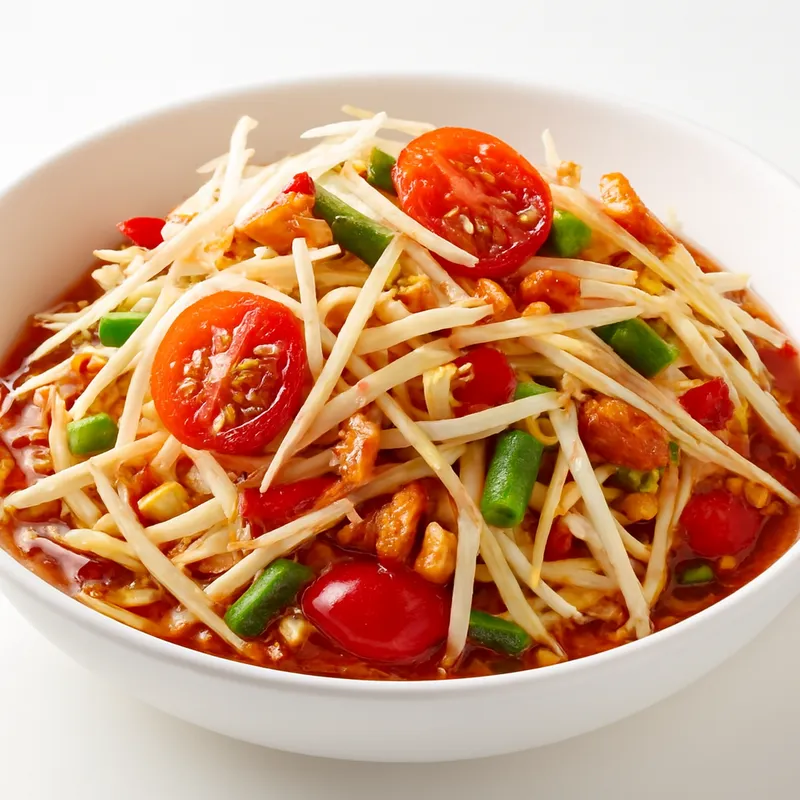
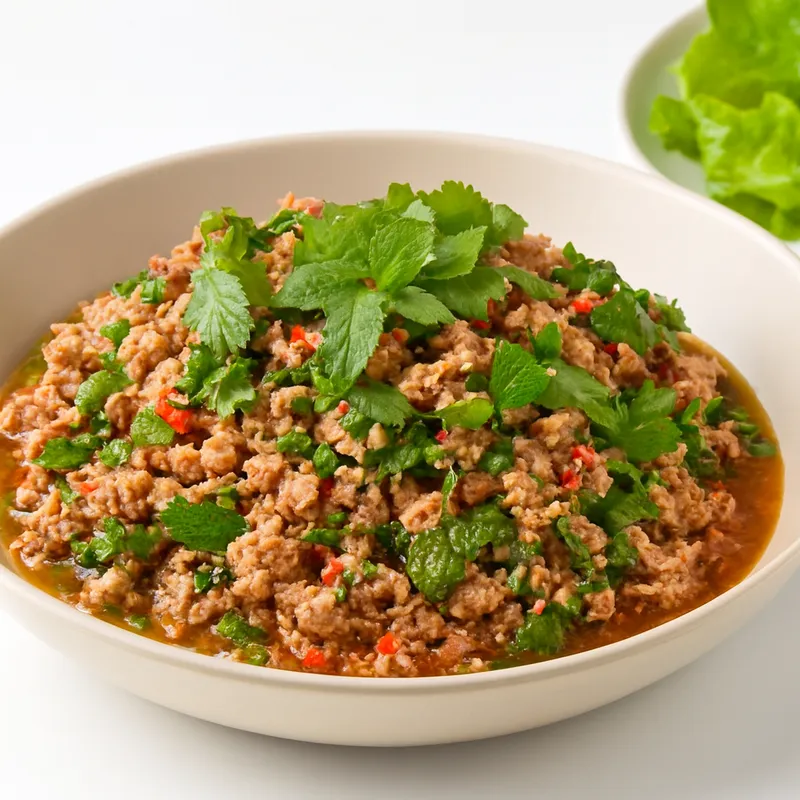
Pla Ra is crafted by cleaning small freshwater fish, combining them with salt, and layering them with cooked sticky rice in large earthen jars. These jars are then sealed and left to ferment for months, allowing the fish to break down and develop its signature pungent aroma and umami flavor. The end product is a thick, dark paste that smells intensely of the sea, with a sharp, salty tang that lingers on the tongue. In dishes like Som Tum, the Pla Ra is the secret ingredient that elevates the green papaya salad with an irresistible depth and complexity. In Larb, a spoonful of this fermented paste grounds the fresh herbs and lime juice with an earthy, savory note. The test for done is simple: the aroma should be sharp enough to make your mouth water, yet balanced enough not to overpower the dish.
Where it comes from
In the sun-drenched fields of northeastern Thailand, Pla Ra emerged during the 17th century as a necessity among rice farmers. Faced with the region's long, dry seasons, these communities developed a way to preserve fish caught during the brief monsoon months. Using local fish, sticky rice, and salt, they created a fermentation process that allowed the fish to endure the harsh climate, giving rise to this distinctive, potent ingredient. As trade routes expanded, Pla Ra found its way into neighboring Laos and Cambodia, each locale imprinting its own twist. While the Isaan version maintains a thick, paste-like consistency, the Lao version often incorporates more herbs, and the Cambodian rendition may include additional spices. Despite these variations, the core identity of Pla Ra remains uniquely tied to Isaan's culinary landscape.
In the kitchen
Pla Ra, the soul of Isaan cuisine, infuses dishes with its pungent, fermented fish aroma.
Nutrition (per 100g)
Values are AI-estimated, not from a laboratory database