In Practice
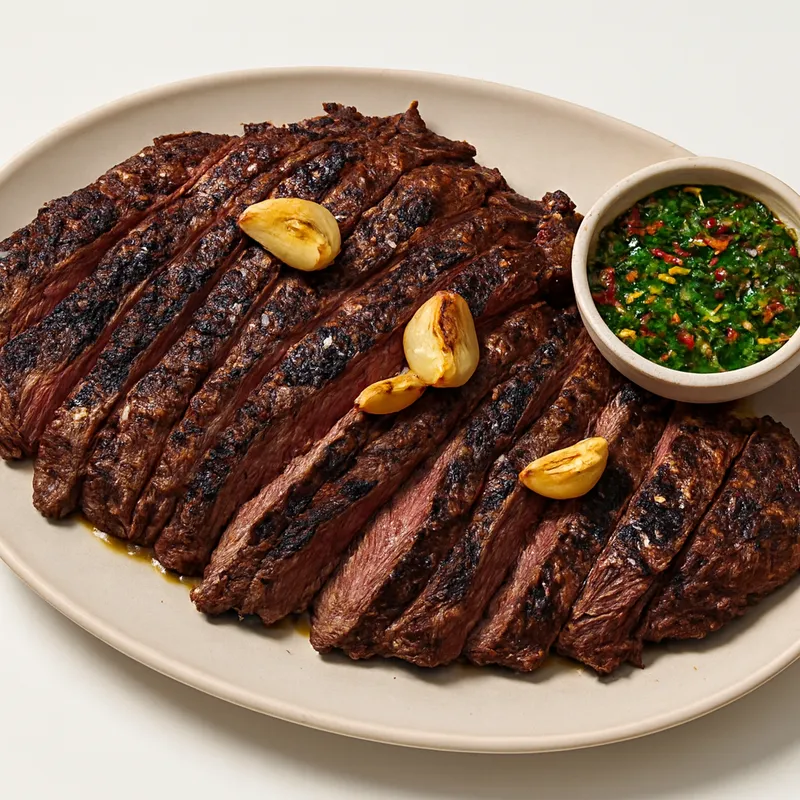
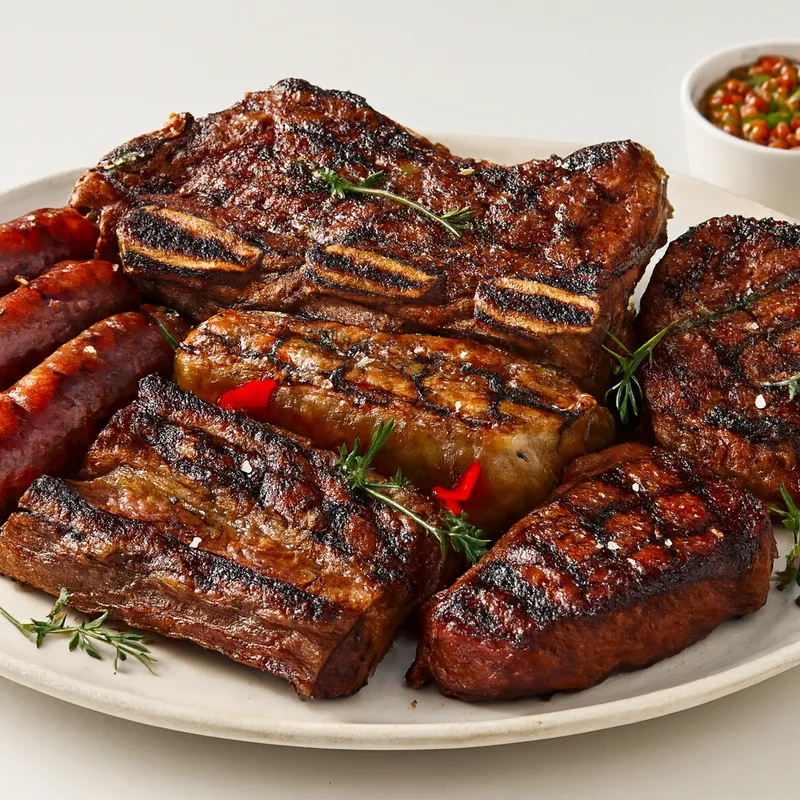
Quebracho or algarrobo hardwood burned down to a glowing bed before meat goes on. Salt-only seasoning (sal parrillera, coarse). Asador angle adjusted hourly to manage radiant intensity; ribs face-up first to render, then flipped. Beef ribs 6-8 hr, whole lamb 4-5. Chimichurri served after, not before — vinegar would etch the crust. Failure modes: flaming wood instead of coals gives soot rather than radiant warmth; meat too close chars the surface long before interior warms.
Background
Asado emerged in the vast pampas of Argentina during the 18th century, where gauchos roamed the open plains. These skilled horsemen needed a way to cook their fresh beef, and the abundance of wood and open space made open-fire grilling both practical and communal.
As time passed, asado transcended its rustic origins, migrating from the fields to the urban patios of Buenos Aires. Here, it became a weekend ritual, a time for family and neighbors to gather. While the basic elements remained — beef, salt, fire — regional differences began to surface. In some areas, lamb or pork took center stage, whereas in others, the type of wood used became a signature of local flavor.
How It Works
Whole carcasses or large cuts splayed on a vertical cross (asador) face glowing wood coals at 1.5-2 meters distance for 4-8 hours. Radiant heat at 180-220°C surface drives gradual Maillard while interior comes up by conduction — no smoke combustion compound buildup since meat is offset, not engulfed. Rendered fat drips away rather than igniting, keeping aromatics clean.



Through Time
Gauchos of the 17th-19th century Pampas roasted feral cattle (descended from Spanish introductions) on iron crosses planted in the ground. Argentine national identity codified asado in the post-independence 1820s; Don Segundo Sombra (Güiraldes, 1926) immortalized it literarily. Francis Mallmann's *Seven Fires* (2009) brought the contemporary technical canon to international audiences.
Related cooking knowledge
Grilling shares the radiant-fire mechanism but at closer range and shorter duration. Carne Asada is the Mexican variant on cut steak rather than whole carcass. Braai is the South African community-fire sibling. Barbecue Smoking shares the long-cook timeline but adds smoke immersion that asado deliberately avoids.