





Lechazo asado is the asador tradition of Castilla y León — the towns of Aranda de Duero, Sepúlveda, and the Tierra de Sahagún are famous for it. The breed used is the Churra, raised on the high meseta where its milk-only diet (the lambs are slaughtered before grass) gives the meat its distinctive paleness. The wood-fired horno de asar developed alongside Romanesque monastery kitchens, and lechazo became the Sunday feast on the parameras (high plateaus). IGP-protected since 1997.
Castilla y León asador tradition built on the Churra breed — milk-fed lambs slaughtered before they touch grass, IGP-protected since 1997. Two-temperature roast: 180°C to render fat without contracting the muscle, then a water-salt-lemon brush at the flip to puff the skin.
Skin is a thin mahogany shell that gives way to meat the colour of cooked salmon — pink-pale, fibreless, falling off the bone with finger pressure. The lamb itself tastes of milk and grass, much milder than mutton. The potato bed beneath has absorbed every drop of fat and juice, gone from white to amber. Eaten with crusty bread and a glass of Ribera del Duero. If the lamb is grey and stringy, the cook used an older animal — true lechazo is barely lamb yet.
The two-temperature roast is what defines lechazo. At 180°C, fat renders slowly into the potato bed and meat sets without contracting. Crank too early and the skin tightens, squeezing juice out — meat goes dry and stringy. The water-salt-lemon brush at the flip is critical: the water creates steam that puffs the skin, the salt draws moisture for crackling, and the lemon's acid accelerates Maillard browning at the lower-than-ideal oven temperatures of a domestic setup.
Variations
Aranda de Duero plates a quarter per person on cazuela de barro; Sepúlveda runs leaner cuts; Tierra de Sahagún braises rather than roasts; Restaurante José María (Segovia) does a cabrito version with the same horno.
On the Palate
Where Lechazo Asado sits in the Spanish flavor cloud
Ingredients
Serves 4

How it's made
6 steps · 25 min active + 2 hours 5 min waiting
- 15 min
Take a 1.2-1.4kg quarter of unweaned lamb (lechazo, max 35 days, milk-fed only — Lechazo de Castilla y León IGP if you can get it). Trim excess outer fat to 5mm but leave the cap.
- 28 min
Slice 600g large potatoes into 1cm rounds and 2 onions into thick rings. Spread evenly across an earthenware cazuela. Pour 200ml water and 100ml dry white wine over.
Watch outThe bed must be a single layer — if potatoes overlap they steam unevenly and stick.
- 35 min
Rub the lamb quarter with 30g pork lard, 1 tbsp coarse salt, 1 crushed garlic clove. Lay it skin-side-down in the cazuela on the vegetable bed.
- 450 min
Roast in a 180°C wood-fired or convection oven for 50 minutes — lamb fat renders into the bed, potatoes drink the juices and turn translucent at the edges.
Watch outIf the cazuela goes dry, splash 50ml water onto the potato bed — never onto the lamb skin.
- 525 min
Flip the lamb so skin faces up. Brush the skin with a mix of 30ml water, 1 tsp coarse salt, 1 tsp lemon juice. Crank oven to 220°C for 20-25 minutes — skin crisps and turns deep mahogany.
- 612 min
Rest 10 minutes uncovered. Carve into shoulder, ribs, and saddle pieces — a Castilian asador serves the lamb as a whole quarter on the cazuela, and the diner pulls portions off at the table. Plate with the soft potatoes underneath.
Watch outDon't tent with foil — trapped steam wilts the skin you just crisped.
Archive tool suggestions — not reviewed
These legacy suggestions have not been evidence-reviewed and are not presented as required tools.
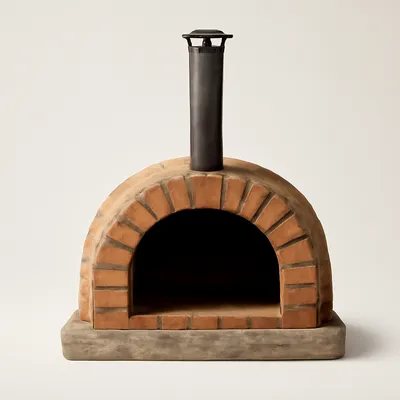
A domed wood-fired oven, brick or stone-lined, that reaches 450-500°C in the floor and 350-400°C in the dome. A Neapolitan margherita cooks in 60-90 seconds — the floor scorches the bottom while radiant heat from the dome flash-blisters the top. Building one requires three insulating layers (firebrick floor, refractory dome, ceramic-fiber jacket); a proper Neapolitan version is a multi-tonne fixture, not a backyard kit.

A round, shallow, glazed terracotta dish, 18-30 cm across with sloping walls, used for tableside-served Spanish tapas — gambas al ajillo, almejas a la marinera, callos, fideuà. Clay's slow heat retention keeps olive oil at the perfect 80-90°C garlic-confit zone for prawns without scorching, and the wide shallow profile lets liquids reduce while keeping protein lightly moored at the bottom.


