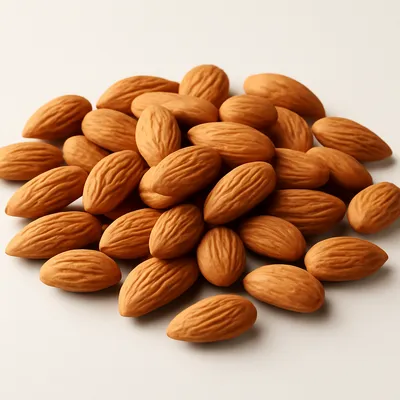
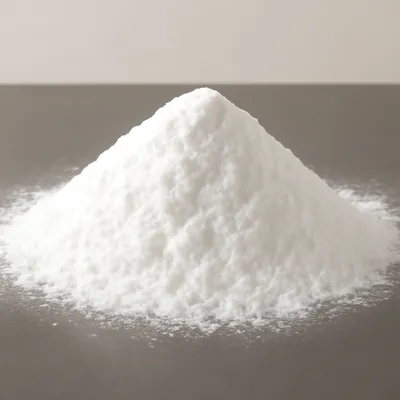
Diamond-shaped Maghrebi pastries built primarily from finely ground almonds and fine semolina, bound with eggs and orange blossom water, baked until just golden, dipped in a light fragrant syrup, and dusted with icing sugar. The almond counterpart to Kairouan's date-filled makroud, this version is drier, more delicate, and associated with urban Tunis and Algiers pastry-making traditions, appearing on Eid, Ramadan, and wedding tables.



The makroud family of diamond-shaped semolina pastries has contested origins—Kairouan in Tunisia and the M'zab oases and Sétif plateaux of Algeria both claim the form. The date-filled variety is documented as far back as Ibn Razīn al-Tujībī's 13th-century Maghrebi cookbook, which describes date-filled fried dough, while a separate Algerian account describes 11th-century inhabitants combating famine using the founding ingredients—semolina, dates, and olive oil. The almond variant, Makroud el Louz, is associated with refined urban confectionery: almonds were historically costly, imported from the Tell Atlas mountains or from Spain, marking the pastry as suitable for prestigious occasions. Makroud in its various forms spread widely through Aghlabid-era and Andalusian migration, reaching Malta, Fès, and Oujda.
Marzipan-dense at the centre but with a sandy, slightly gritty semolina edge that crumbles cleanly; the orange blossom syrup imparts a clean floral sweetness, and the cloud of icing sugar dissolves instantly on the tongue into powdery warmth.
Ground almonds contain approximately 50 % fat (primarily oleic acid) and no gluten-forming proteins; the batter sets through egg protein coagulation during baking at 65–75 ℃, not through gluten structure. Fine semolina starch granules swell and gelatinize at 60–70 ℃, providing mechanical support and a slight bite without toughness. Orange blossom water's key aromatics—linalool and geraniol—have boiling points above 196 ℃, so significant fragrance survives oven temperatures. The post-bake syrup dip deposits a hygroscopic sucrose layer on the surface that retains moisture and extends shelf life for several days.
Variations
Some Tunisian recipes replace part of the orange blossom water with lemon zest, producing a brighter, citrus-forward aroma. A few modern bakers substitute half the almonds with pistachio or walnut for a greener colour and richer flavour. Unlike the date-filled version which is typically deep-fried, Makroud el Louz is almost always baked—a distinction that reinforces its identity as the more refined, urban sibling.
On the Palate
Where Makroud el Louz sits in the Tunisian flavor cloud
Ingredients
Serves 24How it's made
8 steps · 38 min active + 22 min waiting
- 110 min
Combine fine semolina, ground almonds, powdered sugar, and a pinch of salt in a large bowl; add eggs and orange blossom water and work together until a smooth, cohesive dough forms.
- 220 min
Cover and rest the dough 20 minutes so the semolina granules absorb moisture fully and the dough firms slightly.
Watch outRest the dough twenty minutes so the semolina fully absorbs moisture and firms up — skip the rest and it's too soft to hold the diamond scoring cleanly.
- 35 min
Divide dough into 3 equal portions; roll each into a flat log about 3 cm wide and 1.5 cm thick using the palm of your hand.
- 45 min
Score the surface diagonally with a sharp knife in two directions to create a diamond grid pattern, pressing almost all the way through; then cut fully through to separate into individual diamond pieces.
- 522 min
Arrange diamonds on a parchment-lined baking sheet, spacing them slightly apart; bake at 170 ℃ for 18–22 minutes until pale golden and firm to the touch.
- 65 min
While the pastries bake, prepare a light syrup: dissolve sugar in water, add orange blossom water, and simmer gently for 3 minutes; keep warm.
- 75 min
As soon as the diamonds come out of the oven, dip each one in the warm syrup for about 5 seconds, turning to coat; lift out and place on a clean rack.
Watch outDip each hot-from-the-oven diamond into warm syrup about five seconds — hot pastry into warm syrup drinks in just enough; too long and they go soggy.
- 85 min
Once fully cooled and the syrup glaze has set, dust generously and evenly with icing sugar.
Archive tool suggestions — not reviewed
These legacy suggestions have not been evidence-reviewed and are not presented as required tools.


