A spherical wine-laced pork sausage aged inside a pig's bladder for six to twelve months, then suspended and simmered for up to eight hours until the interior transforms into an extraordinarily soft, sauce-like paste — Ferrara's greatest salume, documented at the Renaissance Este court and recognised as IGP in 2014.




The earliest allusion to salama da sugo appears in a letter from Lorenzo de' Medici to Duke Ercole I d'Este. The first culinary documentation is by Cristoforo di Messisbugo, scalco (banqueting steward) to Duke Alfonso I d'Este, whose posthumously published 1549 work 'Banchetti composizioni di vivande e apparecchio generale' describes 'mortadelle di carne' incorporating red wine in the mixture — the identifiable ancestor of today's salama. The expensive spices (nutmeg, cloves, cinnamon) point to the prosperous Este court. The Ferrarese historian Antonio Frizzi celebrated the product in his 1772 poem 'La Salameide', tracing its name fancifully to the Battle of Salamis. The first detailed domestic recipe appears in Don Domenico Chendi's 1761 'L'agricoltore ferrarese', describing a hot, spiced, spherical sausage served with abundant sugo by the spoonful. Pellegrino Artusi included it in his 1891 'La scienza in cucina e l'arte di mangiare bene'. IGP recognition came in 2014, limited exclusively to Ferrara province.
The bladder skin is cut away to reveal a paste of deep burgundy richness — scooped with a spoon, the meat spreads over potato purée and releases a pool of concentrated red cooking sugo; the flavour is intensely savoury, with wine tannins, warm spice heat and a deep fermented earthiness that no other Italian salume replicates.
During the 6–12-month bladder aging, the pig's bladder acts as a semi-permeable membrane, permitting gradual, uniform moisture loss through the whole mass without the surface cracking that would afflict a conventional casing. Microbial fermentation by natural lactic acid bacteria breaks down muscle proteins into free amino acids, building glutamate-rich umami. The added red wine — deliberately sulphite-free so as not to inhibit the fermenting bacteria — contributes tannins and polyphenols that oxidise slowly, deepening the paste colour and adding complexity. During the 4–8-hour final simmering, collagen-rich cuts (coppa, jowl) hydrolyse to gelatin at 70–80 °C, giving the paste its characteristic spreadable softness. The sugo that accumulates beneath is this gelatin enriched by wine and spice infusion passing through the bladder wall.
Variations
Served with pumpkin purée instead of potato (a Ferrarese autumn variant); sugo only used as a pasta sauce for cappellacci di zucca (the local pumpkin-stuffed pasta); consumed cold and thinly sliced in some older farmhouse traditions, though unusual for such a soft product; modern producers offer vacuum-packed versions with shorter aging (6 months minimum per the IGP specification).
On the Palate
Where Salama da sugo ferrarese sits in the Italian flavor cloud
Ingredients
Serves 4How it's made
7 steps · 30 min
- 115 min
Lower the salama into a bowl of cold water — it should sink cleanly; a floater indicates air pockets and possible spoilage. Bring a deep pot of water to a full boil.
Watch outThe salama must sink cleanly — a floater has air pockets inside and may be spoiled; don't cook it.
- 210 min
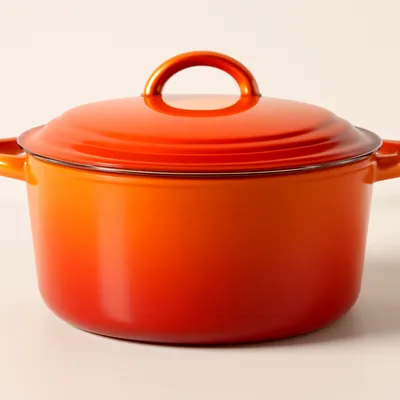
Wrap the salama in a double layer of clean muslin cloth; attach a long kitchen string to the bundle and tie the free end to the pot handle or a rod resting across the rim, suspending the salama in the centre of the pot, fully surrounded by water but never touching the base or sides.
- 3480 min
Reduce to the lowest possible simmer; cook for 6–8 hours; replenish with boiling water to maintain the level; never allow the water to boil hard, which risks rupturing the bladder and losing the sugo.
Watch outHold it at the barest tremble, never a hard boil — a rolling boil bursts the bladder and you lose the sugo that is the whole point.
- 445 min
About 45 minutes before the salama is done, boil floury potatoes until completely tender; drain and pass through a potato ricer; beat in warm butter and hot milk over low heat until smooth; season with salt and freshly grated nutmeg.
- 55 min
Test doneness by pressing gently through the cloth — the salama should feel uniformly soft with no hard pockets of undercooked meat.
Watch outPress through the cloth — it should feel evenly soft all over; any firm lump means that part of the meat is still undercooked.
- 610 min
Carefully lift the salama out by the string; rest for 10 minutes; unwrap; use kitchen scissors to cut the string segments dividing the bladder, then cut a circular cap off the top of the bladder.
- 75 min
Spoon the soft interior generously onto warmed plates of potato purée; ladle the concentrated cooking sugo, filtered through a fine sieve, around the edge; serve immediately.
Archive tool suggestions — not reviewed
These legacy suggestions have not been evidence-reviewed and are not presented as required tools.