A deep-fried sweet rice-flour dumpling of Assam's Bihu festivals, made from a simple dough of glutinous rice flour and jaggery, shaped into flat kneecap-sized rounds, and fried until crisp outside and soft, chewy, jaggery-sweet within. Its name comes from the Assamese for kneecap, describing its shape.



Ghila pitha is a deep-fried sweet rice-flour dumpling of Assam, made especially for Magh Bihu (Bhogali Bihu) and Bohag (Rongali) Bihu, the two great festivals of the Assamese year. Its name comes from the Assamese word ghila, meaning kneecap, because the fritters are shaped into flat, round discs roughly kneecap-sized. The dish belongs to the wider Assamese and eastern-Indian pitha tradition of rice-based festive cakes, and it is one of the simplest forms: a dough of glutinous rice flour (bora saul) bound with jaggery — no filling, no spice beyond perhaps a little cardamom — shaped and fried. The jaggery, dissolved into the dough's water, sweetens throughout and gives the deep caramel color; the glutinous rice gives the soft, chewy, almost-mochi-like interior that distinguishes ghila pitha from a crisp flour fritter. Alongside til pitha and the various larus (laddoos), ghila pitha is an essential part of the Bihu platter, and it is also made as an everyday tea-time snack.
A deep golden, crisp shell yielding to a soft, chewy, jaggery-sweet interior with a warm caramel depth and a faint, pleasant grain-bitterness at the edge.
The pitha's texture comes from the glutinous rice and the jaggery-sweetened dough. Glutinous rice flour, high in amylopectin and nearly free of amylose, gelatinizes into a soft, cohesive, chewy mass rather than the brittle, glassy texture of a regular rice flour — this is what gives the interior its mochi-like, slightly elastic bite. The jaggery dissolved in the dough's water does three things: it sweetens the whole mass evenly, its reducing sugars accelerate Maillard browning on the surface for the deep golden color, and its sucrose raises the dough's sugar concentration enough to keep the interior slightly soft and moist rather than drying out. Deep-frying at moderate heat (roughly 160–170°C, not too hot) cooks the dense dough through before the surface burns — the dough's low gluten means it cannot trap much air, so the pitha does not puff; instead, the surface dehydrates and browns into a crisp shell while the interior stays soft. The kneecap shape, flat and not too thick, ensures even cooking through.
Variations
A grated-coconut version is richer; some add a pinch of baking soda for a lighter crumb, and the pitha is sometimes made with a sesame or coconut filling inside.
On the Palate
Where Ghila Pitha sits in the Indian flavor cloud
Ingredients
Serves 6How it's made
6 steps · 20 min
- 14 min
Dissolve grated jaggery in a little hot water and strain.
- 26 min
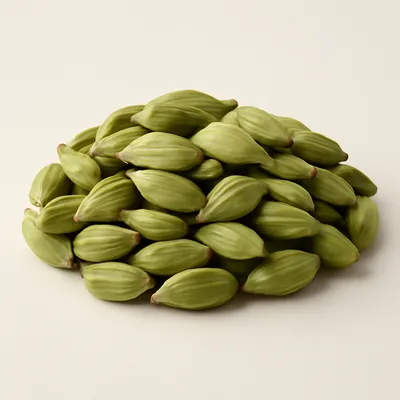
Stir glutinous rice flour (and a pinch of cardamom, baking soda, and salt) into the warm jaggery water to form a smooth, pliable dough; rest briefly.
Watch outWork the glutinous rice flour into a smooth, pliable dough — too dry and it cracks in the oil; too wet and the discs won't hold their round shape.
- 35 min
Pinch off portions and shape each into a flat, round disc about kneecap size.
- 412 min
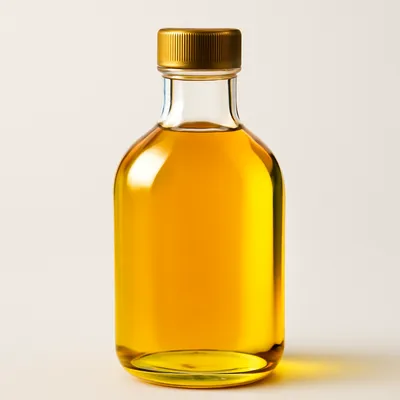
Heat oil (traditionally mustard oil) in a deep pan to moderate heat.
- 55 min
Slip the discs in and deep-fry until deep golden and crisp outside and cooked through within, turning once.
Watch outFry at moderate heat until deep gold and crisp outside and cooked through within — too hot and the outside darkens before the sticky centre sets.
- 62 min
Drain on paper and serve warm, or cool and store airtight.


