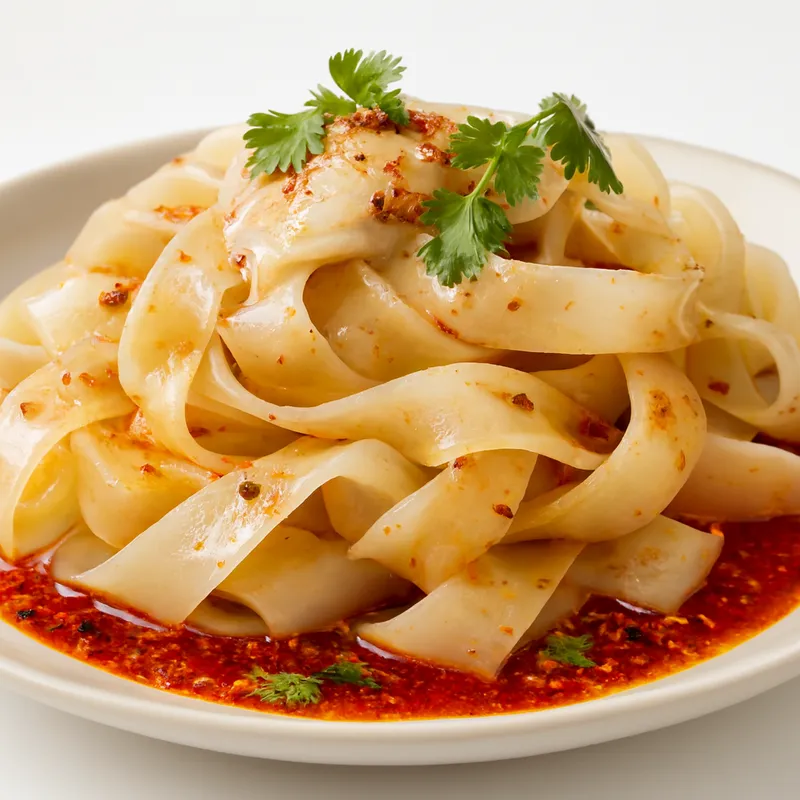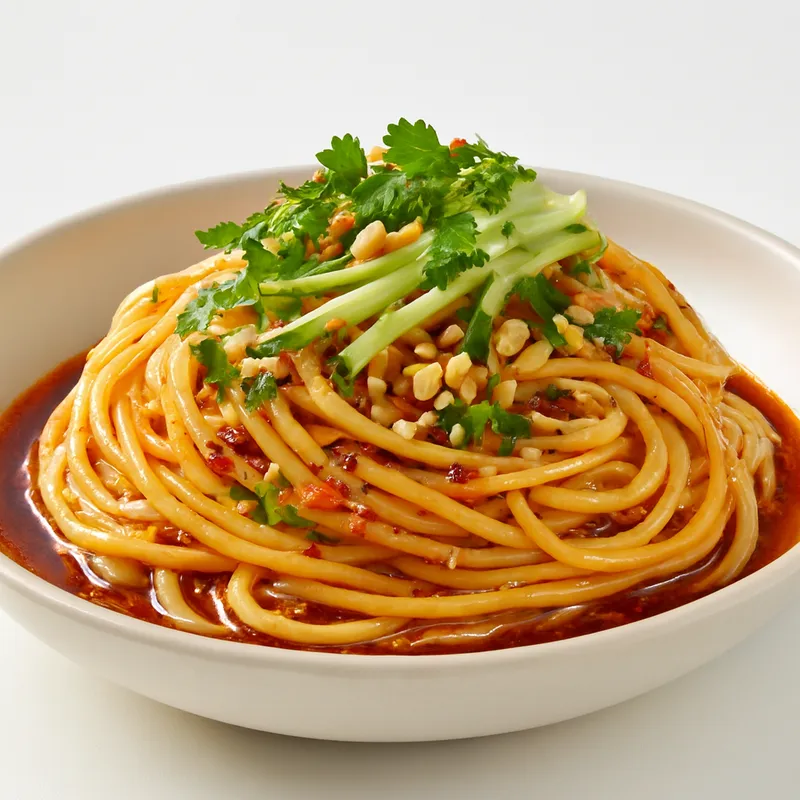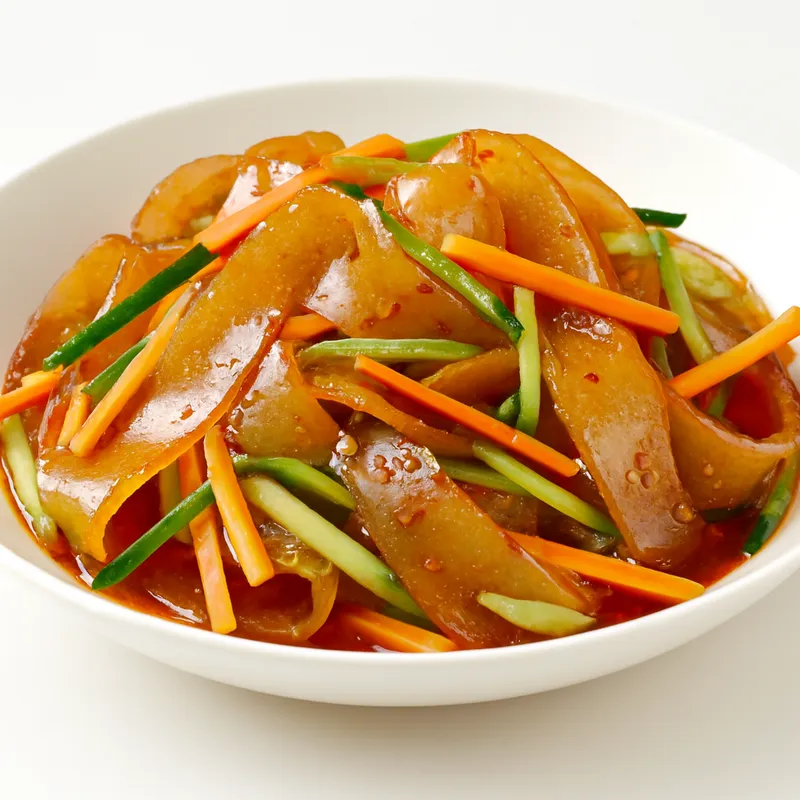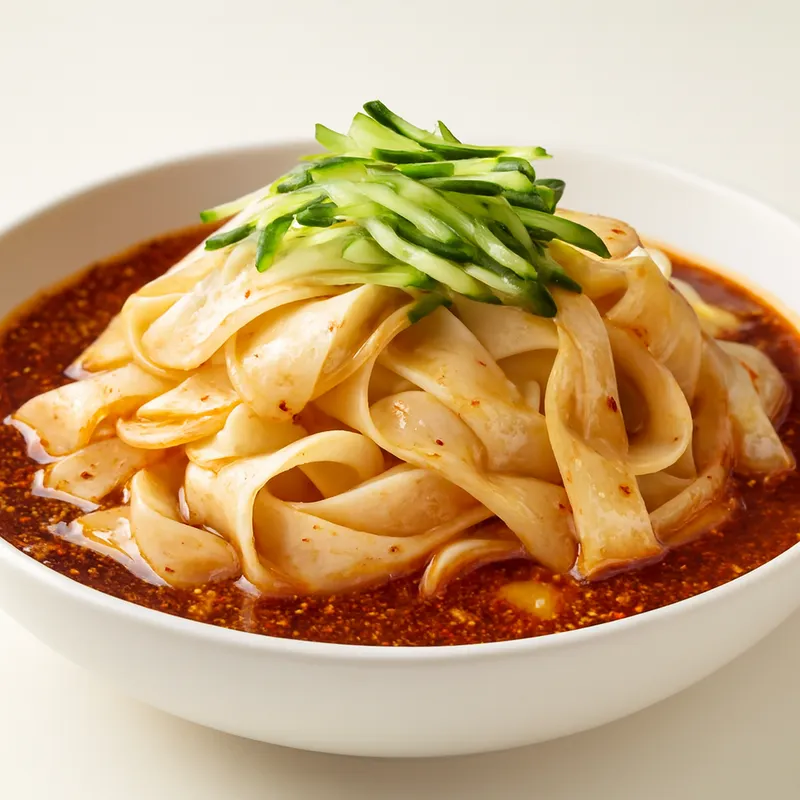




Shaanxi, with origins claimed in the Qin dynasty by local legend (a Qinshihuang-era farmer offering steamed rice batter as tribute when his rice came out poor); the recorded form dates to the Tang in Han-zhong, where rice surplus made cold rice-noodle salad a working-class summer staple. Modern Xi'an liang pi standardized in the early twentieth century with the addition of wheat gluten — a Hui Muslim contribution.
Tang-dynasty Hanzhong rice-noodle salad; modern Xi'an form fixed in the early 20th century with the wheat-gluten 面筋 cube — a Hui Muslim addition. The 油泼辣子 is the load-bearing flavor; staged oil-pours at 220°C / 180°C / 150°C are what build it.
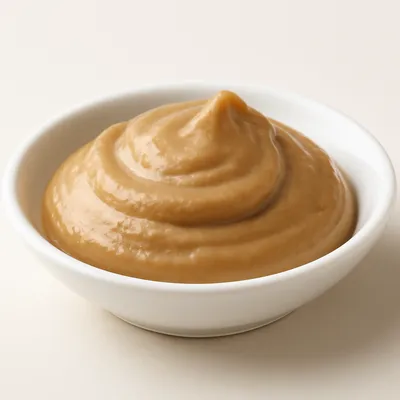
Cold wide rice-and-wheat noodles (凉皮), translucent and slippery, tossed with chili oil that's red but not burning, black vinegar, garlic water, sesame paste, and shredded cucumber. Cubes of chilled wheat-gluten (面筋) sit on top — spongy, soaking up the sauce. A summer dish in Shaanxi; the noodle is room-temperature, never iced. If it tastes only of vinegar, the chili oil wasn't bloomed properly.
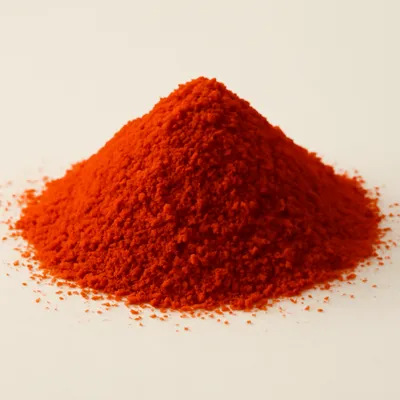
The chili oil (油泼辣子) is the load-bearing flavor — and it must be made by pouring smoking oil onto raw chili powder in stages, not by frying chili in oil. The staged pour at descending temperatures (220°C, 180°C, 150°C) extracts color from the first hit, aroma from the second, sweetness from the third. A single hot pour scorches; a low-temp infusion stays raw and grassy.
Variations
Hanzhong 米皮 is pure rice and softer; Qishan 擀面皮 uses wheat starch and is chewier; Xi'an Hui-style with 麻酱 sesame paste; Baoji's 岐山 style runs a sour-spicy profile heavier on black vinegar than chili.
On the Palate
Where Liang Pi sits in the Chinese flavor cloud
Ingredients

How it's made
4 steps · 1 hour 30 min
- 130 min
Mix wheat flour with water to form a dough, then let rest.
- 210 min
Steam the dough and slice into thin noodles.
Watch outSteam until the sheet turns from milky to glossy and translucent and springs back — undercooked, it tears when you slice it.
- 35 min
Prepare a sauce with chili oil, vinegar, garlic, and soy sauce.
Watch outWhen you pour smoking oil onto the chili powder it should sizzle and foam and smell toasty, not acrid — if it goes black you scorched it, start over.
- 45 min
Toss noodles with sauce, sesame, and sliced cucumber.