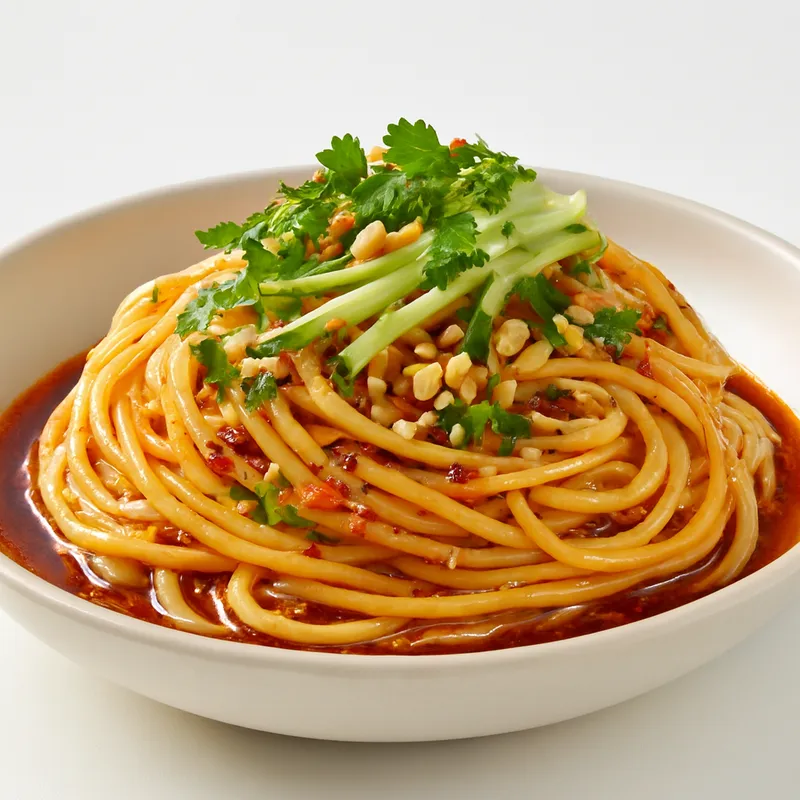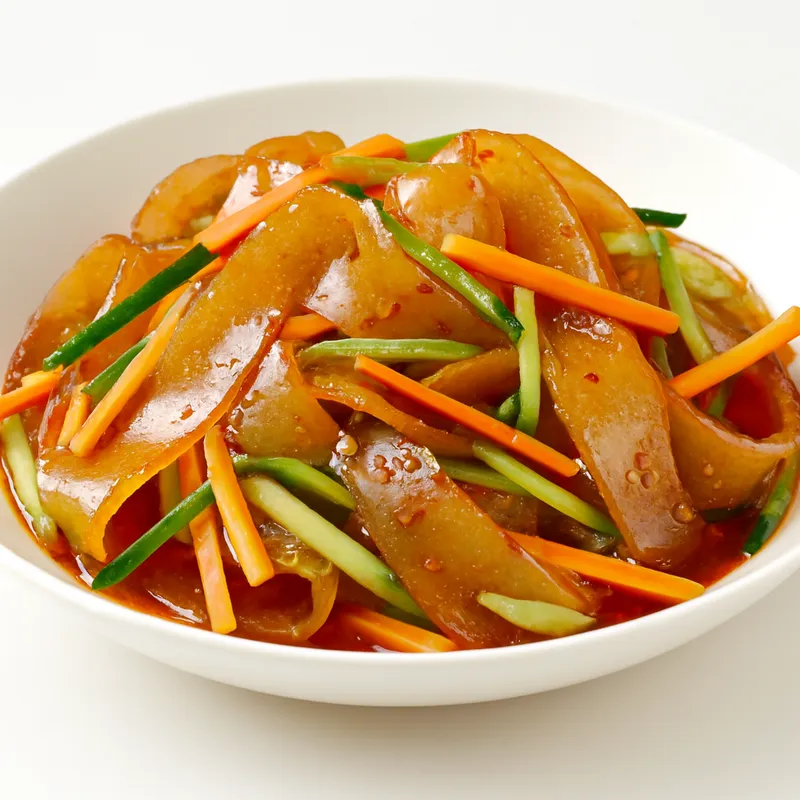
Silky potato- or mung-bean-starch sheets (modern commercial versions often use tapioca/cassava starch) tossed with crunchy vegetables and a robust sesame and chili dressing.




Liang pi (凉皮) as a category dates back to the Qin dynasty in Shaanxi, but the Dongbei version is a 20th-century adaptation: thicker sheets, more sesame-vinegar in the dressing (less chili than the western styles), and a heavier vegetable load. It became summer street food across northeast cities — Harbin, Shenyang, Changchun — by the 1980s, sold from refrigerated carts.
Liang pi as a category dates to Qin-dynasty Shaanxi, but the Dongbei adaptation is 20th-century: thicker mung bean starch sheets, sesame-vinegar heavier, less chili than western styles. Spread across Harbin, Shenyang, Changchun by the 1980s on refrigerated street carts.
Wide translucent sheets of mung bean starch, slippery and cool, cut into ribbons. Dressed with sesame paste, black vinegar, soy, garlic water, chili oil, and a heavy scatter of cucumber, cilantro, peanut. Served straight from the fridge in summer; the noodles should slide off the chopsticks if you don't grip. Vinegar comes through first, then sesame, then chili heat builds slow.
Mung bean starch sheets work because the starch is high-amylose: it sets into a clear, springy gel when chilled and won't soften in dressing for hours, unlike wheat or rice noodles which go mushy. The sheets are steamed in shallow trays floating on boiling water — flat, fast, no kneading. Substitute potato or wheat starch and you lose both the snap and the transparency.
Variations
Shaanxi original (秦镇 vs 汉中) runs chili-oil dominant and is rice-based (秦镇 rice noodle / 汉中 rice sheet); the wheat-based branches are different styles (麻酱凉皮, 岐山擀面皮); Sichuan 凉面 leans peanut-sesame; Korean Yanbian-influenced 朝鲜冷面 in Yanji uses buckwheat noodles in cold beef broth — same cold-summer logic, different starch.
On the Palate
Where Dongbei Cold Skin Noodle Salad sits in the Chinese flavor cloud
Ingredients



How it's made
5 steps · 16 min
- 13 min
Bring a pot of water to a rolling boil. Add mung bean starch sheets and cook for 2 minutes until just tender. Drain and rinse under cold water to stop the cooking process.
Watch outSheets just tender at 2 minutes, then straight under cold running water — the cold set is what gives the bite.
- 25 min
Julienne the cucumber and carrot into thin matchsticks. They should be crisp and vibrant, adding a fresh crunch to the salad.
Watch outMake sure to cut the vegetables uniformly to ensure even texture and presentation.
- 33 min
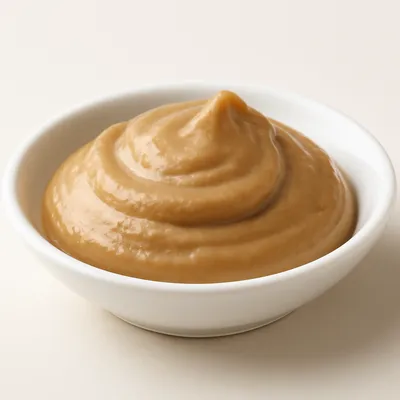
In a large bowl, combine sesame paste, vinegar, minced garlic, and chili oil. Stir until smooth and well blended. The aroma should be nutty and slightly spicy.
Watch outStir the dressing until it's smooth and pourable and smells nutty-spicy; grainy paste won't coat.
- 44 min
Add the cooled noodles, cucumber, and carrot to the bowl. Toss everything together gently until the noodles are well coated with the sauce and the vegetables are evenly distributed.
Watch outToss gently so the springy sheets don't tear; every strand should carry a film of dressing.
- 51 min
Serve the salad chilled, allowing the flavors to meld for a refreshing and tangy dish.