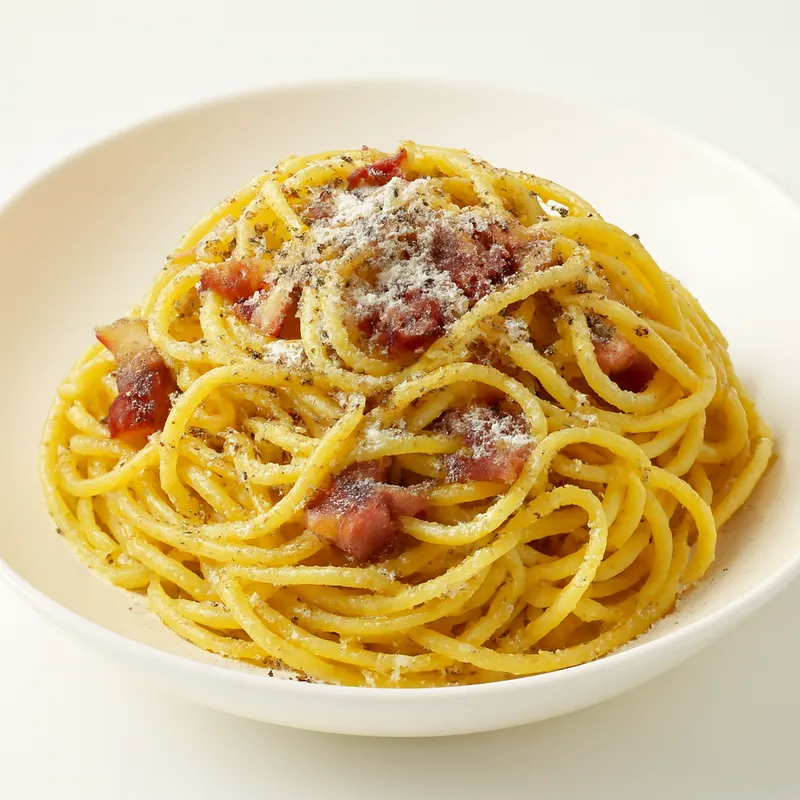
Bucatini all'Amatriciana features thick hollow pasta cloaked in a spicy, savory sauce of guanciale, tomato, and Pecorino Romano.




Born in Amatrice, a mountain town in Lazio (part of Abruzzo until 1927, when it was transferred to the newly created province of Rieti in Lazio, where it remains), as a shepherd's pasta originally without tomato — gricia, just guanciale and pecorino. Tomato entered after it reached the New World pantry in the late 18th century. Roman shepherds adopted it; the dish became a Roman fixture by the 1800s as Amatrice migrants set up trattorias in the capital.
Born in Amatrice (Lazio mountain town near the Abruzzo border) as a tomatoless shepherd dish — gricia. Tomato joined in the late 18th century; Amatrice migrants brought it to Rome. Guanciale is non-negotiable: pork cheek has roughly twice pancetta's fat ratio and a sweet, almost vanilla-edged render.
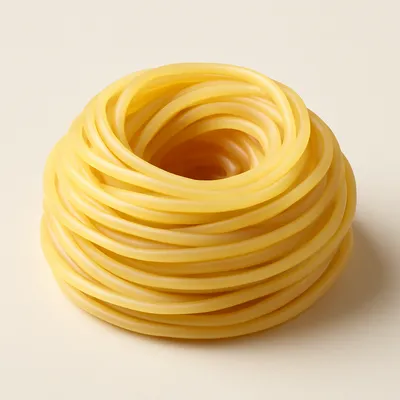
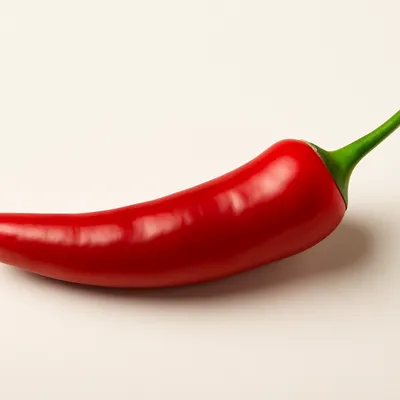
Hollow bucatini coated in an orange-red sauce thick with rendered guanciale fat. Pork-cheek crisp at the edges, soft in the middle. Pecorino Romano grated on at service. Tomato is acidic, not sweet — a hit of red chili lifts the back. Twirl it; the hollow strands trap sauce inside, which is the dish's whole point.
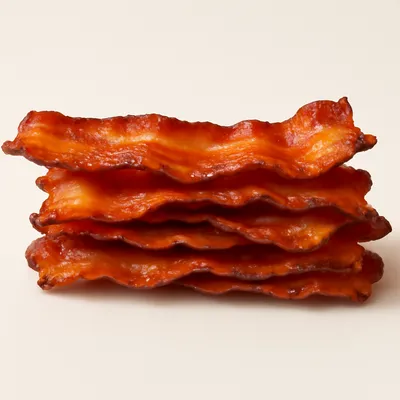
Guanciale is non-negotiable — pork cheek, not belly (pancetta), not bacon. The cheek has roughly twice the fat ratio and a different flavor from its proximity to the pig's salivary and lymph glands; rendered slowly it produces a sweet, almost vanilla-edged fat that defines the sauce. Romans will refuse to call it amatriciana otherwise. The fat carries the dish; do not drain it.
Variations
Amatrice mountain version uses spaghetti not bucatini and white wine, no onion; Roman trattorias like Roscioli run bucatini with onion and chili; Sabina-area variants add a splash of red wine and skip the chili entirely.
On the Palate
Where Bucatini all'Amatriciana sits in the Italian flavor cloud
Ingredients





How it's made
5 steps · 30 min
- 18 min
Dice the guanciale and sauté until crispy.
Watch outRender the guanciale slow over low heat until the fat runs clear and the edges crisp — that sweet melted fat is the whole sauce, so whatever you do, don't pour it off.
- 25 min
Add sliced onion and cook until translucent.
- 33 min
Stir in crushed tomatoes and a pinch of chili pepper.
- 415 min
Simmer the sauce until thickened.
- 55 min
Cook bucatini until al dente, then toss with the sauce and Pecorino Romano.
Watch outPull the bucatini a touch before al dente — it keeps cooking as you toss it in the hot sauce, and mushy pasta ruins the dish.
Archive tool suggestions — not reviewed
These legacy suggestions have not been evidence-reviewed and are not presented as required tools.