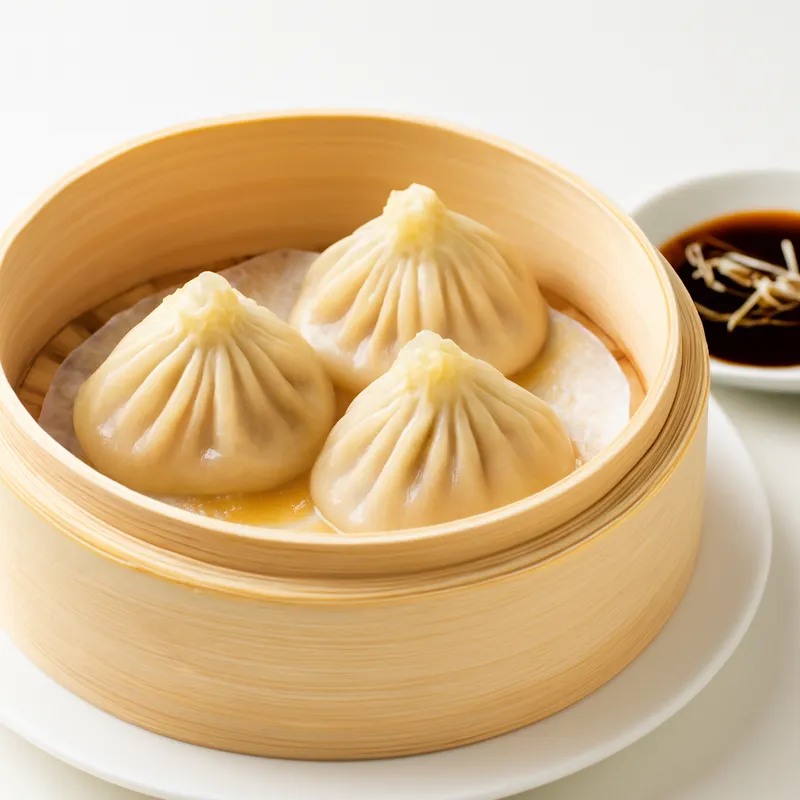
Large thin-skinned steamed dumplings filled mostly with hot pork broth — a Henan classic where you sip the soup before eating the dumpling.




Kaifeng's signature soup dumpling lineage runs through the First Tower (第一楼) restaurant, whose founder Huang Jieshan opened a bun shop in 1922 (renamed First Tower in 1933) and later perfected the form by switching from half-leavened to unleavened (dead) dough for the thinner skin. They differ from Shanghai xiaolongbao in scale: each Kaifeng guantangbao is roughly twice the size, with a thinner wrapper and proportionally far more soup, closer to Tianjin's goubuli baozi in scale than to xiaolongbao. Kaifeng was the Northern Song capital; the soup-dumpling craft traces back to that imperial-kitchen lineage.
Kaifeng's First Tower (第一楼) has made these since 1922 — twice the size of Shanghai xiaolongbao with a 1:1 aspic-to-meat ratio (Shanghai runs 1:2). Eighteen pleats spiraling to a tiny knot is the form.
The dumpling arrives in a bamboo basket the size of a small saucer, eighteen pleats spiraling to a tiny knot. You lift it on a spoon — never with chopsticks alone, the skin will tear — bite a small hole at the side, and sip the broth first. It is scaldingly hot, pork-rich, almost amber. Then eat the wrapper and meat together with black vinegar and shredded ginger. If broth pools in the basket instead of inside, the cook over-steamed.
The aspic-as-soup trick is the load-bearing technique: cold pork-skin (and often chicken) aspic is solid at room temperature, so it can be wrapped, but melts above 60°C, so during steaming it liquefies inside the sealed wrapper. Aspic-to-meat ratio is the variable — Shanghai xiaolongbao runs about 1:2, Kaifeng runs 1:1, which is why these have noticeably more soup. Hand-mince the pork instead of grinding, or the meat won't trap the soup against the skin.
Variations
Kaifeng First Tower is the bigger thinner-skinned canon; Shanghai Nanxiang xiaolongbao runs smaller and meatier; Yangzhou's crab-roe version (蟹粉灌汤包) carries roe in the aspic; Tianjin's Goubuli is closer in scale but uses raised dough, not unleavened.
On the Palate
Where Kaifeng Soup Dumplings sits in the Chinese flavor cloud
Ingredients
Serves 4




How it's made
5 steps · 1 hour
- 1240 min
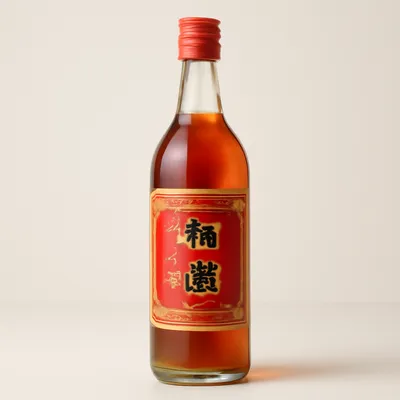
Make pork-skin aspic: simmer 300g pork skin and 200g pork knuckle in 1.5 liters water with ginger, scallion, and 30ml Shaoxing wine for 2 hours. Strain, season with salt and white pepper, pour into a tray, and refrigerate 4 hours until firmly set. Dice into 5mm cubes.
Watch outThe aspic must set firm enough to dice into clean 5mm cubes that hold their edges — if it's still jiggly, chill it longer or it won't wrap.
- 212 min
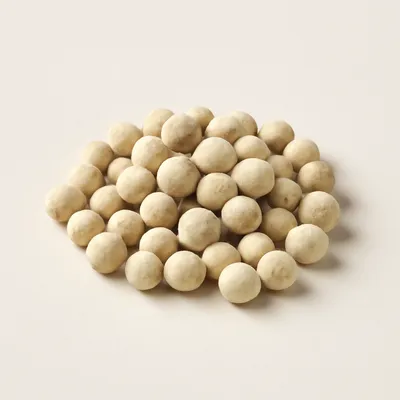
Mince 400g pork belly (30% fat) by hand, not in a processor. Mix with 30ml light soy, 10g sugar, 5g salt, 1 teaspoon white pepper, 50ml ginger-scallion water added in three additions while stirring one direction until the meat turns sticky.
- 35 min
Fold the diced aspic into the meat — equal weight of aspic to meat. Keep the mixture cold; refrigerate again if it warms above 12°C or the aspic will start releasing liquid.
Watch outKeep the filling cold to the touch — once it warms past 12°C the aspic starts weeping liquid and the meat can't hold the soup.
- 450 min
Make the dough: 300g all-purpose flour, 150ml cold water, 3g salt. Knead 12 minutes until smooth, rest 30 minutes. Divide into 24 pieces; roll each to a 10cm round with a thicker center and very thin edge.
- 510 min
Place 35g cold filling in each wrapper. Pleat tightly into 18-22 folds with a small knot at the top. Steam over high heat in bamboo baskets for exactly 8 minutes — over-steam and the soup boils through the skin.
Watch outPull them at exactly 8 minutes — the skin should be translucent and taut; a minute over and the soup boils right through the wrapper.
Archive tool suggestions — not reviewed
These legacy suggestions have not been evidence-reviewed and are not presented as required tools.