Dry-style red-curry stir-fry: red curry paste with thinly sliced pork, chicken, or firm tofu, plus yardlong beans and shredded kaffir lime leaves — no liquid, the paste coats everything.
Pad Prik King is central-Thai home-cooking common since at least the early 20th century — a way to use red curry paste without the coconut milk a full curry requires, suitable for stretching meat or feeding many. Despite the name (「stir-fried with chile-ginger」), modern recipes use red curry paste, not a separate ginger paste; the prevailing explanation is that the name signals a moderate heat — roughly "as spicy as ginger" — rather than a ginger ingredient; some also speculate it preserves the name of an older, now-disused paste formula. Common in temple-fair vendor stalls and Buddhist-vegetarian (jay) versions with tofu.
Despite the name (「stir-fried with chile-ginger」), modern recipes use red curry paste with no ginger paste. The load-bearing step is splitting the paste 2-3 minutes until oil pools red around the edges.
Visually dry — meat in mahogany-red wraps, beans in flecks of orange. First taste is curry paste in concentrated form — galangal, lemongrass, dried chile, shrimp paste — without coconut milk to soften it. Lime-leaf shreds release citrus on the chew. Yardlong beans squeak. The dish eats slow because the paste is dense; one spoon over a mound of rice goes a long way. If there's a sauce pool, the cook didn't dry-fry the paste long enough — pad prik king should never be wet.
The load-bearing step is 「splitting」 the paste — frying it in oil over medium-high heat for 2-3 minutes until the oil visibly separates around the edges and the raw smell turns toasty. Until that happens, the paste tastes raw and one-dimensional. After it splits, the oil itself becomes flavoured red oil that coats and carries every other ingredient. Second mechanism: no water. Pad prik king is texturally a coating, not a sauce, and adding water turns it into a curry — different dish.
Variations
Pad prik king moo grob uses crispy pork belly; pad prik king pla duk uses fried catfish; jay version with firm tofu is standard at Buddhist-vegetarian shops; yardlong bean is the canonical vegetable, krachai shoots replace it in season.
On the Palate
Where Pad Prik King sits in the Thai flavor cloud
Ingredients
Serves 3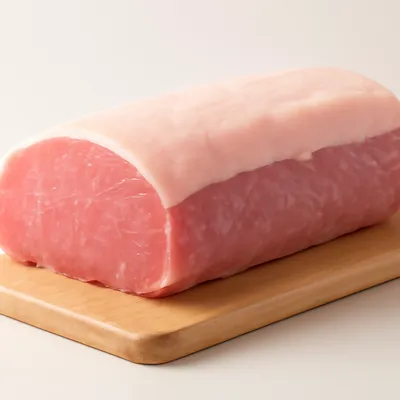



How it's made
6 steps · 18 min active + 7 min waiting
- 15 min
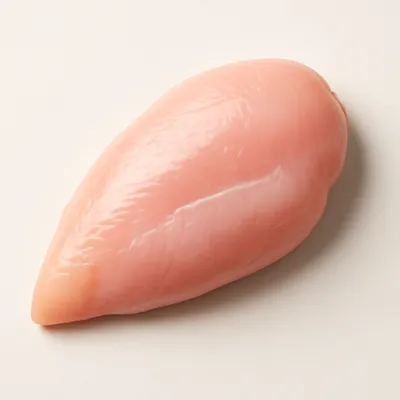
Slice 300g pork loin or chicken breast into 3mm strips against the grain. (For tofu: pan-fry 300g firm tofu in cubes until golden, then proceed.)
- 23 min
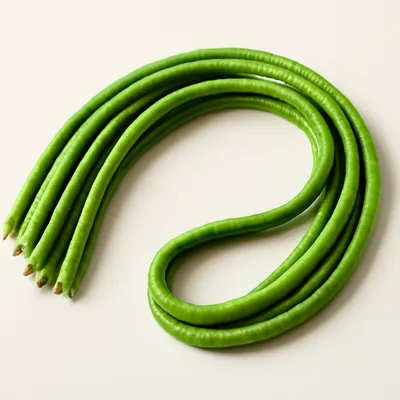
Trim 200g yardlong beans (thua fak yao — 30-40cm long beans, the right kind; green beans are a flavour-mismatched substitute). Cut into 4cm lengths.
- 34 min
Stack 6 kaffir lime leaves, roll tight, slice into hair-thin shreds. Have 3 tbsp red curry paste (nam prik gaeng phet — homemade or trusted brand) ready.
- 43 min
Heat wok over medium-high — NOT highest, the curry paste burns. 2 tbsp oil, then 3 tbsp red curry paste; fry 2-3 minutes, stirring continuously, until the paste 「splits」 — oil seeps out red around the edges and the raw garlic-galangal smell shifts to roasted.
Watch outFry the curry paste on medium-high, not the fiercest flame, 2-3 minutes until the red oil weeps out at the edges and the raw garlic-galangal smell turns toasty — that's the paste 'split'; before that it tastes raw.
- 53 min
Add protein; toss to coat in paste, 90 seconds. Add yardlong beans; toss 90 seconds — they should retain bite. Season: 1.5 tbsp fish sauce, 2 tsp palm sugar, no water. The dish stays dry.
Watch outToss the beans just 90 seconds so they keep their snap, and add no water at all — this dish is a dry coating; a splash of water and it slides into curry, a different thing entirely.
- 60 min
Off heat, fold in kaffir lime shreds. Plate over jasmine rice. The plate should look 「dry-glossed」 — every piece of meat coated in red paste, no pool of liquid underneath.