
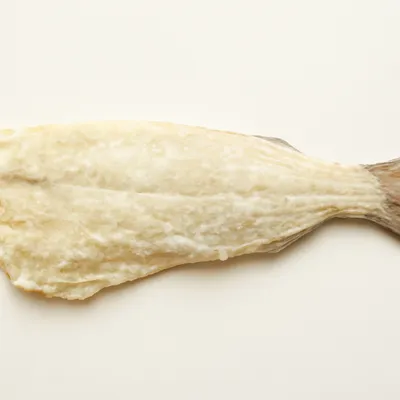


A 19th-century Bilbao invention from the city's salt-cod kitchens — Basque ports kept Atlantic dried cod long before refrigeration, a legacy of the medieval Basque whaling and Newfoundland fisheries. The pil-pil onomatopoeia mimics the sound of the swirling oil in the cazuela. The dish entered restaurant culture through 19th-century Bilbao taverns and became codified as one of the four Basque grandmother sauces alongside salsa verde, vizcaína, and tinta.
Salt cod, garlic, olive oil, dried chile, the cook's wrist. Mechanical magic — gelatin from the cod's skin doing all the work.
Pearly cod under a glossy lemon-yellow sauce that clings like loose mayonnaise. The fish breaks into thick translucent flakes; the sauce tastes of olive oil, garlic, and the sea — no cream, no flour, just emulsified gelatin. The chile is a slow back-warmth. Drag bread through the cazuela. A failed pil-pil reads as a pool of oil with cod sitting in it — the sauce should be opaque and spoon-coating, never broken.
The emulsion is gelatin-driven, not yolk-driven. Salt cod skin releases collagen that hydrolyses into gelatin in warm oil; gelatin molecules wrap oil droplets and lock them in suspension when mechanically agitated. Two non-negotiables: oil temperature stays under 80°C (hotter denatures the gelatin chains and the sauce will never bind), and the swirling is gentle and circular — never whisked. If broken, a teaspoon of warm water restarts it by giving the gelatin chains a hydration anchor.
Variations
Bacalao a la vizcaína thickens with pepper-and-tomato sauce; al ajoarriero scrambles with tomato and pepper; al klub-fish adds onion-tomato.
On the Palate
Where Bacalao al Pil-Pil sits in the Spanish flavor cloud
Ingredients
Serves 4How it's made
6 steps · 35 min active + 1 day 23 hours 25 min waiting
- 15 min
Soak 800g salt cod loins (bacalao, skin on) in cold water in the fridge for 36-48 hours, changing water 3-4 times. Final water should taste only mildly salty. Pat dry; pull out any pin bones with tweezers.
Watch outSkin must stay on — it carries the gelatin that drives the emulsion.
- 25 min
In a wide earthenware cazuela or heavy skillet, warm 300ml extra-virgin olive oil over low heat with 4 sliced garlic cloves and 2 dried guindilla or cayenne chiles. Fry until garlic is pale gold, 3-4 minutes; lift out garlic and chile and reserve.
Watch outGarlic must not brown — bitter oil will not emulsify cleanly.
- 318 min
Cool the oil to about 70°C — touchable for a second. Lay the cod skin-side down in a single layer. Poach barely trembling, 8-10 minutes per side, never letting the oil simmer. Tiny pearls of gelatin will rise from the skin into the oil.
Watch outBubbles bigger than a pinhead means the heat is too high — pull the pan off.
- 42 min
Lift the cod onto a warm plate. Pour the oil into a jug, leaving the milky-white gelatin at the bottom of the cazuela. Set the cazuela off heat.
- 55 min
Hold the cazuela by both handles and swirl in a slow circle while drizzling oil back in a thin stream. After 2-3 minutes the gelatin and oil bind into a pale-yellow cream — the pil-pil. Continue until all oil is absorbed and the sauce coats the spoon.
Watch outIf it refuses to bind, add 1 tbsp warm water and keep swirling — water bridges the proteins.
- 62 min
Slip the cod back in, skin down. Warm gently for 1 minute, basting. Scatter the reserved garlic slices and chile over. Serve in the cazuela, country bread alongside.
Archive tool suggestions — not reviewed
These legacy suggestions have not been evidence-reviewed and are not presented as required tools.
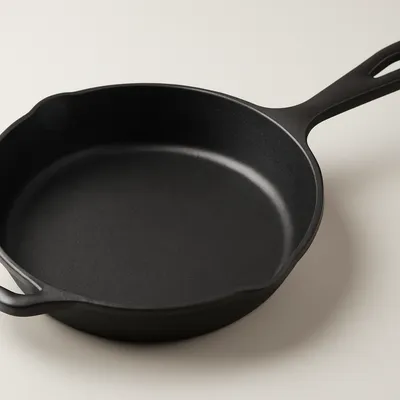
A heavy, single-piece cast iron pan, 25-30 cm across, weighing 1.5-2.5 kg. Once preheated, the thick mass holds 230°C+ even when a cold steak hits the surface — that's the secret to a deep crust. A well-seasoned skillet (multiple thin layers of polymerized oil baked into the iron) is essentially nonstick, gets better with use, and lasts a century. Lodge skillets from Tennessee have been in continuous production since 1896.

A round, shallow, glazed terracotta dish, 18-30 cm across with sloping walls, used for tableside-served Spanish tapas — gambas al ajillo, almejas a la marinera, callos, fideuà. Clay's slow heat retention keeps olive oil at the perfect 80-90°C garlic-confit zone for prawns without scorching, and the wide shallow profile lets liquids reduce while keeping protein lightly moored at the bottom.


