Late 1800s NYC, where it descends from German immigrant baking — the related German Amerikaner cookie has a similar form but only chocolate icing. The two-tone version codified at NYC Jewish bakeries and delicatessens; Glaser's Bake Shop on the Upper East Side (1902-2018) was a long-running canonical source. Hudson Valley calls a similar cookie 'half-moon' with a buttercream rather than fondant icing — same idea, different family tree.
Late-1800s NYC, German immigrant baking — the related Amerikaner cookie has only chocolate icing. Glaser's Bake Shop on the Upper East Side (1902-2018) was a long-running canonical source. Larry David used it as a model for racial harmony in a 1994 Seinfeld episode — that's the cultural footprint.
A 10cm pale yellow disc, palm-sized, glossy on top with a clean line down the middle dividing white and dark brown. Crumb is soft and fine — closer to vanilla cake than to a sandy butter cookie. Lemon and vanilla on the white side, slightly bitter cocoa on the dark. Fondant is firm enough to hold the line but melts on the tongue. Jerry Seinfeld held one up as a model for racial harmony — 'look to the cookie' — in a 1994 Seinfeld episode ('The Dinner Party').
The cookie itself is a drop-cake batter — high enough liquid that it bakes into a soft cakey crumb rather than a crisp cookie. The trick is icing the flat baked bottom, not the rounded top — the bottom is the smooth canvas. Fondant (sugar + water + corn syrup) sets to a firm matte finish; royal icing would be too brittle, buttercream too soft to hold the divide. The line down the middle has to be applied separately for each side or the colors will bleed.
Variations
Glaser's (East 87th, 1902-2018) was the gold standard; William Greenberg Jr. Desserts (UES) is the surviving classic; Hudson Valley calls a similar disc 'half-moon' with buttercream rather than fondant; Zaro's runs the supermarket-airport version.
On the Palate
Where Black & White Cookie sits in the American flavor cloud
Ingredients
Serves 12







How it's made
6 steps · 40 min active + 50 min waiting
- 18 min
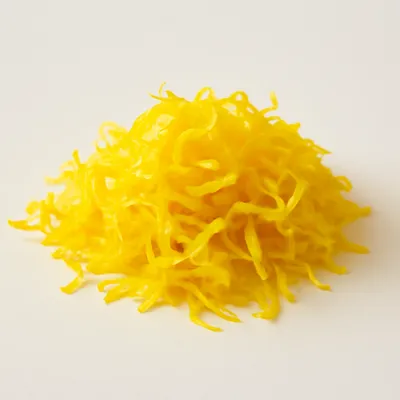
Cream 170g unsalted butter with 250g sugar 4 minutes until pale. Add 2 large eggs one at a time, 1 tsp vanilla, 1 tsp lemon zest. Beat smooth.
Watch outLemon zest is non-negotiable — it's the bright note that keeps the cookie from tasting like flat cake.
- 25 min
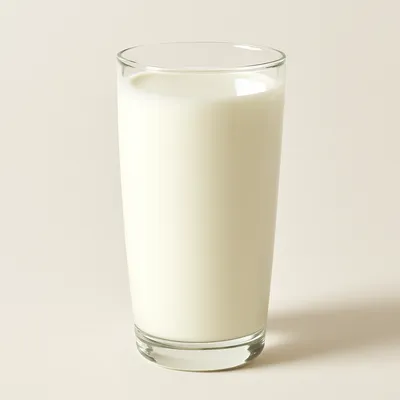
Whisk 380g cake flour, 1 tsp baking powder, 0.5 tsp salt. Alternate adding flour mixture and 240ml whole milk to the butter base in 3 batches, ending with flour. Stop when just combined.
- 38 min
Scoop 80g portions onto parchment-lined sheets, spaced 6cm apart. Smooth tops with a wet spoon — these are flat-bottomed disc cookies, not domed.
- 450 min
Bake at 350°F (175°C) for 18-20 minutes until edges are pale gold and centers spring back. Tops should stay almost white. Cool completely on a rack — 30 minutes.
Watch outBrowning the tops is a fail — these cookies are pale by design and need a smooth flat surface for the icing.
- 512 min
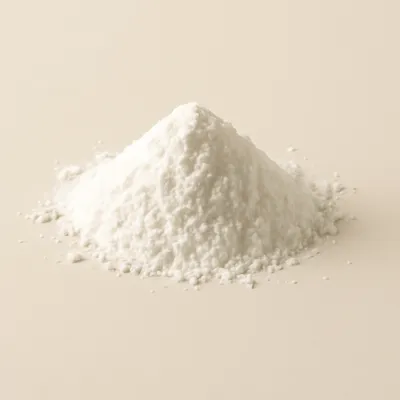
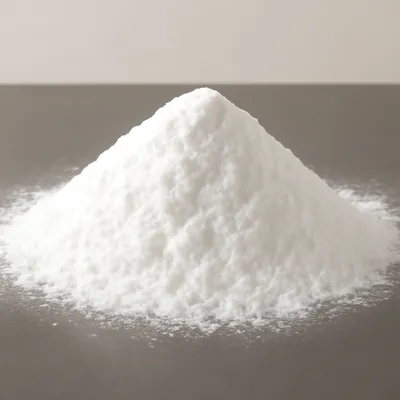
Make vanilla fondant: whisk 300g powdered sugar with 60ml hot water, 1 tbsp light corn syrup, 0.5 tsp vanilla — should ribbon thickly. Flip cookies upside-down (frost the flat bottom). Coat half of each cookie with vanilla fondant using an offset spatula. Set 15 minutes.
Watch outIced bottom-up, not top-up — the flat baked underside is the canvas, the rounded top is the back.
- 610 min
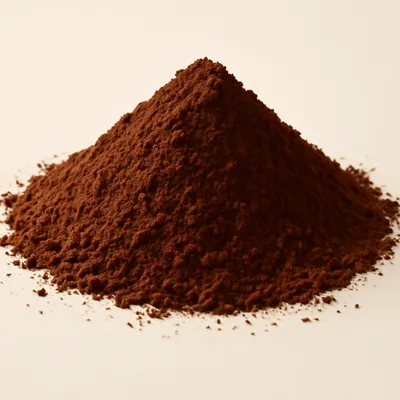
Stir 30g cocoa powder and 30g melted dark chocolate into the remaining fondant; thin with hot water if stiff. Coat the other half of each cookie. Set 30 minutes uncovered before stacking.
Archive tool suggestions — not reviewed
These legacy suggestions have not been evidence-reviewed and are not presented as required tools.