A dense Mexican baked custard built on condensed milk, evaporated milk, cream cheese, egg yolks, and vanilla, set over caramel in a bain-marie until just trembling — heavier and sweeter than Spanish flan, lighter than dulce de leche.



Flan reached Mexico from Spain in the colonial period, and that earlier version is still made — eggs, milk, sugar, vanilla, baked. Flan napolitano is a 20th-century Mexican variant whose name has nothing to do with Naples — it likely refers to «napolitano» in the Mexican-Spanish sense of «layered/striped», or to evaporated- and condensed-milk products marketed under «Napolitano» in mid-century Latin America. The cream cheese is the giveaway: it appears only after Philadelphia-brand cream cheese was widely sold in Mexico, post-1950s. It is now the default flan at Mexican family birthdays.
Not from Naples — the name reads as «layered/striped» in mid-century Mexican-Spanish. Cream cheese is the giveaway: it appears only after Philadelphia hit Mexican shelves post-1950s. Condensed (60% water removed) plus evaporated (50%) plus Philadelphia gives a tighter set than any Spanish flan.
Slice and the wedge holds its angle for a second before slumping under its own weight — much denser than a French crème caramel, almost cheesecake-firm but not grainy. The first bite is sweet caramel, then condensed milk's cooked-milk depth, then a low background tang from cream cheese that keeps it from being one-note sugar. Cold from the fridge, on a plate flooded with bittersweet caramel sauce. The Mexican vanilla aroma should be obvious — it's the load-bearing flavour.
What makes flan napolitano denser and creamier than its Spanish parent is the swap-out: instead of fresh whole milk it uses condensed milk (which has lost 60% of its water) plus evaporated milk (lost 50%) plus cream cheese. The total water is much lower and the milk-protein and milk-sugar concentration much higher, giving a tighter set and a deeper cooked-milk flavour. Cream cheese contributes both fat and the trace acidity that prevents the custard from reading as cloyingly sweet. Bain-marie at 160°C keeps egg yolk proteins from curdling — go above 80°C internal and you get grainy weeping flan.
Variations
Yucatán flan de queso pushes the Philadelphia harder; Puebla flan de cajeta uses goat-milk caramel; Veracruz substitutes coconut milk for evaporated; the original Spanish flan (whole milk, no cream cheese) is still made and is a different texture entirely.
On the Palate
Where Flan Napolitano sits in the Mexican flavor cloud
Ingredients
Serves 6


How it's made
6 steps · 30 min active + 5 hours 30 min waiting
- 110 min
Heat oven to 160°C. Bring a kettle of water to a boil for the water bath. Set a 22cm round flan mould or 6 individual ramekins ready, plus a deep roasting tin big enough to hold them.
- 28 min
Make the caramel: in a heavy small pan combine 200g sugar with 3 tbsp water, swirl (do not stir) over medium heat 6-8 minutes until the sugar melts and turns deep amber, the colour of strong tea. Immediately pour into the mould and tilt to coat the bottom and lower 2cm of the sides. Set aside — the caramel hardens to glass.
Watch outStir caramel and it crystallises back to white grit — only swirl. Pour the moment it hits dark amber, it darkens further from residual heat.
- 34 min
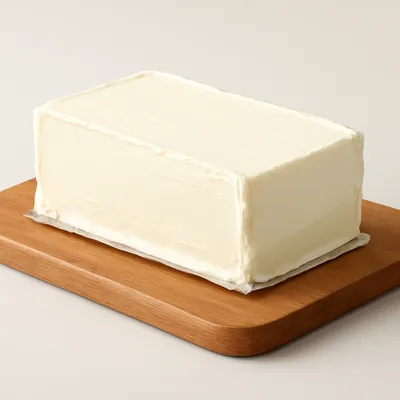
In a blender combine 1 can (397g) sweetened condensed milk, 1 can (354ml) evaporated milk, 100g room-temperature cream cheese, 4 whole eggs, 2 extra egg yolks, 2 tsp vanilla extract (Mexican preferably), and a pinch of salt. Blend on low for 60 seconds — you want it smooth but not aerated.
Watch outBlending high creates foam that bakes into bubble holes — low speed, just until smooth.
- 44 min
Pour the custard through a fine sieve over the set caramel — the sieve catches any chalazae or unblended cheese. Cover the mould tightly with foil. Place in the roasting tin and pour boiling water around it to come halfway up the sides.
Watch outLoose foil lets steam in and pocks the surface — seal it tight.
- 565 min
Bake 60-70 minutes. Test by jiggling: the centre should wobble like jelly, not slosh like liquid. Internal temperature 78-80°C. Pull from the water bath, cool to room temperature 1 hour, then refrigerate at least 4 hours, ideally overnight.
Watch outOverbaked flan is grainy and weeps — pull at the wobble, residual heat finishes it.
- 63 min
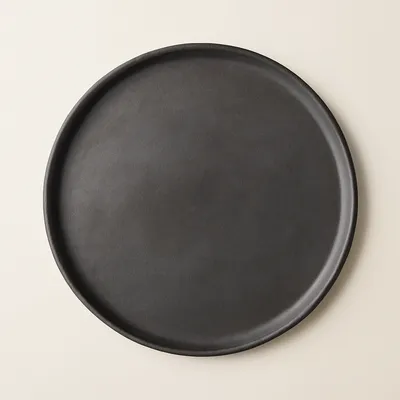
To unmould: run a thin knife around the edge. Set a rimmed serving plate on top, hold tightly together, invert in one smooth motion. Lift the mould — the caramel should pool around the flan as a brown sauce. Cut into wedges with a hot wet knife.
Watch outIf the caramel doesn't release, dip the mould bottom in hot water 30 seconds then re-invert.
Archive tool suggestions — not reviewed
These legacy suggestions have not been evidence-reviewed and are not presented as required tools.