
Calabrian Pizzo-village frozen dessert — a hollow ball of chocolate and hazelnut gelato hand-formed around a heart of liquid chocolate, dusted with cocoa powder, served at room-temp on a paper doily — a 1950s confection from the Calabrian coastal town of Pizzo.



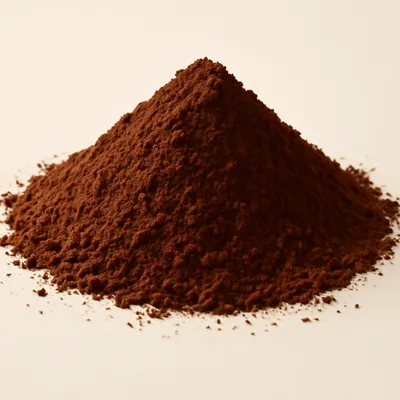


Tartufo di Pizzo (or 'truffle of Pizzo') was invented in 1952 by Don Pippo De Maria, owner of Bar Dante in the coastal town of Pizzo Calabro. He created the dessert for a society wedding when his ice cream supply ran out and he had to improvise: he hand-rolled balls of mixed chocolate and hazelnut gelato around a small pool of melted chocolate, then froze them and dusted with cocoa. The dessert was a hit; by the 1960s every Pizzo café was making it. The Tartufo di Pizzo is widely reputed as the first European ice cream awarded protected geographical-indication (IGP) status, tying the name to traditional Pizzo production; note that Italian Wikipedia disputes whether it ever actually obtained the EU mark, listing it only among regional traditional products (P.A.T.). The official recipe specifies hand-formed (not molded), molten chocolate heart, dusted in cocoa, no chocolate shell. Today every Pizzo café competes for the best tartufo; locals can identify which café made which tartufo by texture and chocolate-heart proportions.
The waiter delivers a brown irregular sphere dusted in cocoa, on a paper doily, with a small fork. Cut into it — and a warm river of dark chocolate oozes out from the center, contrasting with the cold gelato outside. The first bite is a layered shock: cold cocoa-dust → cold chocolate gelato → cold hazelnut gelato → warm molten chocolate. The two gelatos are distinct yet blend on the tongue. The liquid heart is the trick that makes tartufo more than just gelato — it's a temperature and texture surprise that 70-year-old Calabrian grandmothers still marvel at. The paper doily is non-negotiable; without it the dessert feels naked.
The hand-forming (not molding) is part of the dessert's identity — irregular spheres are canonical, perfect spheres are 'tourist' versions. The cocoa-dust coating creates a slight bitter shell that contrasts with the sweet interior. The molten chocolate heart works because pure chocolate at room temp is liquid but stays partially-solid when frozen briefly; warming 5 min at serving brings it back to flowing state without melting the surrounding gelato. The two gelato flavors (chocolate + hazelnut) are essential — single-flavor tartufo loses the dialogue between bitter chocolate and sweet hazelnut.
Variations
Pizzo PGI canonical: chocolate + hazelnut gelato + liquid chocolate center + cocoa dust, hand-formed; Pizzo modern variants include pistachio + chocolate or strawberry + chocolate (the bar in Piazza della Repubblica famously offers 12 flavors); supermarket tartufo sold outside Calabria is mass-produced and lacks the molten heart (it's solid chocolate inside); a 'tartufo bianco' variant uses vanilla and dark chocolate; the molten heart is the canonical signature — without it, it's just a chocolate gelato ball.
On the Palate
Where Tartufo di Pizzo sits in the Italian flavor cloud
Ingredients
Serves 6
How it's made
6 steps · 1 hour active + 4 hours waiting
- 1262 min
Make chocolate gelato: in a saucepan, warm 500ml whole milk + 200ml heavy cream + 130g sugar over low heat. Whisk in 50g cocoa powder + 100g chopped dark chocolate (70%) until smooth and chocolate is melted, 8 min. Pour into a bowl; cool to room temp. Refrigerate 4 hours minimum. Process in ice cream maker per manufacturer instructions (about 25 min). Transfer to freezer; freeze 30 min until firm but scoopable.
- 2240 min
Make hazelnut gelato (or buy quality hazelnut gelato): in a separate saucepan, warm 500ml whole milk + 200ml heavy cream + 130g sugar + 150g hazelnut paste (or 200g toasted hazelnuts blended smooth) over low heat, 8 min. Cool; chill; churn; freeze.
- 317 min
Make liquid chocolate heart: melt 100g dark chocolate (70%) with 50ml heavy cream + 1 tbsp butter in a double-boiler until smooth. Stir in 1 tbsp dark rum (optional, traditional). Cool to body temp but still pourable. Pour into 6 small ice cube tray cells (about 1 tbsp each); freeze 15 min — just until firm enough to handle but still soft inside.
Watch outFreeze the chocolate hearts just until they hold their shape but stay soft inside — freeze them solid and they won't ooze at the table.
- 415 min
Form tartufi: prepare 6 squares of parchment (15cm). Working quickly with cold tools, scoop a generous golf-ball-sized lump of chocolate gelato in one hand (use a damp cloth or gloved hand). Flatten slightly; place one frozen chocolate-heart cube in the center; cover with another scoop of hazelnut gelato. Press gelatos together, sealing the heart inside. Roll between palms to form an irregular ball about 7-8cm diameter (the irregularity is canonical — molded perfect spheres are wrong).
Watch outRoll it into a rough, lumpy ball with your palms — the irregular shape is the real thing; a smooth molded sphere is the tourist version.
- 565 min
Roll each tartufo gently in cocoa powder + a touch of granulated sugar to coat completely. Place each on a paper doily on individual serving plates. Freeze 1 hour to set firm. Just before serving, let warm 5 min at room temp.
- 66 min
Serve: each tartufo on a paper doily, individual plate, with a small fork or spoon. Cut into the ball at the table — the liquid (slightly warmed) chocolate heart will ooze out. Eat with bites that include outside cocoa, two gelato flavors, and the molten chocolate center together. Pair with a small glass of Cirò passito (sweet dessert wine) or strong espresso.
Watch outLet it sit 5 min at room temp before serving — cut in too cold and the center is still set, not the molten heart you're after.
Archive tool suggestions — not reviewed
These legacy suggestions have not been evidence-reviewed and are not presented as required tools.

Hand-held wire loop tool for beating eggs, whipping cream, emulsifying dressings, and incorporating air into batters. Balloon whisks (large round head) for whipping cream and meringues; French whisks (narrow tear-drop) for sauces in pots; flat whisks (gravy) for pan sauces. Stainless steel is universal; silicone-coated for non-stick pans.

Round metal pot, 14-26 cm diameter, with vertical walls and a long handle, designed for sauces, soups, oatmeal, rice, boiled vegetables. The vertical walls minimize evaporation (vs. a sauté pan). Sizes: 1 qt for melting butter, 2-3 qt for sauces, 4 qt for soups. Stainless-steel-clad aluminum or copper is best for conduction; cast-iron is too thick for delicate sauces.


