
Uganda's national dish — green East African Highland cooking bananas (matoke) peeled, wrapped in banana leaves, steamed 2-3 hours, then mashed into a dense pale-gold mound. Slightly sweet, gently savory, the canvas for groundnut sauce, beef stew, smoked fish, or chicken luwombo. The Buganda kingdom centerpiece eaten with the right hand.

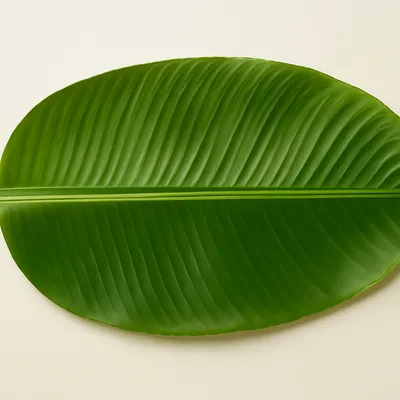

Matoke comes from the Buganda kingdom of central Uganda, where the East African Highland banana has been cultivated for over a thousand years. Kampala's Owino market and rural Mpigi farms move tonnes of matoke daily. The banana-leaf-steam-and-mash technique is unchanged for centuries: peel green bunches, wrap tightly, steam over hot water for 2-3 hours, then mash with a wooden pestle. Matoke is so identified with Uganda that the country's GDP literally tracks banana production.
Pinch off a piece of warm matoke from the mound — pale-gold, soft, slightly stringy, gently sweet from the steamed banana sugars. Press into a thumb-well, scoop up groundnut sauce or a chunk of beef stew. Bite: the matoke is mildly sweet (the steam locks in the natural banana sweetness), the sauce coats it richly, the texture is dense-yielding. Less starchy than fufu, less sweet than ripe plantain — its own thing. The Buganda Sunday meal in one mouthful.
Steaming (not boiling) inside banana leaves traps the matoke's natural moisture and aromatic compounds (esters from the banana skin) inside the bundle, creating the characteristic gentle floral aroma. The 2+ hour steam fully gelatinizes the matoke's starch (50% starch by weight when green) without leaching out flavor. Hand-mashing preserves some texture; the wooden pestle adds traces of wood aromatics. Salt is added to balance the sweetness.
Variations
Mashed-with-beans matoke combines the matoke with stewed red beans for a complete vegetarian meal. Katogo (breakfast version) cooks matoke with offal or beans in one pot. Western Uganda style mashes matoke with avocado for a creamy finish. Diaspora version uses plantains and pressure-cooks 25 min. Fancy restaurant version serves matoke as small quenelles with charred onion.
On the Palate
Where Matoke sits in the Ugandan flavor cloud
Steam the peeled bananas wrapped tight in leaves for two-plus hours rather than boiling them — the sealed steam keeps the moisture and floral aroma inside and fully softens the starch, whereas boiling leaches the flavour straight out.
Ingredients
Serves 6How it's made
9 steps · 30 min active + 1 hour waiting
- 14 min
Acquire 12 green East African Highland cooking bananas (matoke). Substitute: very green large plantains.
- 212 min
Peel each banana — score the skin lengthwise and pull off in 3-4 strips. Rinse the peeled fingers.
- 34 min
Line a deep steamer or pot with 8-10 large banana leaves (or substitute aluminum foil).
- 45 min
Pile the peeled matoke fingers in the center of the leaves. Sprinkle with 1 tsp salt. Wrap the leaves tightly into a bundle.
Watch outWrap the leaves into a tight bundle before it goes over the water — a loose parcel lets the steam and aroma escape.
- 53 min
Place the bundle in a steamer basket over 4 cm of boiling water. Cover tightly.
- 6130 min
Steam 2-2.5 hours, replenishing water every 30 min. The bananas will turn from pale-green to pale-yellow.
Watch outAs it steams, the bananas shift from pale green to pale yellow; top up the water every 30 minutes so it never runs dry.
- 74 min
Unwrap the bundle. The matoke should be soft enough to pierce with a fork.
- 88 min
Mash with a wooden pestle (or potato masher) into a smooth-but-textured mound. Some prefer a little chunkiness.
Watch outMash while piping hot into a smooth-but-textured mound; some cooks leave it a little chunky on purpose.
- 93 min
Plate as a mound. Serve hot with groundnut sauce (binyebwa), beef stew, or smoked tilapia on the side. Eat with the right hand.


