
A flaky, sesame-crusted baked shaobing from the town of Huangqiao in Taixing, Taizhou, Jiangsu. The wheat dough is laminated with an oil-and-flour paste for many short, crisp layers, brushed with malt-sugar syrup, crusted with peeled white sesame, and traditionally baked stuck to the inner wall of a charcoal drum oven until crab-shell gold. It is made in both sweet styles (sugar, sweet osmanthus-and-sugar, red-bean paste) and savory ones (scallion-and-lard, ham, crabmeat-and-pork, radish, shrimp-and-chive). The pastry far predates 1940, but the Battle of Huangqiao that October made it nationally famous: townspeople baked and carried shaobing to the front to support the New Fourth Army, and a folk song commemorates it.



Huangqiao sesame shaobing is a specialty of Huangqiao, a town in Taixing under Taizhou, Jiangsu. Its exact beginnings are unrecorded — local sources state plainly that there is no written record of when it first appeared — but the baked sesame shaobing clearly predates 1940 and grew out of the older Jianghuai tradition of 'rubbed-pastry cakes' and sesame cakes. What carried its name across China is the Battle of Huangqiao (the Huangqiao Decisive Engagement) of October 1940. During the climactic fighting of 4–6 October, the New Fourth Army under Chen Yi and Su Yu, with some 7,000 troops, defeated a far larger force under Han Deqin; the people of Huangqiao kept the mills and shaobing ovens of the town running day and night and carried the cakes to the front lines to feed the soldiers. That autumn the army's field service troupe wrote 'The Song of Huangqiao Shaobing' (words by the martyr Li Zengyuan, music by Zhang Mei), opening 'Huangqiao shaobing, golden and gold…,' which praised the bond between the army and the people; it was later admired by Chen Yi and is still sung. The shaobing thus became a lasting symbol of that battle, and its making is recognized as Taizhou municipal intangible cultural heritage.
Press the top and the sesame-studded crust crackles and sheds fine flakes; bite in and the wall gives way in many thin, short, dry layers rather than one chewy crumb. The peeled white sesame on top is toasted and nutty, the surface lacquered faintly sweet by the malt-syrup brush. A sweet one runs molten sugar or fragrant osmanthus-sugar inside; a savory one is layered with scallion and lard, or ham and crabmeat-and-pork, salty and rich against the plain shell. Made fresh it is crab-shell gold, crisp on both faces, short and dry to the tooth, neither scorched nor greasy.
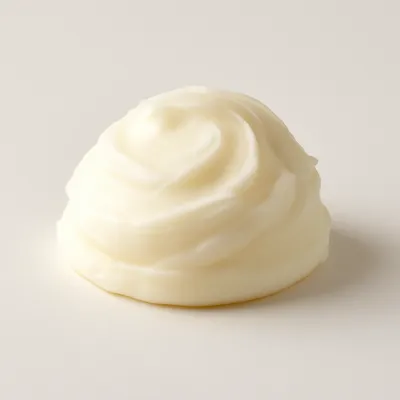
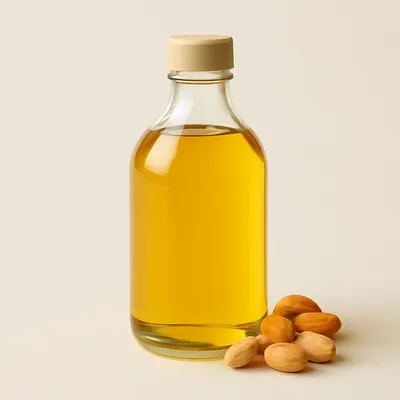
The flakiness comes from lamination of two doughs. A water dough of wheat flour develops gluten and stays stretchy; a short paste — flour rubbed with lard (and often peanut oil) — has no water and no gluten network. The short paste is wrapped inside the water dough, then rolled out and rolled up, repeatedly, so the fat keeps the sheets of gluten apart in many alternating layers. In the oven the water in the dough flashes to steam and pushes those layers apart while the fat fries and crisps each one, setting them dry and separate — that is the short, shattering flake; too little fat or over-kneading lets the layers fuse into something tough, while too much heat or oil leaves it greasy or scorched. Before baking the top is brushed with maltose syrup and pressed into peeled white sesame: the sticky sugar glues the seeds on and, being a reducing sugar, browns readily in the heat to lacquer the crust gold and carry the toasted-sesame aroma. Traditionally the raw cake is slapped onto the inner wall of a charcoal drum oven, where fierce radiant and convective heat from the fire below bakes it fast and dry, browning both faces.
Variations
Huangqiao shaobing is split into sweet and savory lines. Sweet fillings include plain sugar, osmanthus-and-white-sugar with sesame, nut-and-lard sugar, red-bean paste, and lotus-seed paste; savory ones include scallion-and-lard, ham, crabmeat-and-pork, lard-and-shredded-radish, and shrimp-and-chive, with newer kinds such as pork floss and sausage. Shape sometimes tracks filling — round for savory, longer for sweet in some shops. It belongs to a wide family of Chinese baked sesame cakes; the long, sweet, sugar-and-sesame Suzhou-style 'crab-shell yellow' (xiekehuang) is a close cousin built on the same oil-pastry lamination. Today, beyond the fresh charcoal-oven cakes, vacuum-packed Huangqiao shaobing are sold as a regional gift and souvenir food.
On the Palate
Where Huangqiao Sesame Shaobing sits in the Chinese flavor cloud
Ingredients
Serves 6


How it's made
8 steps · 50 min active + 40 min waiting
- 125 min
Make a water dough: mix wheat flour with warm water (and a little lard) into a smooth, elastic dough and rest, covered, about 20 minutes.
- 210 min
Make the short paste: rub wheat flour together with lard (and a little peanut oil) into a soft, lump-free paste; rest it covered while the dough relaxes.
Watch outRub the lard into the flour to a smooth, lump-free paste — lumps break the lamination and the crust won't shatter into fine flakes.
- 310 min
Prepare fillings: a sweet sugar or osmanthus-sugar-and-sesame filling, and a savory scallion-and-lard or ham filling.
- 412 min
Wrap a portion of short paste inside each piece of water dough, then roll out flat and roll up; repeat the roll-out and roll-up once or twice to build the layers.
Watch outRoll and roll up gently to build layers without tearing the water dough — burst through and the fat leaks and the flakes fuse solid.
- 58 min
Flatten each laminated piece, enclose the filling, seal, and press gently into a round (or oval) cake.
- 66 min
Brush the tops with maltose syrup and press the cakes face-down into peeled white sesame so the seeds stick.
- 718 min
Bake hot, sesame-side up, until the crust is crab-shell gold and crisp and the layers are set and dry — traditionally stuck to the wall of a charcoal drum oven, or on a tray in a very hot oven.
Watch outBake hot until the crust is crab-shell gold and the layers set dry and crisp — pull it pale and the flakes stay damp and soft.
- 81 min
Serve fresh and hot while the crust still crackles.
Archive tool suggestions — not reviewed
These legacy suggestions have not been evidence-reviewed and are not presented as required tools.


