
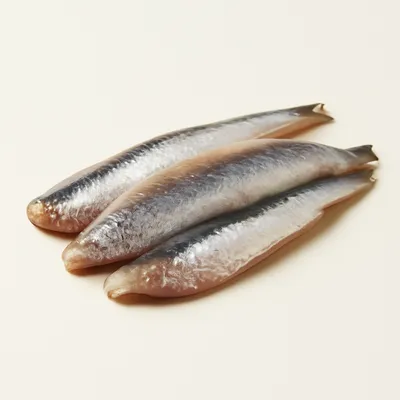
Salt-matured Cantabrian anchovies from Santoña, on the northern coast of Cantabria. Spring-caught European anchovies (Engraulis encrasicolus) are layered with coarse salt and pressed for six months or longer, then washed, hand-filleted, deboned, and packed in olive oil. The result is a firm, deep-red fillet eaten as a tapa on bread or with butter, not a sharp brined anchovy. Quality is graded by fillet size, from 00 down.



The salt-maturing method is not native to Cantabria but Italian. From the 1880s, salters from Sicily and the Campanian coast (towns such as Cetara) settled in Santoña, drawn by the abundant anchovy of the Cantabrian Sea, which local fishermen had previously used mainly fresh or as bait. The Sicilian Giovanni Vella is widely credited with refining the boneless fillet-in-oil format around 1883. Santoña itself carries no protected designation; the relevant guarantee is the collective mark Anchoa del Cantábrico, registered in 2004 to certify Cantabrian Sea origin and local processing.
A single fillet is firm and meaty, not mushy, deep mahogany-red with a clean line where the bone was lifted out. The flavour is savoury and rounded rather than aggressively salty, with a long umami finish and a silky coat of olive oil. Eaten on bread, the salt of the fish plays against the fat of butter or oil; cold from the tin, the fillet should hold its shape on the fork.
Maturation is controlled enzymatic curing, not cooking. Beheaded and gutted anchovies are packed bone-in between thick layers of coarse salt under weight; the salt draws out water by osmosis and lowers water activity so spoilage bacteria cannot grow, while the fish's own enzymes slowly break down proteins into savoury compounds. Over six to eighteen months the flesh firms, darkens, and gains depth. Only then is it rinsed and filleted by hand, since the softened backbone now lifts away cleanly; packing in oil seals the cured fillet from air.
Variations
The same Cantabrian Sea catch is also sold as boquerones en vinagre — fresh anchovy filleted raw and pickled white in vinegar, a different product entirely. Lightly cured, larger fillets are graded 00 and 0 for premium tins; smaller or broken fillets go into everyday packs. Neighbouring Basque ports such as Ondarroa and Getaria run the same spring fishery and salting tradition.
On the Palate
Where Anchoas de Santoña sits in the Spanish flavor cloud
This is a long salt-cure, not cooking — pack the anchovies bone-in under weight and let time and the fish's own enzymes firm and deepen the flesh over months before you ever fillet them.
Ingredients
Serves 6How it's made
6 steps · 1 hour
- 130 min
Behead and gut fresh spring anchovies, leaving the backbone in; rinse briefly.
- 230 min
Layer the fish bone-in with coarse salt in a vat, alternating salt and fish, and set a weighted lid on top.
Watch outAlternate salt and fish in solid layers with no gaps, then weight the lid down firmly so brine is forced out.
- 3259200 min
Cure under weight for six months or longer in a cool place, letting the salt draw out moisture and the flesh firm and darken.
Watch outOver the months the flesh should firm up and darken to a deep reddish-brown — that color and firmness signal it's maturing right.
- 415 min
Lift the matured anchovies out and rinse off the surface salt.
- 540 min
Open each fish along the backbone and remove the spine, then hand-fillet into two clean halves and pat dry.
Watch outAfter rinsing, the softened backbone should lift away in one clean piece; if it drags, the cure needed longer.
- 615 min
Pack the fillets flat in jars or tins, cover completely with olive oil, and keep refrigerated.
Archive tool suggestions — not reviewed
These legacy suggestions have not been evidence-reviewed and are not presented as required tools.


