
Canelons are the Catalan version of baked cannelloni: flat sheets or tubes of egg pasta wrapped around a finely chopped meat farce, lined up in a dish, masked with béchamel, dusted with grated cheese, and browned au gratin. The Catalan filling is built from meat that is cooked first — roast pork, veal, chicken or capon, often with chicken livers — and then minced, rather than from raw mince as in the Italian style. They are the defining dish of Sant Esteve (Saint Stephen's Day, 26 December), when families traditionally fold the day-old roasts of the Christmas table into the farce. Served hot as a main course, in portions of three to four rolls per person.
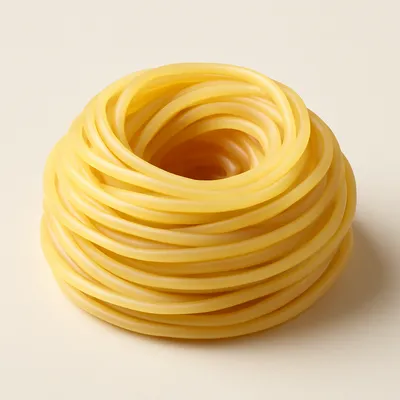

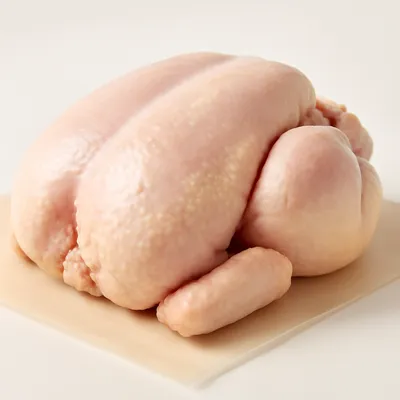
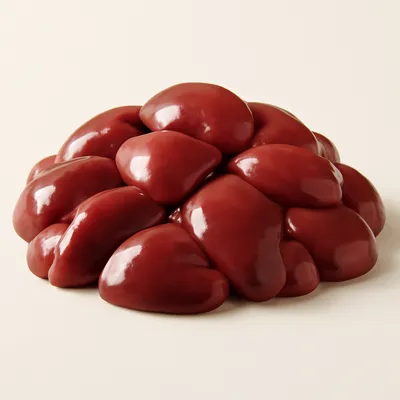


Cannelloni reached Catalonia with the Italian and Swiss cooks who staffed Barcelona's first fondas and luxury restaurants from the late eighteenth into the nineteenth century; grand bourgeois houses such as the Maison Dorée served them as a refined delicacy, and the local recipe gradually took on a Catalan accent. The decisive step came in 1911, when Ramon Flo — a Barcelona pasta maker beside the Sant Antoni market — commercialised the first dried pasta sheets under the brand El Pavo, removing the main obstacle to home cooking, which had been making the pasta by hand. The link to Sant Esteve (26 December) reflects a thrift custom: the day after Christmas the leftover roasts and boiled meats of the escudella i carn d'olla were minced and reused, a role earlier filled by leftover-rice casseroles before canelons displaced them. Today canelons are firmly identified as a Catalan dish, eaten in their millions across the Christmas season.
The cut yields in a single soft stroke — tender pasta giving way to a dense, savoury mince that tastes of slow-roasted meat and gives a faint liver depth. The béchamel is silky and warm, coating the tongue, while the gratin crust on top adds a thin, toasty, lightly bitter edge of browned cheese. It eats rich and comforting, the cream binding pasta and meat into one mouthful.
Two transformations carry the dish. The béchamel is a starch sauce: butter coats the flour granules in the roux so they disperse without clumping, then the milk's heat gelatinises the starch — the granules swell and their amylose leaches into a three-dimensional network that traps liquid and thickens (a classic ratio is about one part roux to ten parts milk). The leftover-meat logic is collagen chemistry: in roasting or braising, connective-tissue collagen begins converting to gelatin from around 60°C and more fully at roughly 71–82°C, so already-cooked roast or boiled meat is tender, broken down and tacky, binding the farce far better than raw mince. Under the grill the surface browns by the Maillard reaction between proteins and sugars in the cheese and béchamel, generating the toasted gratin crust and its roasted aroma.
Variations
The classic is meat — leftover Christmas roasts, or a purpose-made farce of pork, veal and chicken with chicken livers, sometimes enriched with a splash of brandy or a little foie. Modern kitchens offer mushroom (often with spinach), seafood and fish versions, and luxury foie-gras canelons. The festive form is the canelons de Sant Esteve, built from Christmas-Day leftovers; the dish's spread is tied to the El Pavo dried-pasta brand and to the Italian cooks of nineteenth-century Barcelona. They differ from Italian cannelloni chiefly in the filling — Catalan meat is cooked then chopped rather than used raw — and in the heavy reliance on a béchamel-and-cheese gratin finish.
On the Palate
Where Canelons sits in the Spanish flavor cloud
Ingredients
Serves 4



How it's made
7 steps · 40 min
- 112 min
Mince the cooked meat (leftover roast pork, veal and chicken, plus a couple of sauteed chicken livers) very finely, or pulse briefly in a processor; do not turn it to paste.
Watch outMince the cooked meat finely but stop before it turns to paste — you want a tender, textured farce, not a smooth spread.
- 215 min
Soften finely chopped onion in olive oil until golden, add the minced meat, season, and bind with a spoonful of flour and a splash of milk or stock; cool the farce.
- 310 min
Boil the pasta sheets in plenty of salted water until just pliable, lift out, and lay flat on a damp cloth to stop them sticking.
- 410 min
Make the béchamel: melt butter, stir in flour and cook the roux briefly, then whisk in warm milk off the boil until smooth and thick; season with salt and grated nutmeg.
Watch outWhisk warm milk into the roux off the boil until smooth and thick — add it too fast or too hot and the béchamel goes lumpy.
- 512 min
Spread a little farce along each pasta sheet, roll into a tube, and arrange the rolls seam-down in a buttered baking dish.
- 64 min
Coat the rolls evenly with béchamel and scatter grated cheese over the top.
- 722 min
Bake at 200°C, finishing under the grill, until the surface is bubbling and golden-brown; rest a few minutes before serving.
Watch outBake until the surface is bubbling and golden-brown, finishing under the grill — that browned béchamel top is the mark of a proper canelons.
Archive tool suggestions — not reviewed
These legacy suggestions have not been evidence-reviewed and are not presented as required tools.


