Hot grass jelly — grass jelly herb simmered into a warm, lightly thickened black dessert 'soup', loose and barely set rather than the firm cold jelly block. It is ladled hot over toppings such as taro balls, red beans, peanuts, pearl barley, chewy QQ balls and tapioca pearls. A winter staple and a mainstay of Taiwanese milk-tea and dessert shops.


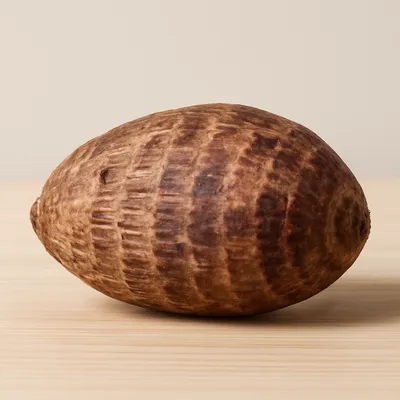

Grass jelly is made from xiancao (Platostoma palustre, also called liangfencao), a herb of the mint family native to East Asia. As a cooling, 'heat-clearing' summer dessert it is a centuries-old folk food of the Hakka and of Fujian and Guangdong — Meizhou in Guangdong is a noted home — and spread from there to Taiwan. The cold set jelly (xiancao dong), eaten in syrup over ice, is the older form. Hot grass jelly is the warm, lightly-set version eaten in winter; it is the newer and now hugely popular form, especially as a fixture of dessert and milk-tea shops, served piping hot under a heap of toppings.
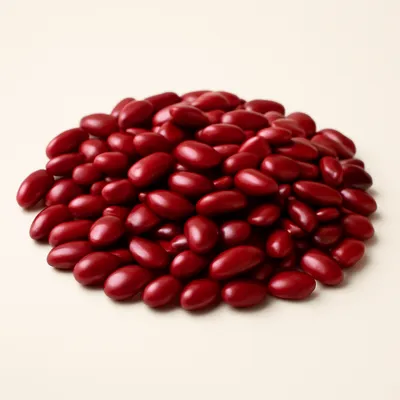
Hot grass jelly arrives steaming and loose — you drink and spoon it as much as eat it. The herbal base is dark, faintly bitter-sweet and grassy-medicinal, lightly syrupy on the tongue rather than firm. Soft taro balls and red beans sink to the bottom; chewy QQ balls and pearls bounce; pearl barley adds a soft grain. It coats and warms the throat going down.
Grass jelly sets because the herb's cell walls hold water-soluble polysaccharides (a natural gum). Long boiling — traditionally with a little alkaline water — draws these polysaccharides into the liquor; on cooling they form a gel network that traps water, the same principle that turns the cold version into a sliceable block. Hot grass jelly is held warm and never allowed to fully gel, so the polysaccharide network stays slack; instead a starch (sweet-potato or tapioca starch) is stirred in, where the granules gelatinize and swell with heat to thicken the soup into a soft, flowing, barely-set body. The contrast with cold xiancao dong is one of degree: more polysaccharide gel plus full cooling gives a firm block, while gentle heat plus starch-thickening gives the loose, warm pour of shao xiancao.
Variations
Toppings are generous and pick-your-own: taro balls, sweet potato balls, red beans, peanuts, pearl barley, chewy QQ balls, tapioca pearls and tangyuan. Some shops fold in evaporated or fresh milk, or pour the hot jelly over the same starch balls used in taro-ball desserts. The defining contrast is with cold grass jelly (xiancao dong) — the firm, sliced jelly served in iced syrup in summer — versus this warm, loosely set winter form.
On the Palate
Where Hot Grass Jelly sits in the Taiwanese flavor cloud
Ingredients
Serves 4
How it's made
7 steps · 20 min
- 1300 min
Rinse 50 g dried grass jelly herb and simmer it in plenty of water for several hours (traditionally with a pinch of edible alkali) until the liquid turns deep black and faintly thick.
- 210 min
Strain off the spent herb, pressing it to squeeze out the polysaccharide-rich liquor, and return the liquid to the pot.
- 35 min
Sweeten the liquor with brown sugar to taste and keep it at a gentle simmer.
- 48 min
Slurry sweet-potato (or tapioca) starch in a little cold water, then stir it into the simmering liquor until it thickens to a soft, just-flowing body.
Watch outAdd the starch slurry off a rolling boil and stir until it's just soft and flowing — this version must stay slack, not gel into a block.
- 540 min
Separately boil taro balls and pearls until translucent and chewy, and simmer red beans, peanuts and pearl barley until soft.
- 63 min
Spoon the toppings into warm bowls.
- 72 min
Ladle the piping-hot grass jelly over the toppings and serve at once, optionally with a splash of milk.