A tea egg steeped in Dongding oolong, soy and spice from Lugu township in Nantou, the home of Taiwan's most famous oolong. Marbled brown on the outside, soft and savoury within, sold hot at mountain tea-farm stalls.



The oolong tea egg is a specialty of Lugu township in Nantou county, the home of Dongding oolong, Taiwan's most famous tea, grown on the slopes of Dongding mountain since the 1850s when tea bushes were brought from Fujian. The tea egg itself, a hard-boiled egg cracked and re-steeped in tea, soy and spice to give a marbled brown surface, is eaten across the Chinese world, but Lugu's version uses the local Dongding oolong, whose roasted, nutty depth flavours the steep more richly than a generic black tea. The egg is boiled hard, its shell cracked all over without peeling, then simmered for an hour or more in a brew of Dongding oolong leaves, soy sauce, star anise, cinnamon and sugar, the spiced tea seeping through the cracks to marble the white and flavour the egg through to the yolk. Sold hot from stalls at Lugu's tea farms and on the mountain road, the egg is the savoury companion to a tea-tasting, the two products of the same slopes paired, and it represents the ingenuity of turning a drink crop into a food.
A hot, peeled egg, the white marbled brown from the tea seeping through the cracks, firm and deeply savoury with roasted oolong and warm spice, the yolk still soft and powdery within. Eaten hot, on the mountain road, with a cup of Dongding.
The technique is the crack-and-resteep. Eggs are hard-boiled, then their shells cracked all over by tapping with the back of a spoon, the shell left on so the spiced tea seeps through the cracks rather than coating the egg directly. The cracked eggs are then simmered in a brew of Dongding oolong tea, soy sauce, sugar, star anise, cinnamon and sometimes dried citrus peel, for at least an hour, ideally several, the longer the steep the deeper the flavour penetrates to the yolk. The tea tannins and soy salt season the egg white through the cracks, creating the marbled brown pattern, and the warm spices perfume the whole. The cracked shell acts as a sieve, the tea flowing through the cracks but the shell holding the egg intact, and the pattern left on the white maps the cracks. After steeping the eggs are kept in their brew in the fridge and reheated, the flavour deepening over days. The choice of Dongding oolong, with its roasted, nutty character, gives a deeper flavour than a plain black tea.
Variations
A pinch of Sichuan peppercorn adds a numbing note. Pu-er tea replaces oolong for an earthier egg. The eggs keep for up to a week in their brew.
On the Palate
Where Dongding Oolong Tea Egg sits in the Taiwanese flavor cloud
Ingredients
Serves 8How it's made
6 steps · 10 min
- 15 min
Place 8 eggs in a pan of cold water, bring to the boil, and cook 9 minutes for hard-boiled; drain and cool briefly.
- 24 min
Tap each egg all over with the back of a spoon to crack the shell thoroughly, without peeling.
Watch outTap the shell all over so it's finely crazed but stays on — the cracks are what let the tea seep in for the marbling.
- 34 min
In a pot, brew 15g Dongding oolong leaves in 1 litre boiling water for 5 minutes.
- 44 min
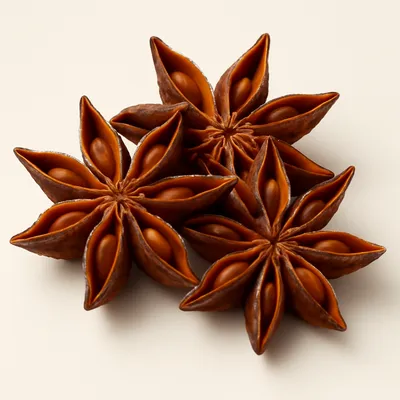
Add 100ml soy sauce, 2 tbsp sugar, 2 star anise, 1 cinnamon stick and the cracked eggs to the tea.
- 55 min
Simmer gently for 1 hour, then turn off the heat and leave the eggs to steep in the brew for at least 2 hours, ideally overnight.
Watch outAfter the hour's simmer, kill the heat and let the eggs steep hours or overnight — the color and flavor reach the yolk during the soak, not the boil.
- 63 min
Reheat to serve hot; peel to reveal the marbled white, eaten with the yolk soft within.
Archive tool suggestions — not reviewed
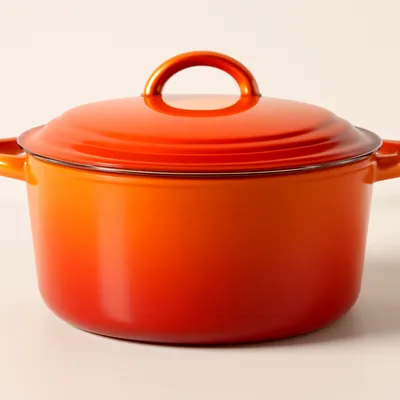
These legacy suggestions have not been evidence-reviewed and are not presented as required tools.