Taiwanese tofu pudding — a soft, silky soy custard far more fragile than block tofu, ladled in thin curds and served with toppings in a light sugar syrup. Iconic versions crown it with soft-stewed peanuts, red beans, tapioca pearls or taro balls; over crushed ice in summer, in warm ginger syrup in winter. A year-round staple of dedicated douhua shops and night markets.



Douhua descends from the ancient soy-curd tradition attributed in legend to Liu An, prince of Huainan, who is said to have stumbled on the curd while seeking an elixir. As an everyday dessert it took clear regional form across southern China, Hong Kong and Taiwan. The Taiwanese line is sweet and very soft: peanut douhua — pudding over hours-stewed peanuts — is its signature, alongside red beans, tapioca, taro balls and pearls. It is served cold over ice in summer and hot in ginger syrup in winter, and is sold at dedicated douhua shops; Chiayi is among the cities famous for it. This sweet, silky style stands apart from the savory douhua of northern China and Shanghai (douhua/doufunao seasoned with soy, chili oil and pickles).
The first spoonful barely holds its shape — the curd slips apart into silky, just-set sheets that melt almost before you chew, carrying a faint clean bean sweetness. The syrup is light, never cloying. Soft peanuts give a yielding, mealy bite; pearls and taro balls add chew; in summer the shaved ice keeps it cold and loose, in winter the ginger syrup warms the throat with a gentle burn.
Douhua is a soy-protein gel. Boiling the beans extracts the storage globulins — beta-conglycinin and glycinin, together roughly 70% of soy protein — into the soy milk. A coagulant then cross-links them into a network: traditional gypsum (calcium sulfate) supplies calcium ions that bridge the proteins' negative charges, while the modern favorite, glucono-delta-lactone (GDL), is stirred into cool milk and hydrolyzes on heating above about 90°C into gluconic acid, slowly lowering pH so the protein acid-coagulates gradually and evenly. The slow, gentle set near 85-90°C, the low coagulant dose, and crucially the fact that the curd is never pressed or drained (unlike block tofu, which is wrapped and weighted to expel water) leave a fragile, water-rich gel — the silky softness that defines Taiwanese douhua.
Variations
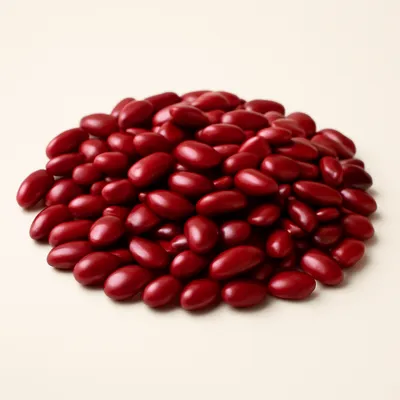
Toppings are the canvas: peanut douhua is the classic, joined by red bean, mung bean, tapioca pearls (fenyuan), taro balls (yuyuan), boba, grass jelly and pudding. Service splits by season — crushed ice and cold syrup in summer, hot ginger syrup in winter. The Taiwanese sweet style contrasts with Hong Kong/Cantonese sweet douhua and, more sharply, with the savory salted douhua (doufunao) of northern China and Shanghai, dressed with soy, chili oil, dried shrimp and pickles.
On the Palate
Where Douhua sits in the Taiwanese flavor cloud
Ingredients
Serves 4How it's made
7 steps · 30 min
- 110 min
Soak 200 g dried soybeans overnight, then blend with water and strain through cloth to yield smooth raw soy milk.
- 215 min
Bring the soy milk to a full boil, skimming foam, then let it cool to about 85-90°C.
Watch outCool the boiled soy milk to about 85-90°C before you add the coagulant — too hot and the curd sets coarse and full of holes.
- 33 min
Dissolve the coagulant (a little gypsum, or about 0.25% glucono-delta-lactone) in a few spoons of cool water in the serving pot.
- 425 min
Pour the hot soy milk into the pot from a height in one steady stream to mix, then cover and leave undisturbed 20-30 minutes to set into a soft curd.
Watch outPour the hot milk in one steady stream from a height, then leave it completely undisturbed 20-30 minutes — nudge it and the setting curd breaks.
- 520 min
Meanwhile simmer peanuts until soft and mealy, and boil tapioca pearls or taro balls until translucent and chewy.
- 68 min
Make a light syrup by dissolving sugar in water (add sliced ginger and simmer for the winter version).
- 75 min
Scoop the set douhua in thin sheets into bowls, add the toppings, and finish with cold syrup over ice in summer or hot ginger syrup in winter.