A Tamsui riverfront snack of fried tofu skin stuffed with cellophane noodles bound in fish paste, sealed shut and steamed, then drenched in a sweet-savoury fermented-bean sauce. The signature dish of Tamsui, at the mouth of the Tamsui River north of Taipei.


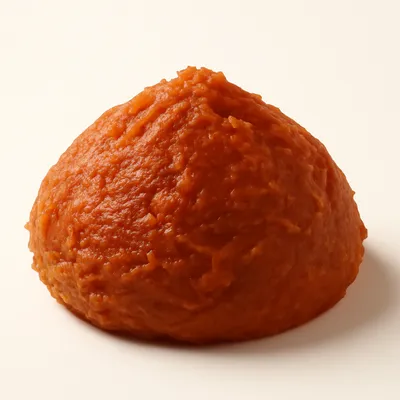

A-gei, sometimes spelled a-ge, is the signature snack of Tamsui, the river-port town at the mouth of the Tamsui River north of Taipei. Its invention is credited to Yang Zheng, a vendor at the Tamsui old-street market in 1965, who devised it as a way to sell leftover fried tofu by stuffing it with cellophane noodles and fish paste. The name comes from the Taiwanese Hokkien a-ge, an abbreviation of aba-gei meaning 'oil-fried tofu'. The construction is distinctive: a square of deep-fried tofu pouch is slit open, filled with cellophane noodles bound in a glossy fish paste, sealed shut like a parcel, and steamed until set. The parcel is then drenched in a sweet-savoury sauce made from fermented black beans, miso and tomato, the dark sauce pooling around it. Eaten with a bamboo skewer, a-gei is the must-eat of a Tamsui waterfront stroll, sold from a cluster of old shops along the old street, and it has spread in milder form to night markets across northern Taiwan.
A soft, warm tofu parcel yielding to slippery cellophane noodles bound in bouncy fish paste, drenched in a dark, sweet, beany sauce with a tomato tang. Eaten from a skewer, the textures all soft and yielding, the sauce the dominant note.
A-gei is built on a single parcel of fried tofu. The fried tofu pouch, which is already hollow and spongy from deep-frying, is slit open on one side. Cellophane noodles, soaked and cut short, are mixed with fish paste to bind them into a cohesive filling that holds its shape on steaming. The filling is mounded into the tofu pouch, and the open edge is sealed by pressing the tofu skin shut, sometimes secured with a toothpick, then the parcels are steamed for about 15 minutes until the fish paste sets firm. The distinctive sauce is a reduction of fermented black beans, miso or sweet bean paste, tomato ketchup, sugar and water, simmered until thick and glossy, the fermented-bean depth balanced by the tomato sweetness. The parcels are drenched in the sauce and eaten hot with a bamboo skewer, the soft tofu and slippery noodles against the bouncy fish paste and the dark sweet sauce being the whole dish.
Variations
Some versions add shredded carrot or mushroom to the noodle filling. The sauce is sometimes thickened with starch. A spicy chili-oil drizzle is a common addition.
On the Palate
Where Tamsui A-Gei sits in the Taiwanese flavor cloud
Ingredients
Serves 4How it's made
7 steps · 30 min
- 14 min
Soak 50g cellophane noodles in hot water 10 minutes, drain, and cut into short lengths.
- 25 min
Mix the noodles with 150g fish paste and a pinch of white pepper until well bound.
- 35 min
Take 8 squares of fried tofu pouch, slit one side of each open to form a pocket.
- 45 min
Mound the noodle filling into each pocket, press the slit edges shut, and secure with a toothpick if needed.
Watch outPress the tofu slit firmly shut around the filling — a loose seal lets the filling spill out as the fish paste swells and sets.
- 56 min
Steam the parcels over boiling water for 15 minutes until the fish paste is set.
Watch outSteam until the fish paste is firm and springs back — soft filling means it hasn't set and will fall apart in the sauce.
- 65 min
Meanwhile simmer 2 tbsp fermented black beans, 2 tbsp miso, 2 tbsp tomato ketchup, 1 tbsp sugar and 200ml water for 5 minutes until thick and glossy.
Watch outSimmer the sauce until thick and glossy so it clings to the parcels — a thin sauce just runs off the tofu.
- 74 min
Plate the parcels, drench with the sauce, and serve hot with bamboo skewers.
Archive tool suggestions — not reviewed
These legacy suggestions have not been evidence-reviewed and are not presented as required tools.


