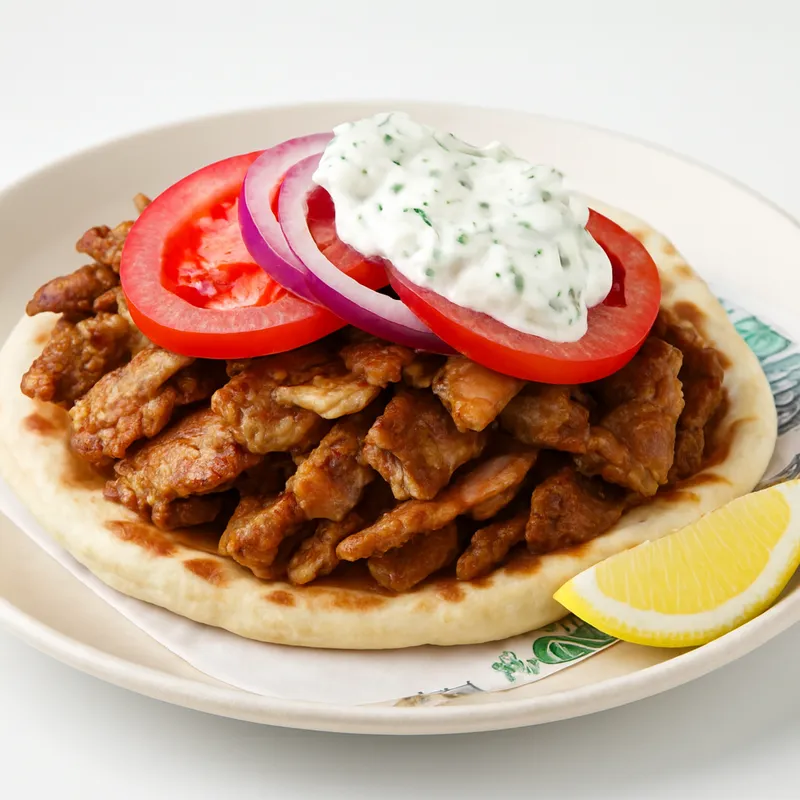
Ladenia is the flatbread of the Cyclades islands of Kimolos and Milos — a thick, soft, olive-oil-soaked yeast base topped with sliced tomato, raw onion and dried oregano, and baked until the edges crisp. Often called "Greek pizza," it pointedly carries no cheese. The name comes from ladi, olive oil, which both enriches the dough and pools generously over the top; the oil, not the topping, is the headline.




Ladenia belongs to the Aegean tradition of olive-oil flatbreads, a lean dough enriched with the islands' own oil; the form is associated with Kimolos, a small trading island that passed through long Venetian rule (roughly the 13th to 16th centuries). The tomato topping, though, cannot be that old: the tomato is a New World latecomer that reached Greece only in the 19th century and did not naturalize in island cooking until the early 20th. The dish as eaten today is best read as an old olive-oil flatbread that took on tomato once the crop arrived. It is still chiefly a local bakers' specialty rather than a restaurant dish.
Thick and bready underneath, not thin and crisp like Italian pizza, the crumb soaked through with olive oil so it almost fries against the hot tray. The tomato collapses into a sweet-sour jam, the raw onion goes soft and mellow, and the oregano scents everything. The edges crisp and the bottom turns golden and oil-fried. Eaten warm or, in the island manner, at room temperature on a hot day with nothing more than a glass of wine.
Generous olive oil under and over the dough is what defines it: the oil between dough and pan shallow-fries the base to a crisp golden underside, while oil on top keeps the surface from drying as the tomatoes roast. The tomatoes are sliced and laid raw so they slowly cook down and concentrate in the oven, shedding water that the thick dough can absorb without going soggy; salting them helps draw that moisture early. A long, slack proof gives the base its open, oil-friendly crumb.
Variations
Recipes split between a thicker, bread-like base and a thinner, more pizza-like one. Some cooks add sliced green pepper or scatter olives and capers; a little sugar over the tomatoes helps them caramelize. The cheeseless rule is the constant — adding cheese turns it into something else. A closely related lenten and island flatbread tradition produces many similar oil-and-tomato breads under local names across the Aegean.
On the Palate
Where Ladenia sits in the Greek flavor cloud
Ingredients
Serves 6
How it's made
7 steps · 30 min active + 1 hour 40 min waiting
- 110 min
Dissolve the yeast in warm water with a pinch of sugar; let it foam.
- 212 min
Mix flour and salt, add the yeast water and a good glug of olive oil, and knead into a soft, slack dough.
- 360 min
Cover and proof until doubled, about 1 hour.
- 48 min
Oil a baking tray generously and press the dough out to fill it, dimpling the surface.
Watch outOil the tray generously before pressing out the dough — that pool of oil shallow-fries the base to a crisp golden underside.
- 56 min
Lay sliced tomatoes and thin onion rings over the top, season with salt, pepper and plenty of dried oregano.
Watch outSalt the tomato slices as you lay them — the salt draws out water early so the thick base soaks it up instead of going soggy.
- 620 min
Drizzle the whole surface with more olive oil and rest 20 minutes.
- 738 min
Bake at 200C until the base is golden and crisp and the tomatoes have collapsed, about 35-40 minutes.
Watch outBake until the base is crisp and the tomatoes have collapsed and concentrated — that slow shedding of water is what deepens their flavor.
Archive tool suggestions — not reviewed
These legacy suggestions have not been evidence-reviewed and are not presented as required tools.