Brazilian passion-fruit juice: the pulp of yellow maracujá blended briefly with water and sugar, then strained of its seeds — tart, fragrant and pale yellow. It is a fixture of the padaria counter and the everyday lunch, one of the most-drunk fresh juices in the country alongside orange and cashew. The aroma is heady and tropical, the taste sharply sour and balanced with sugar. It is the juice form of the fruit, quite distinct from the rich, set passion-fruit mousse that is Brazil's other great use of maracujá.


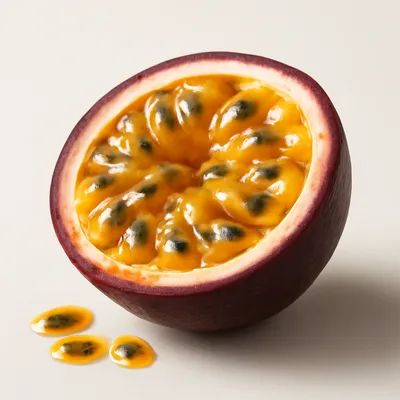
Passion fruit (Passiflora edulis) is a vine native to South America, and Brazil is today by far the world's leading grower of it; the yellow form widely cultivated for juice is known locally as maracujá-azedo, 'sour passion fruit.' The word maracujá comes from the Tupi language of Brazil's indigenous peoples, meaning roughly 'food in a gourd' or 'fruit that is eaten in gulps.' With the fruit grown in abundance and a sour, intensely aromatic pulp ideally suited to a sweetened drink, the fresh juice became a national everyday staple, ranking among the most-consumed juices in Brazil behind orange and cashew, and a standard offering at every padaria and lanchonete.
Pale yellow and lightly frothy, with a powerful, unmistakable tropical perfume that hits before the first sip. The taste is sharply sour — bracingly tart on its own — pulled into balance by sugar so it lands sweet-sour and lively, with a faint floral note behind the acidity. Served cold over ice it is thirst-quenching and bright. Strained smooth it is clean on the tongue; left with a few seeds it gains a little crunch. Refreshing rather than heavy, the everyday lunch juice.
The pulp and seeds are scooped from the fruit and pulsed briefly with water and sugar in a blender — only a few quick pulses, because blading the seeds too hard crushes them and turns the juice bitter. The mixture is then poured through a sieve to lift out the seed husks, leaving a smooth juice. Sugar is essential to balance the fruit's high acidity, and the juice is served immediately over ice; its aroma and fresh tartness fade as it sits. The whole process is raw and quick, a matter of pulping and straining rather than cooking.
Variations
The most popular variation is suco de maracujá com leite, blended with milk instead of water for a creamier, milder drink that softens the sourness. Some leave a spoonful of seeds in for texture, or sweeten with honey. The same pulp is the base for the batida de maracujá cocktail with cachaça, for sorbets and caipirinhas, and — set with condensed milk and cream — for the celebrated mousse de maracujá, which is the dessert rather than the drink. As a juice it sits beside orange and cashew (caju) as a Brazilian everyday standard.
On the Palate
Where Suco de Maracujá sits in the Brazilian flavor cloud
Ingredients
Serves 4How it's made
5 steps · 10 min
- 13 min
Halve the passion fruit and scoop the pulp and seeds into a blender.
- 21 min
Add cold water and sugar to taste.
- 31 min
Pulse briefly, just a few short bursts — do not over-blend or the crushed seeds turn the juice bitter.
Watch outPulse only a few short bursts — blade the seeds too hard and the crushed pips turn the juice bitter.
- 43 min
Pour through a sieve to strain out the seed husks, pressing lightly to extract the juice.
- 52 min
Taste and adjust the sugar, then serve at once over plenty of ice.
Archive tool suggestions — not reviewed
These legacy suggestions have not been evidence-reviewed and are not presented as required tools.


