
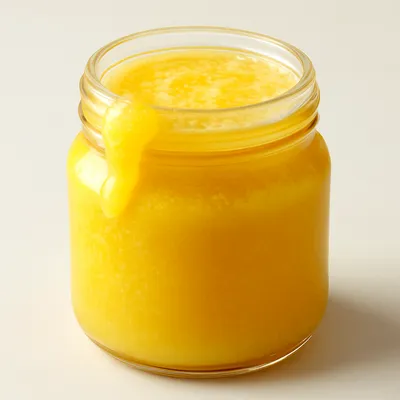
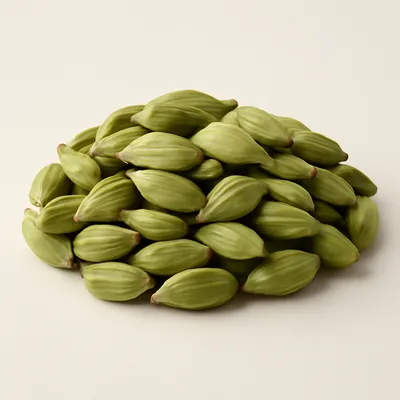
Chikki is an Indian brittle made by setting roasted peanuts (or sesame, puffed rice, or other nuts and seeds) into melted jaggery, then rolling it thin and cutting it into squares or bars before it hardens. The jaggery is cooked to the hard-crack stage so it sets glassy and snappy, gripping the nuts in a single brittle sheet. The classic and best-known version is peanut chikki, traditionally bound only with peanuts, jaggery and a little ghee, sometimes scented with a pinch of cardamom. Inexpensive, energy-dense and long-keeping, it is sold across India as an everyday sweet and travel snack, and is the signature product of the hill town of Lonavla in Maharashtra.


Jaggery-and-nut brittles are old and widespread across the subcontinent, but chikki's fame is tied to Lonavla, a hill station on the railway between Mumbai and Pune. The popular account credits a confectioner named Maganlal Agarwal, who in the 1880s is said to have made a cheap, high-energy snack of jaggery, peanuts and ghee — first called 'gud dani' — for the labourers building the difficult Western Ghats railway line, and later for passengers; renamed Maganlal chikki and then Lonavla chikki, it made the town synonymous with the sweet. This origin is traditional and widely repeated rather than rigorously documented, and brittles of this kind certainly predate it. Lonavla chikki has since been recognized as a regional speciality of Maharashtra.
A thin, hard slab the colour of dark amber, peanuts visible and half-embedded throughout, with a glossy or matte surface. It resists the first bite, then cracks cleanly with a sharp snap and shatters into shards; there is no chew once it has set properly. The taste is the deep, slightly smoky, molasses-like sweetness of jaggery against the toasty, oily richness of roasted peanut, rounded by a trace of ghee. It is sticky only if underdone; correctly cooked it is dry, glassy and brittle. Eaten in pieces, broken from a larger bar, at room temperature.
Chikki is a hard-crack sugar set. Jaggery (or sugar) is melted, with a little water or ghee, and cooked until it reaches the hard-crack stage — roughly 150–155°C — at which almost all the water has boiled off; a drop placed in cold water turns instantly brittle and snaps rather than bending. At this stage the sugars set into a glassy, non-crystalline solid as they cool, which is what gives the clean snap. Warm roasted peanuts are stirred in quickly and the mass is turned out onto a greased surface and rolled thin at once, because it stiffens within seconds; it is scored or cut while still hot and breaks along the lines once cold. The fat from the ghee and the nuts' own oil keep it from over-sticking and help it release. The two failure modes are undercooking, which leaves it tacky and chewy, and burning the jaggery, which turns it bitter; pre-roasting the peanuts deepens flavour and keeps them crisp inside the set sugar.
Variations
Peanut chikki (shengdana chikki) is the classic; common variants swap or add sesame (til chikki), puffed or popped rice or sorghum (often called gajak-style or laiya chikki), and richer nuts such as cashew, almond, pistachio and walnut, as well as desiccated coconut and dried fruit. Some are made with sugar rather than jaggery for a paler, harder brittle, and softer 'soft chikki' is cooked to a lower stage. Til-gud chikki of sesame and jaggery is associated with the winter festival Makar Sankranti, when sesame-jaggery sweets are exchanged. Lonavla is famous for a wide range of these, but the technique is the same across them.
On the Palate
Where Chikki sits in the Indian flavor cloud
Ingredients
Serves 8How it's made
6 steps · 10 min
- 18 min
Dry-roast shelled peanuts until fragrant, rub off the skins, and keep warm.
- 22 min
Grease a flat surface, a rolling pin and a knife with a little ghee.
- 310 min
Melt jaggery with a little ghee over low heat, stirring, and cook to the hard-crack stage (about 150–155°C); test a drop in cold water — it should turn brittle.
Watch outCook the jaggery to hard-crack, about 150 to 155C — drop a bit in cold water and it should snap brittle, not bend; under this the chikki stays sticky and soft.
- 41 min
Quickly stir the warm peanuts (and an optional pinch of cardamom) into the molten jaggery to coat evenly.
- 51 min
Pour onto the greased surface and roll thin immediately before it stiffens.
Watch outRoll it thin the instant the peanuts are in — the mass stiffens within seconds, so there's no waiting.
- 620 min
Score into squares or bars while still hot; cool completely, then snap along the lines.
Archive tool suggestions — not reviewed
These legacy suggestions have not been evidence-reviewed and are not presented as required tools.


