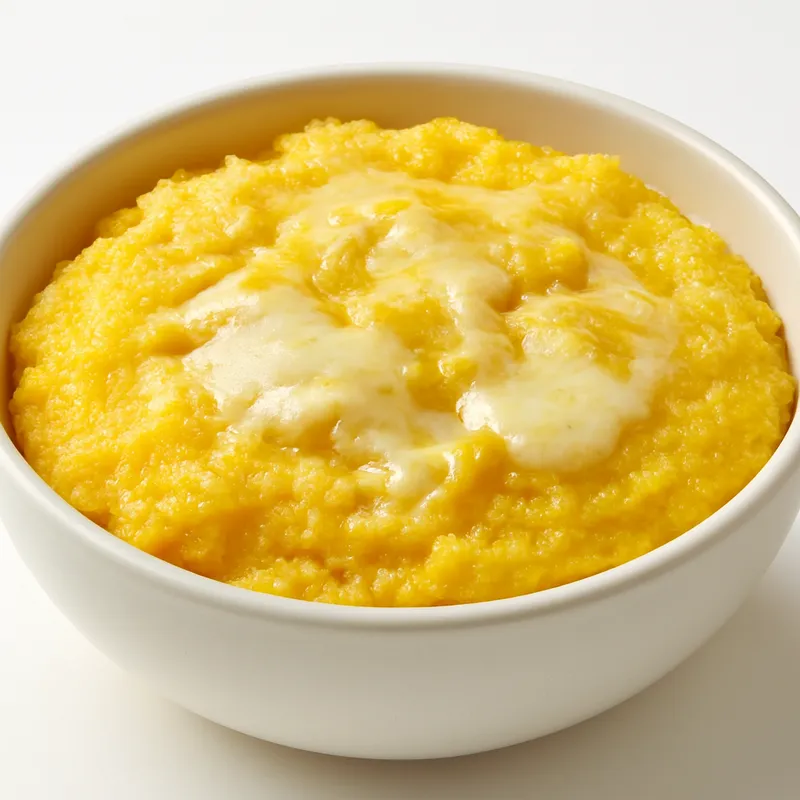




Polenta concia ("dressed polenta") is Valdostan and Piedmontese mountain food — Aosta Valley specifically, where Fontina DOP has been made since the 12th century. Maize itself only reached northern Italy in the late 1500s after Columbus, so polenta as we know it is younger than most Italian classics. The cheese-and-butter loading was peasant calorie density for high-altitude winters.
Aosta Valley alpine dish — coarse polenta cooked 45 minutes, finished with fontina and butter folded off-heat. The cheese ribbons through; the dish is eaten with a spoon, not cut.
A bright yellow porridge, loose enough to spread on a plate but heavy on the spoon, threaded through with melted Fontina that pulls in strings as you lift. Butter pools on top. Coarse grind, so each bite has tooth — not baby food. Tastes of corn first, then cow: dairy fat and that gym-sock funk Fontina has. Eat hot or it sets like cement.
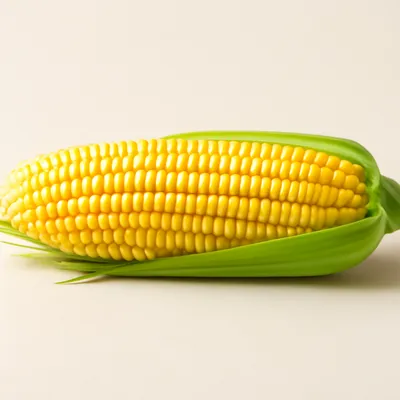
Coarse stone-ground cornmeal, not instant — instant has pre-gelatinized starch and goes pasty in minutes with no corn flavor left. Real polenta needs 40–50 minutes of steady stirring at low heat; the starch hydrates slowly and the corn sugars caramelize in the pot. Fontina goes in off-heat at the end so it melts without splitting.
Variations
Aosta-style with fontina; Bergamasque version uses formai de mut and Branzi cheese; Friulian frico is the polenta-and-cheese fritter cousin; polenta taragna mixes in buckwheat; Veneto’s polenta e schie tops with tiny lagoon shrimp.
On the Palate
Where Polenta Concia sits in the Italian flavor cloud
Use coarse stone-ground cornmeal and stir it low and steady for 40-50 minutes so the starch hydrates and the corn sugars caramelize; instant cornmeal turns pasty in minutes and tastes of nothing.
Ingredients
How it's made
4 steps · 23 min
- 110 min
Bring 4 cups of water to a boil in a heavy-bottomed pot. Gradually whisk in the cornmeal, ensuring no lumps form. Lower the heat to a gentle simmer, stirring frequently as the mixture thickens and the grains soften.
Watch outThe mix should thicken to where a spoon leaves a slow-closing trail; the grains lose their raw grittiness and turn tender.
- 25 min
As the polenta cooks, melt the butter in a separate pan over low heat until it foams. Add a pinch of salt and let the butter take on a nutty aroma.
- 35 min
Fold in the melted butter and Fontina cheese into the cooked polenta. Stir until the cheese melts completely, creating a creamy texture.
Watch outFold the cheese in with the pot off the heat; it should melt into ribbons and go glossy, not seize into oily clumps.
- 43 min
Grate Parmigiano-Reggiano over the polenta and stir to combine. The polenta should be smooth and rich with a glossy finish.
Archive tool suggestions — not reviewed
These legacy suggestions have not been evidence-reviewed and are not presented as required tools.

Hand-held wire loop tool for beating eggs, whipping cream, emulsifying dressings, and incorporating air into batters. Balloon whisks (large round head) for whipping cream and meringues; French whisks (narrow tear-drop) for sauces in pots; flat whisks (gravy) for pan sauces. Stainless steel is universal; silicone-coated for non-stick pans.

Round metal pot, 14-26 cm diameter, with vertical walls and a long handle, designed for sauces, soups, oatmeal, rice, boiled vegetables. The vertical walls minimize evaporation (vs. a sauté pan). Sizes: 1 qt for melting butter, 2-3 qt for sauces, 4 qt for soups. Stainless-steel-clad aluminum or copper is best for conduction; cast-iron is too thick for delicate sauces.