A vanishing Jinan luxury: fresh white lotus petals from Daming Lake, sandwiched with red bean paste, dipped in egg-white meringue batter, and fried to a fragrant, flower-scented cloud. Recorded by Lao She in 1930s Jinan and barely surviving into the present.



Lotus cultivation in Jinan's Daming Lake dates back over a millennium, and using lotus petals as food was documented in the Song Dynasty. The fried version became a Jinan specialty by at least the Republican era: the writer Lao She, during his years teaching at Qilu University in the early 1930s, wrote the essay 'Eating Lotus Flowers' (吃莲花的), humorously recounting a friend's frustrated attempt to order fried lotus petals from a puzzled cook who thought it sounded like a remedy for burns. The dish uses only white-flowered varieties in mid-bloom—red lotus is considered ornamental only—and is available merely weeks each summer. By the 1970s the practice had largely disappeared from restaurant menus; today only a handful of Jinan establishments revive it seasonally.
The batter puffs light as cumulus—golden, shatteringly crisp—and beneath it the petal is gossamer-thin and faintly floral, nearly dissolved. Red bean paste in the center reads as a sweet, earthy counterweight. Osmanthus sugar scattered over the top makes the whole thing smell like a summer garden in full bloom.
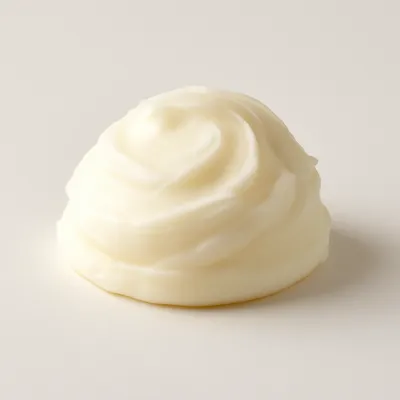
The egg-white meringue batter (雪丽糊) is made by whipping egg whites to stiff peaks and folding in a small amount of flour. When this batter hits hot oil, trapped air bubbles expand rapidly, creating an extremely light, airy shell—similar in principle to Japanese tempura or a soufflé batter. Two-stage frying mirrors the classical double-fry method: the first fry at lower temperature (around 160°C) cooks the interior and sets the batter structure without browning; the second fry at higher temperature (around 180°C) drives residual moisture from the shell and cures it to lasting crispness.
Variations
The savory version—petals coated in plain flour batter without filling—is served sprinkled with salt as a starter. Some cooks substitute lotus stamen for petals, yielding a more concentrated floral flavor. A modern variant uses unopened lotus buds, though traditionalists hold that only mid-bloom white-flowered middle petals deliver the correct delicacy and fragrance.
On the Palate
Where Fried Lotus Petals sits in the Chinese flavor cloud
Ingredients
Serves 4How it's made
8 steps · 15 min
- 15 min
Select white lotus blossoms in mid-bloom; gently remove the middle-layer petals; wash in cold water and pat dry with a clean cloth.
- 25 min
Trim the fibrous base of each petal; spread a thin layer of red bean paste on one half; fold the petal lengthwise to sandwich the filling.
- 35 min
Whip egg whites in a clean, grease-free bowl until stiff peaks form; gently fold in a small amount of flour to create the meringue batter (雪丽糊).
Watch outWhip the whites until the peaks stand up stiff and the bowl holds when tipped — that trapped air is the whole puff; a loose, weepy foam gives a flat, oily shell.
- 43 min
Heat pork lard or neutral oil in a deep pan to 70% temperature (about 160°C).
- 54 min
Dip each filled petal in the meringue batter, coating all sides; lower gently into the oil and fry in batches without crowding, about 1–2 minutes until set and pale gold.
Watch outFirst fry stays gentle — pull the petals when the batter just sets to pale gold, no browning yet; color here means the oil's too hot and the shell will scorch before it cures.
- 61 min
Remove the first-fried petals and drain on a rack.
- 72 min
Raise oil temperature to 80% (about 180°C); re-fry the petals 30–45 seconds until fully crisped and lightly golden; remove immediately.
Watch outSecond fry hot and fast: back in for half a minute till it crisps and turns light gold — you're driving out the last moisture so the shell stays crunchy, not soft.
- 81 min
Arrange on a plate; scatter osmanthus sugar generously; serve within minutes before the batter softens.


