A Jiangnan pastry baked in flower-shaped iron molds over a coal fire — a fermented batter shell encases red bean paste, crowned with sugar lard and jewel-bright melon shreds, emerging in begonia-blossom silhouette with a lacquered barley-syrup glaze.


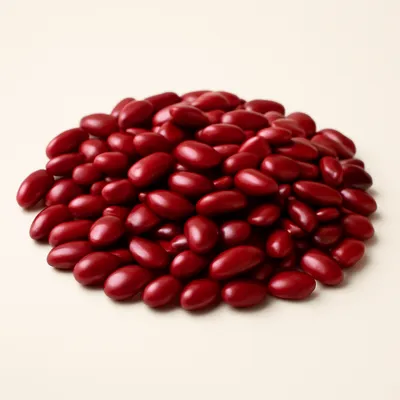

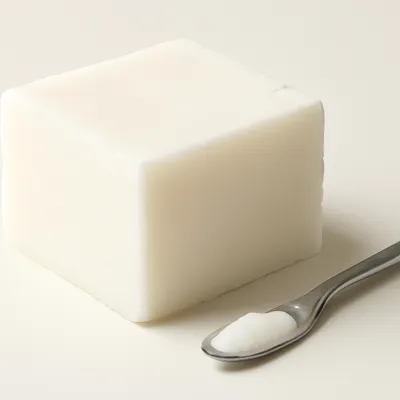

Originating in Qing-dynasty Suzhou as a sibling to the better-known 梅花糕, the begonia cake takes its name from the distinctive iron mold shaped like a begonia blossom. Stalls selling 海棠糕 and 梅花糕 side-by-side were a fixture of Ming-Qing temple fairs across Jiangnan. The technique spread from Suzhou to Wuxi, where it became a signature street snack. Suzhou has since recognized both cakes under its municipal intangible-cultural-heritage roster as part of the Xuanmiao Temple Traditional Snack Making Techniques (玄妙观小吃制作技艺).
Straight from the mold, the pastry arrives warm with a lacquer-red surface tacky with barley syrup — bite through the sweet-crisp fermented shell and the bean paste melts in, punctuated by lard-sugar richness and a glimmer of candied melon.
The fermented batter develops CO₂ bubbles during the resting period. When poured into the preheated iron mold, the intense heat (the mold base can exceed 180 °C) causes rapid bubble expansion, creating a lacy, slightly spongy shell via oven-spring. A covering iron plate traps steam to set the upper surface simultaneously. The sugars in the bean paste undergo caramelization at the mold base, adding a toasted note. The barley-malt glaze (饴糖) applied after unmolding seals the crust with a lacquered finish and deepens the color via additional Maillard browning.
Variations
The standard filling is red bean paste, but stalls also offer fresh minced pork and preserved-vegetable variants. The sibling 梅花糕 uses a nearly identical technique in a five-petal plum mold and is commonly sold from the same cart.
On the Palate
Where Begonia Pastry sits in the Chinese flavor cloud
Ingredients
Serves 4

How it's made
7 steps · 30 min active + 25 min waiting
- 122 min
Mix wheat flour with a small amount of dry yeast and cool water to form a smooth, pourable batter; rest for 20 to 25 minutes until the surface shows small bubbles.
Watch outRest the batter until small bubbles show on top — that gentle ferment is what makes the shell lacy and springy in the hot mold.
- 215 min
Prepare wet red bean paste: simmer red beans until soft, drain, mash, then stir-fry with sugar and a little oil until thick and glossy; set aside.
- 33 min
Place the cast-iron begonia mold over a coal stove or gas burner and heat until very hot; brush each cavity with a thin film of cooking oil.
- 42 min
Pour batter into each cavity until half full, then spoon in 20 g of bean paste per cavity.
- 52 min
Pour additional batter to cover the filling level with the rim; press one sugar-lard cube into the center and scatter shredded red and green melon around the edge.
- 65 min
Cover with a flat iron lid and bake over medium heat for about 5 minutes until the surface is fully set and lightly browned.
Watch outBake under the iron lid until the surface fully sets and just colours — lift too early and the soft top slumps.
- 73 min
Remove the lid; brush the surface with barley-malt syrup for glaze, allow to set for a moment, then unmold and serve immediately while hot.
Watch outBrush the malt syrup on the moment it's out of the mold while hot, so it lacquers into a glossy skin.
Archive tool suggestions — not reviewed
These legacy suggestions have not been evidence-reviewed and are not presented as required tools.


