A fermented rice cake that rises and splits open during steaming, its cracked crown dotted with red dye — made for Lunar New Year and major festivals across Teochew and Chaoshan. The character 发 (fā) carries a double meaning: the leavening of the batter and the prosperity wished upon the household. The wider the split, the better the omen.
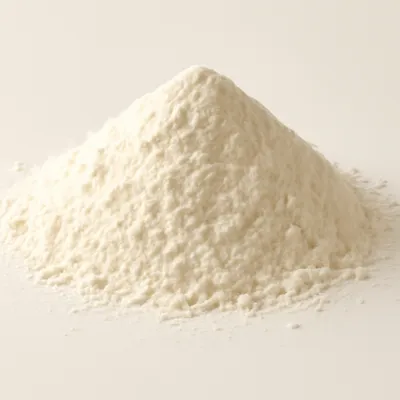

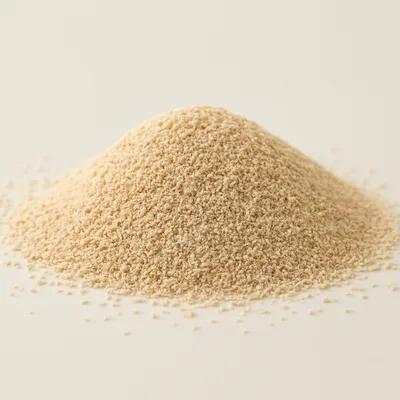


发粿 (also called 酵粿) is one of the five canonical items in the Teochew 粿品 roster — the rice-based ritual foods that anchor Chaoshan festival and ancestral observance. Fermented rice-cake traditions in southern China draw on ancient rice-farming culture: wild-yeast leavening of rice flour was practiced long before commercial yeast became available, producing lighter cakes distinct from denser steamed glutinous-rice forms. In Teochew custom, 发粿 is placed on the ancestral altar during New Year and major deity festivals; its split crown is read as the heavens 'smiling open' with blessing. Multiple Chaoshan food ethnography accounts and community records document 发粿 alongside 甜粿, 菜头粿, 鼠麹粿, and 栀粿 as the complete seasonal cycle of Teochew festival 粿.
Mildly sweet with the faint yeasty warmth of a fresh bread crust; the interior is spongy and slightly chewy, the fermented tang almost imperceptible beneath the sugar. The prized piece is the split crown — red-tipped, slightly caramelized at the surface, yielding to a moist, springy interior.
Yeast metabolizes dissolved sugar in the rice-flour batter, producing CO₂ and ethanol. The CO₂ distributes as micro-bubbles throughout the batter, creating an aerated sponge structure. During steaming, the outer surface firms rapidly as starch gelatinizes; the interior continues generating gas and expanding under heat. When the pressure differential exceeds what the partially set dome can contain, it ruptures upward — the 'laughing mouth' (开口笑) split that is both a quality signal and a cultural symbol. Adding a small amount of lye water (碱水, potassium carbonate solution) can even out starch gelatinization and suppress excess sourness from over-fermentation, keeping the flavor clean and sweet.
Variations
Sweet kueh (甜粿): the non-fermented glutinous-rice cousin, denser and stickier, eaten at New Year and Lantern Festival. Brown-sugar version: replaces white sugar for a molasses-like depth. Rice-wine starter (酒饼) version: ancient method using traditional koji-inoculated rice cake as leavener, producing a faint rice-wine fragrance alongside the fermented sweetness.
On the Palate
Where Leavened Rising Rice Cake sits in the Chinese flavor cloud
Ingredients
Serves 8How it's made
7 steps · 15 min
- 110 min
Dissolve sugar in 350 ml warm water (around 35°C); add dried yeast, stir gently, and let bloom for 10 minutes until foamy.
- 210 min
Gradually sift rice flour into the yeast liquid, stirring constantly to form a smooth, lump-free batter with a consistency similar to thick cream.
- 32 min
Optionally add ½ tsp lye water and stir through — this moderates sourness and promotes even starch gelatinization.
- 45 min
Pour batter into greased molds (traditional ceramic or small metal tins) to 80% capacity.
- 530 min
Leave molds uncovered at room temperature for 20–30 minutes until tiny bubbles appear across the surface.
Watch outLet the filled molds sit until tiny bubbles dot the surface — this is the yeast active and ready; steam it before it over-proofs.
- 630 min
Steam over vigorously boiling water on high heat for 25–30 minutes; do not lift the lid at any point during steaming.
Watch outSteam on high a full twenty-five minutes and never lift the lid — a mid-steam peek drops the heat and the tops sink instead of splitting.
- 720 min
When tops have split open in a smile, use a skewer to dot each crown with red food dye. Cool in molds for 20 minutes, then unmold and serve.
Archive tool suggestions — not reviewed
These legacy suggestions have not been evidence-reviewed and are not presented as required tools.


