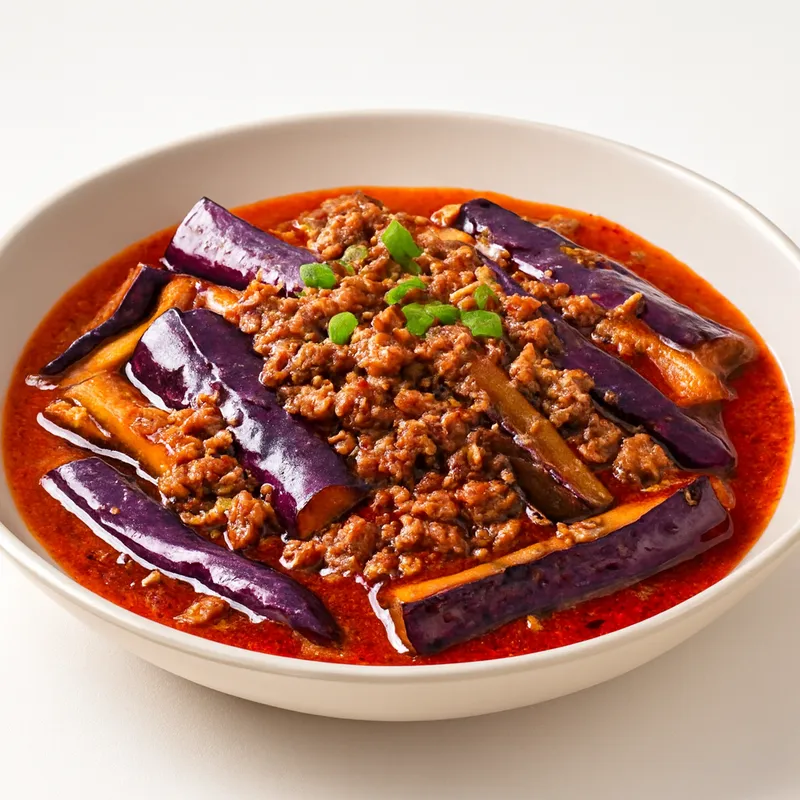
A hearty home-style one-bowl dish of the Guanzhong plain around Xi'an. The pasta, called mahuo (麻食, also written 麻什), is made from firm wheat dough cut into pea-sized pieces and rolled under the thumb on a board or the brim of a straw hat, so each piece curls into a tiny hollow shell that catches sauce. The little shells are then 'hui' (烩) — stewed together with a soffritto of diced potato, carrot, tofu, mushroom, wood-ear and a little meat in a savory, lightly thickened broth — until everything melds into a thick, warming bowl. It is everyday comfort food across central Shaanxi, eaten thick rather than soupy, and is a direct descendant of the Yuan-dynasty tutu-mahuo (秃秃麻食).



Mahuo descends from a Yuan-dynasty pasta recorded as tutu-mahuo (秃秃麻食, also written 秃秃么思). Husihui's 《饮膳正要》 (Yinshan Zhengyao, the imperial dietary manual compiled in 1330) lists it among the 'rare delicacies,' glossing it as 'hand-flicked noodles' (手撇面) and describing it made with white flour and stir-fried lamb in good broth, finished with scallion, garlic, fermented dairy (酪) and minced coriander. A near-contemporary household encyclopedia, 《居家必用事类全集》, records the shaping: small dough pellets soaked in cold water and pressed flat with the palm into thin little cakes, boiled, drained, then tossed with sauced meat — that is, originally a thumb-pressed flake rather than today's curled shell. The name itself is generally traced by scholars to a Turkic word for a noodle or pasta, carried into northwest and central China by Hui (回回) people, which is why early texts transliterate it so variously. In Guanzhong the pasta is called mahuo or 'cat's-ear' (猫耳朵); in northern Shaanxi it is gada (圪咜), often made from buckwheat; in Shanxi it is the cat's-ear noodle. The exact origin of the stewed 烩 home form is unrecorded; what is documented is the long textual lineage of the pasta itself.
Each little shell is springy and resilient, with a clean wheat chew (劲道) that holds up after long stewing instead of going slack. The thumb-curled cup traps the thick broth, so every piece arrives loaded with sauce inside and out; potato and tofu have gone soft and starchy, carrot and wood-ear keep a slight bite, and the whole bowl is thick enough to stand a spoon in, hot and savory rather than soupy. Done well, the pasta is tender but still has snap and the stew clings without being gluey. Done badly, the dough was too soft or over-stewed, so the shells turn mushy and lose their curl, or the broth was left thin and watery and slides off instead of coating.
Everything turns on gluten and shape. The dough is kneaded firm with little water and rested, so the wheat proteins glutenin and gliadin link into a tight, elastic gluten network; that network is what gives the cooked shell its springy 'jin-dao' bite and lets it survive long stewing without dissolving. Rolling each pellet under the thumb on a textured surface — a board, a sieve, or the woven brim of a straw hat — both stretches the gluten and curls the piece into a hollow cup with a ridged outer face. The shape is the point: the concave pocket and rough surface vastly increase the area in contact with the broth and physically scoop and hold sauce, so a thin pasta eats rich. The stew thickens on its own as well — starch granules leaching from the boiling pasta and from the diced potato swell and gelatinize, and the liberated amylose and amylopectin bind the liquid into a velvety body, sometimes nudged along with a thin starch slurry. Browning the meat and frying the vegetable base first builds savory depth through the Maillard reaction before the broth goes in.
Variations
Mahuo and the Shanxi cat's-ear noodle (猫耳朵) are essentially the same pasta under different regional names; northern-Shaanxi gada (圪咜) is often made from buckwheat with a little sand-wormwood flour for extra chew, while Guanzhong uses wheat. The dish is eaten several ways: hui-mahuo (烩麻食) stewed thick with vegetables and broth as here; chao-mahuo (炒麻食) stir-fried dry like a fried-pasta dish; and a thinner soup version. Vegetarian (素) bowls drop the meat and lean on tofu, mushroom, potato and beans; meaty versions add diced pork, mutton or beef. A tomato-and-egg mahuo is a common quick home variant. The ancestral Yuan tutu-mahuo was a lamb-and-broth dish dressed with garlic, fermented dairy and coriander rather than the thick mixed-vegetable stew of modern Guanzhong.
On the Palate
Where Braised Cat's-Ear Pasta (Mahuo) sits in the Chinese flavor cloud
Ingredients
Serves 4



How it's made
7 steps · 45 min active + 25 min waiting
- 122 min
Knead wheat flour with cold water and a pinch of salt into a firm, smooth dough; cover and rest at least 20 minutes so the gluten relaxes.
Watch outKnead the dough firm with little water and rest it — a tight gluten network gives the springy bite and lets the shells survive the long stew.
- 218 min
Roll the dough into ropes, cut into pea-sized pieces, dust with flour, then press and roll each piece under the thumb on a board, sieve, or the brim of a straw hat so it curls into a small hollow shell; spread the shells out so they don't stick.
- 38 min
Dice the potato, carrot, firm tofu, soaked wood-ear, and mushroom; mince the meat if using. Heat oil and fry the meat, then add ginger, garlic, and the vegetables, stir-frying until fragrant and lightly browned.
- 43 min
Stir in a spoon of tomato or a little soy and season with salt and white pepper, then pour in hot water or stock to make a savory broth and bring to a boil.
- 59 min
Drop in the mahuo shells and stew over medium heat, stirring now and then so they don't stick, until the pasta is tender and springy and the broth has reduced and thickened, about 8 to 10 minutes.
Watch outStew the shells over medium heat, stirring so they don't stick, until tender and springy and the broth reduces and thickens.
- 62 min
If the broth is still thin, drizzle in a little thin starch slurry and simmer briefly until it turns velvety and coats the pasta.
Watch outIf the broth's still thin, drizzle in a little starch slurry until it turns velvety and coats the pasta — thin broth slides off.
- 72 min
Beat in an egg as ribbons if you like, scatter chopped garlic chives or coriander, finish with a spoon of chili oil, and serve hot and thick.
Archive tool suggestions — not reviewed
These legacy suggestions have not been evidence-reviewed and are not presented as required tools.