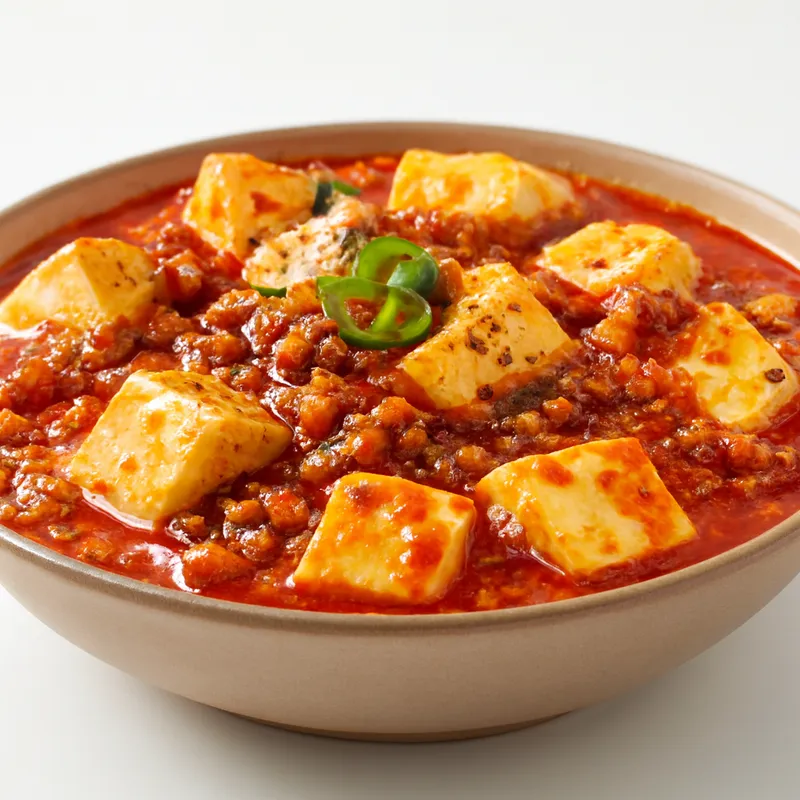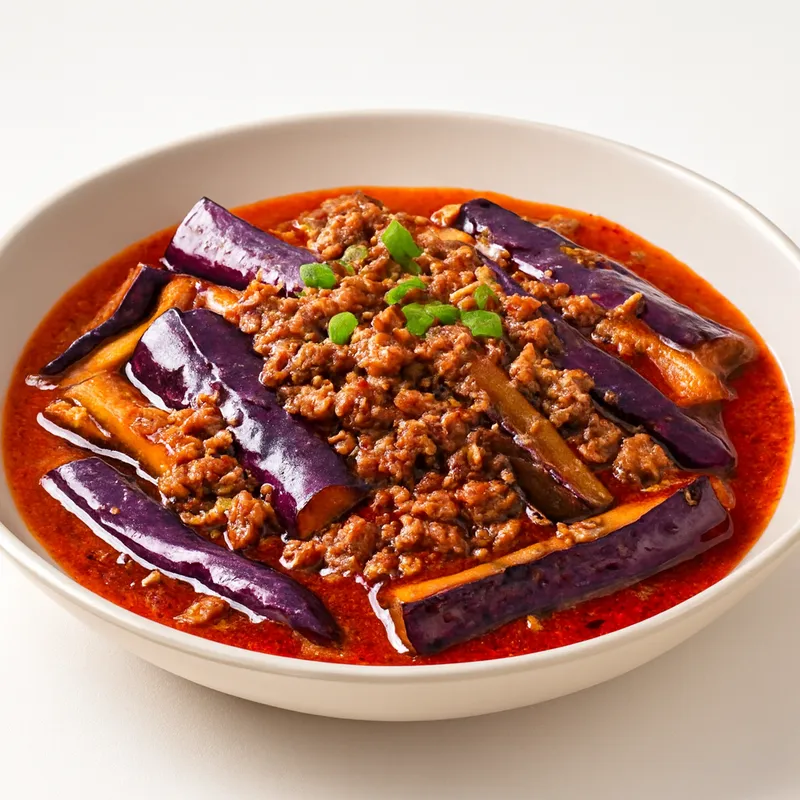




A Sichuan home-kitchen riff on the 1862 Mapo Tofu template — same doubanjiang-and-má-là sauce profile (the original Mapo Tofu is classically made with beef, not pork), swapping silken tofu for eggplant. The dish became widespread in the post-1980s restaurant boom across Chengdu and Chongqing, when Sichuan cooks built a whole family of "mapo-style" vegetables (mapo eggplant, mapo potato) using the original sauce on different bases. Not as old as its namesake, but the technique is the same lineage.
Mapo qiezi — Chengdu kitchen's vegetarian sibling to mapo tofu, same Pixian doubanjiang base, eggplant first deep-fried to break the spongy bite. The numbing peppercorn goes in last, off the heat.
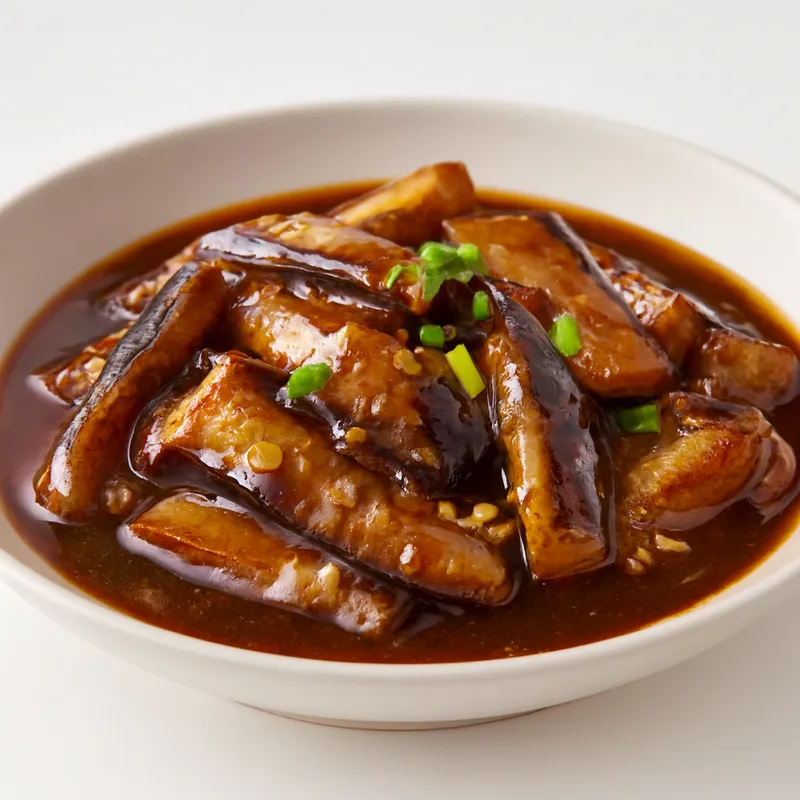
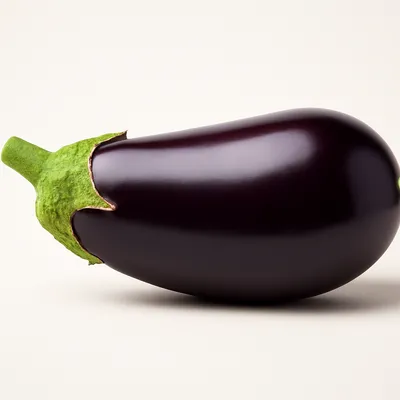
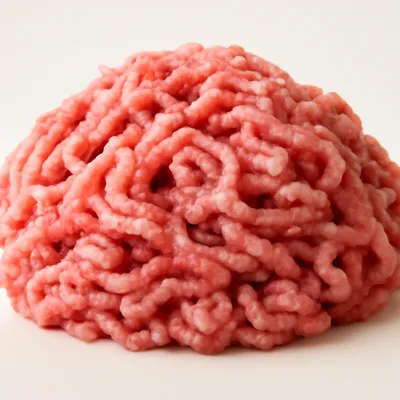
Long Asian eggplant cut into batons, fried until the skin wrinkles and the flesh turns custard-soft, then tossed in a brick-red sauce of doubanjiang, garlic, and ground pork. Sichuan peppercorn buzzes the lips, chili oil coats the spoon. Eat over white rice — the eggplant has soaked up so much sauce that one piece carries half a bowl of flavor.
The eggplant must be pre-cooked (deep-fried or steamed) before it goes near the sauce. Raw eggplant in wok sauce stays spongy and bitter; pre-frying collapses the cell walls so it absorbs sauce like a sponge. Doubanjiang (Pixian fermented broad bean paste) is the load-bearing ingredient — the chili and salt don't read right with regular bean paste. A weak doubanjiang and the dish goes flat, no matter how much chili oil you add.
Variations
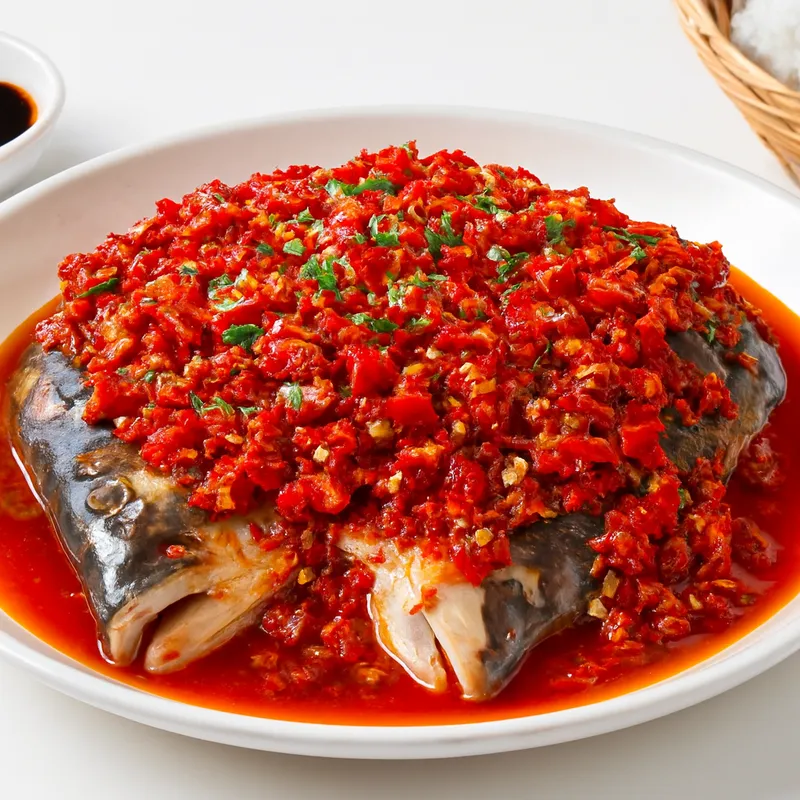
Sichuan version with minced pork and doubanjiang; Hunan style adds chopped salted chili (剁椒); home-style yu xiang qie zi swaps in sweet-sour-spicy fish-fragrant sauce; Cantonese clay-pot eggplant runs sweeter with oyster sauce.
On the Palate
Where Mapo Eggplant sits in the Chinese flavor cloud
Cook the eggplant soft before it ever meets the sauce, and let a real Pixian doubanjiang carry the flavor — those two moves make or break the dish.
Ingredients




How it's made
4 steps · 18 min
- 15 min
Cut the eggplant into long, thick strips. Heat a wok over medium-high heat and add a splash of oil. Once shimmering, add the eggplant and stir-fry until golden and tender, about 5 minutes.
Watch outThe eggplant is ready when the strips go limp and translucent-gold with a glossy sheen — firm, pale pieces have not given up their sponge yet.
- 27 min
Add minced garlic and ginger to the wok, stirring until fragrant and just beginning to color. Immediately add ground pork, breaking it up with a spatula until browned and cooked through.
Watch outFry the garlic and ginger only until fragrant and just tinged gold — the moment it browns hard it turns acrid.
- 35 min
Mix soy sauce, sugar, and a touch of water in a small bowl. Pour this sauce into the wok, tossing everything to coat. Let it simmer until the sauce thickens slightly and clings to the eggplant and pork.
Watch outThe sauce is done when it thickens just enough to cling and coat the eggplant with a shine, not puddle at the bottom of the wok.
- 41 min
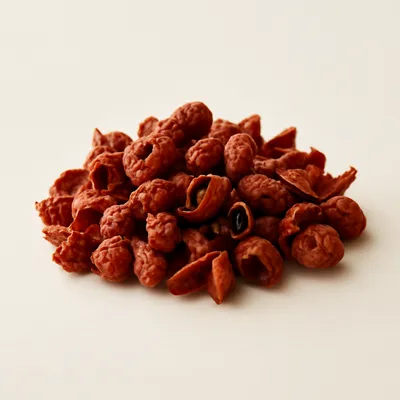
Sprinkle with ground Sichuan pepper before serving, allowing its numbing aroma to complement the dish's richness.