A Shunde fermented rice cake from Ming-dynasty Lunjiao: snowy white, crystalline, and shot through with tiny uniform bubbles from overnight natural fermentation — mildly sweet-sour, springy, and cool against the palate, best eaten as a summer afternoon refreshment.


A Liang-surnamed street vendor in Ming-dynasty Lunjiao accidentally discovered this cake when rice slurry fell into his steaming vessel unexpectedly, producing an unusually light, airy result. He refined the process and the cake became famous far beyond Shunde. By the Qing Xianfeng era, the Shunde County Gazette recorded: 'Lunjiao Cake — in the Ming dynasty, literati officials would travel a hundred li and moor their boats specially to eat it.' The dish won a gold medal at the 1993 National Cooking Competition and was named a 'Famous Chinese Snack' (中华名小吃) in 1997.
Cold and clean on the tongue — a whisper of sourness, a measured sweetness, a faint clean fragrance of fermented rice. The texture is springy but not rubbery; it bounces against the teeth before dissolving without a trace of stickiness.
Unlike bread leavened with commercial yeast, Lunjiao Cake relies entirely on wild yeasts and lactic acid bacteria naturally present on the soaked rice. During the 5–6 hour fermentation at 35°C, yeast produces carbon dioxide bubbles that become trapped in the dense slurry, forming the characteristic honeycomb cross-section when steamed. Lactic acid bacteria simultaneously produce lactic acid, yielding the cake's signature mild tang. Aged long-grain rice (籼米) is preferred because its partially retrograded starch produces a firmer, less sticky gel after steaming.
Variations
The original version uses only white rice and white sugar. A yellow version made with brown sugar (黄糖伦教糕) is popular for its caramel depth. Some modern cakes add pandan leaf juice for a green color and fragrance. A coconut milk variant exists in Guangdong, though purists regard these as departures from the Lunjiao original.
On the Palate
Where Lunjiao Cake sits in the Chinese flavor cloud
Ingredients
Serves 8How it's made
7 steps · 35 min active + 8 hours 25 min waiting
- 1180 min
Rinse aged long-grain rice and soak in cold water for 3 hours. Drain.
- 210 min
Blend the soaked rice with 1 cup of clean water into a very fine, smooth slurry.
- 38 min
Dissolve white sugar in 2 cups of boiling water, stir until clear, then allow to cool to 40°C. Stir the hot sugar syrup into the rice slurry and mix thoroughly.
- 4360 min
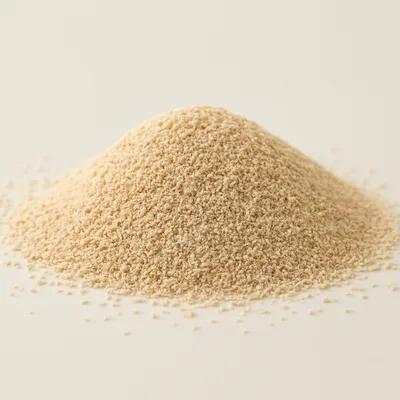
Dissolve yeast (or draw 2 tablespoons of the previous batch of fermented slurry as a starter) in a little warm water. Stir into the slurry, mix well, cover, and ferment at 35°C for 5–6 hours until abundant small bubbles appear throughout and the surface looks frothy.
Watch outFerment until the batter is dotted with dense small bubbles and looks frothy on top — that gas is the honeycomb; under-ferment and it steams up dense and flat.
- 53 min
Grease a deep steaming tray. Pour the fermented slurry in — it should be visibly aerated. Do not stir again.
Watch outOnce it's poured in aerated, don't stir again — knock the bubbles out now and you lose the whole honeycomb.
- 630 min
Steam over vigorously boiling water for 25–30 minutes until a toothpick inserted in the center comes out clean and the surface is glossy and set.
Watch outSteam over a hard rolling boil until a toothpick comes out clean and the top is glossy and set — weak steam leaves the center wet and gummy.
- 710 min
Remove from heat, cool completely at room temperature, then refrigerate. Slice into diamond or rectangular pieces and serve cold.
Archive tool suggestions — not reviewed
These legacy suggestions have not been evidence-reviewed and are not presented as required tools.


