One of Anyang's Three Treasures: dense cakes of buckwheat flour bound with fresh pig blood, steamed into firm slabs, then sliced and deep-fried until the surface crackles while the interior stays yielding. Eaten with a sharp garlic-vinegar dipping sauce, the snack balances the earthy bitterness of buckwheat against mineral iron and a fierce kick of raw garlic.




Blood cake is traditionally said to have originated during the Qing Qianlong reign (1736–1795). Severe flooding reportedly destroyed the harvest around Anyang; the government distributed buckwheat seed for famine relief. After a bumper crop, a farmer—accounts give the surname Liu of Honghetu Village or Wang of Huangfu Village, the two stories sharing the same structure—fried cooled steamed buckwheat cakes and served them with garlic sauce, then began adding fresh pig blood to the batter for a richer flavour. The entrepreneur eventually moved to the city to sell the snack full-time. No pre-20th-century written record confirms this account; the Qianlong founding should be treated as folk history.
The fried surface cracks audibly at first bite; beneath it, the buckwheat-blood interior is dense, faintly bitter, and minerally rich. The sharp garlic-vinegar sauce cuts through cleanly, leaving a hot, pungent finish that outlasts the last chew.
Buckwheat flour is unusually rich in rutin (about 20–80 mg per 100 g), a flavonoid that contributes its characteristic slight bitterness and deep brown pigmentation. Pig blood is predominantly haemoglobin; heating above 70°C causes irreversible protein denaturation and crosslinking into a firm, elastic gel that binds the batter. Deep-frying at around 180°C drives rapid surface dehydration: Maillard reactions between blood-derived amino acids and reducing sugars generate pyrazines and furans, producing the crispy browned exterior while the insulated interior stays moist and tender. Allicin in the garlic dip (formed by enzymatic conversion of alliin) adds volatile pungency that precisely cuts the iron-laden flavour.
Variations
Some vendors blend in a small amount of wheat flour to firm the texture. Blood cake slices are commonly floated as a topping in flat noodle soup (扁粉菜). A sweet potato starch variant substitutes part of the buckwheat for a softer bite. Modern adaptations dip in sweet chili sauce in place of garlic vinegar.
On the Palate
Where Anyang Blood Cake sits in the Chinese flavor cloud
Ingredients
Serves 4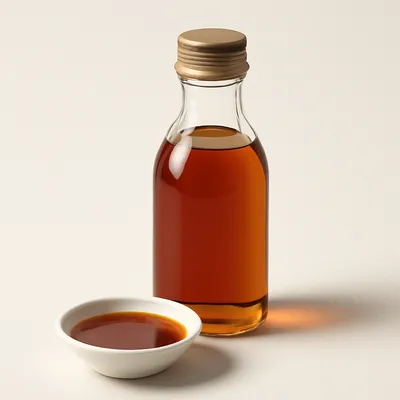

How it's made
7 steps · 15 min
- 110 min
Whisk buckwheat flour with fresh pig blood and water until completely smooth with no lumps; season with salt; rest 10 minutes to hydrate fully
Watch outWhisk the blood and buckwheat batter dead smooth with no lumps — any lump steams into a raw pocket that never sets.
- 25 min
Grease the inside of a deep rectangular mold or wide bowl; pour in the batter and tap sharply to release air bubbles
- 330 min
Steam over high heat for 30 minutes until the centre is fully set; a bamboo skewer inserted in the centre should come out clean
Watch outSteam until the centre is firm and a skewer comes out clean — the blood protein has to fully set above 70°C or the middle stays gooey.
- 465 min
Remove from steamer; cool to room temperature, then refrigerate for 1 hour until firm enough to slice cleanly
- 55 min
Unmold; cut into slices about 1 cm thick, or into triangular wedges in the traditional style
- 64 min
Deep-fry in vegetable oil at 180°C for 3–4 minutes, turning once, until both surfaces are golden and crispy; drain on paper
Watch outFry at 180°C until both faces are crisp and golden — pull it out the second it colours, over-frying dries the tender inside to rubber.
- 76 min
Mix garlic paste with salt, rice vinegar, and sesame oil to make the dipping sauce; serve the hot blood cake immediately alongside
Archive tool suggestions — not reviewed
These legacy suggestions have not been evidence-reviewed and are not presented as required tools.


