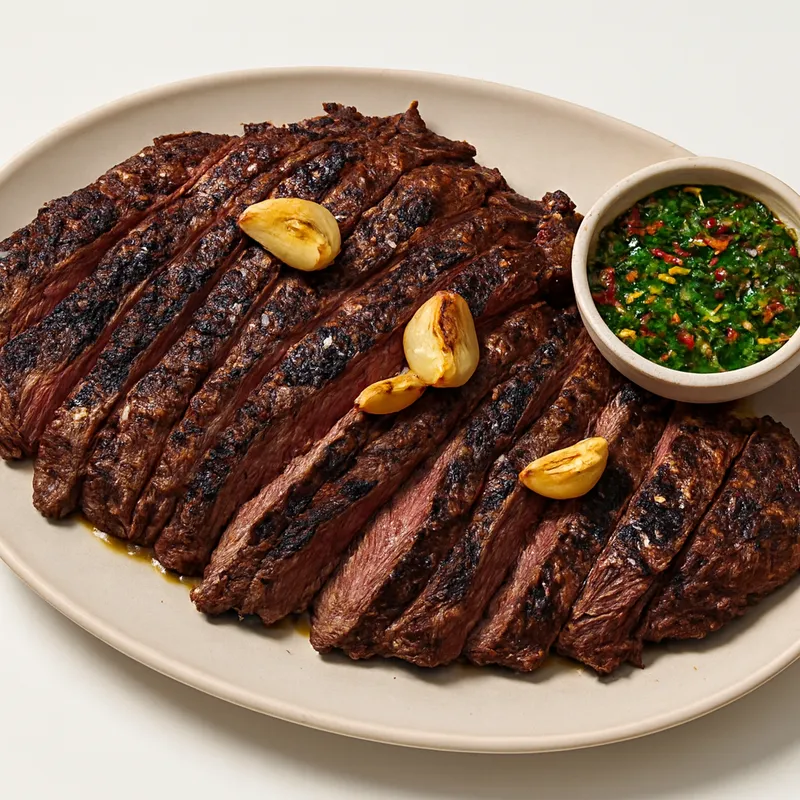
A succulent sirloin steak seasoned with salt, black pepper, and garlic, then grilled to perfection and served with chimichurri.
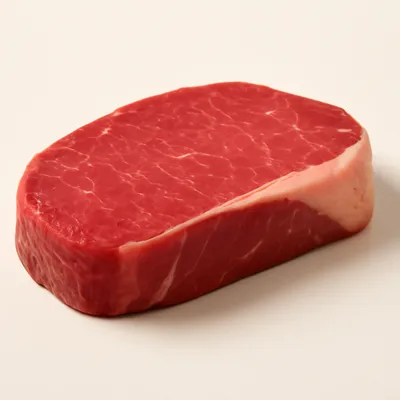





The cut and the name took shape in mid-19th-century Argentina as cattle ranching exploded across the pampas after independence; "chorizo" here refers to the cut's sausage-like cylindrical shape, not the sausage. The parrilla (open grate over wood embers) tradition was carried by gauchos cooking beef in the field. By the early 20th century the steak-and-grate combination was the urban Buenos Aires standard.
The chorizo here means the cut's sausage-like cylindrical shape, not the sausage itself. Mid-19th-century Pampas cattle boom set the cut. The fat cap is load-bearing — trimming it off butcher-style is why imported attempts fall flat. Salt before, never during.
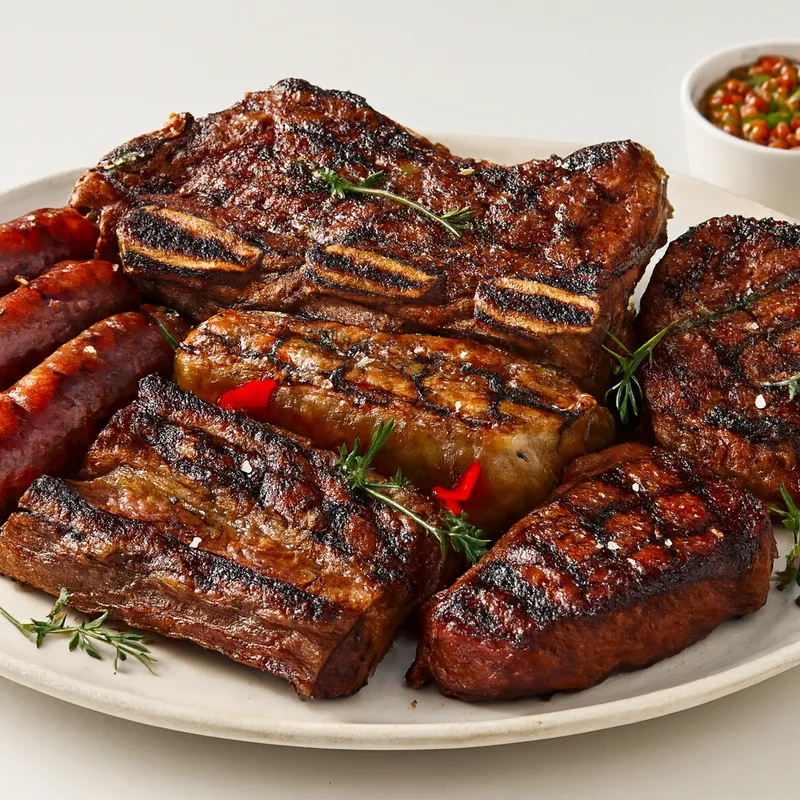
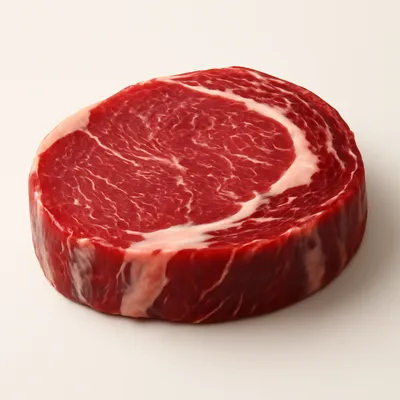
A thick-cut sirloin, finger-and-a-half tall, with a fat cap left on. Outside is dark and crusted from the parrilla; inside runs pink to red. The only seasoning before the grill is coarse salt — pepper and garlic come at the table or not at all. Served with a spoon of chimichurri on the side, never poured over. Eat by cutting against the grain.
The fat cap is load-bearing — Argentine sirloin (bife de chorizo) is cut with the strip of fat still attached, and that fat renders against the embers, drips, and self-bastes the meat. Trimming it off at the butcher (American style) is why imported attempts fall flat. Salt goes on before, never during; salting mid-cook draws moisture and stalls the crust.
Variations
Bife de chorizo (sirloin strip with fat cap); bife angosto (the narrower strip-loin cut from the short loin); bife ancho (the rib eye); ojo de bife (the eye of the rib); American Argentine-style steakhouses often serve a US strip and call it the same thing — locals can tell.
On the Palate
Where Bife de Chorizo sits in the Argentinian flavor cloud
Ingredients

How it's made
6 steps · 30 min
- 13 min
Preheat the parrilla to high heat.
- 21 min
Season the sirloin steak generously with salt and black pepper.
Watch outSalt the steak now, before it hits the grill — salting mid-cook pulls out moisture and stalls the crust.
- 33 min
Rub olive oil and minced garlic onto the steak.
- 45 min
Place the steak on the grill and cook for 4-5 minutes on each side for medium rare.
Watch outLeave it undisturbed until a dark crust forms and it releases from the grate on its own — flip too early and it tears and stays pale.
- 517 min
Remove from heat and let it rest for a few minutes.
Watch outRest it a few minutes before cutting so the juices settle back in — slice it hot and they run out onto the board.
- 61 min
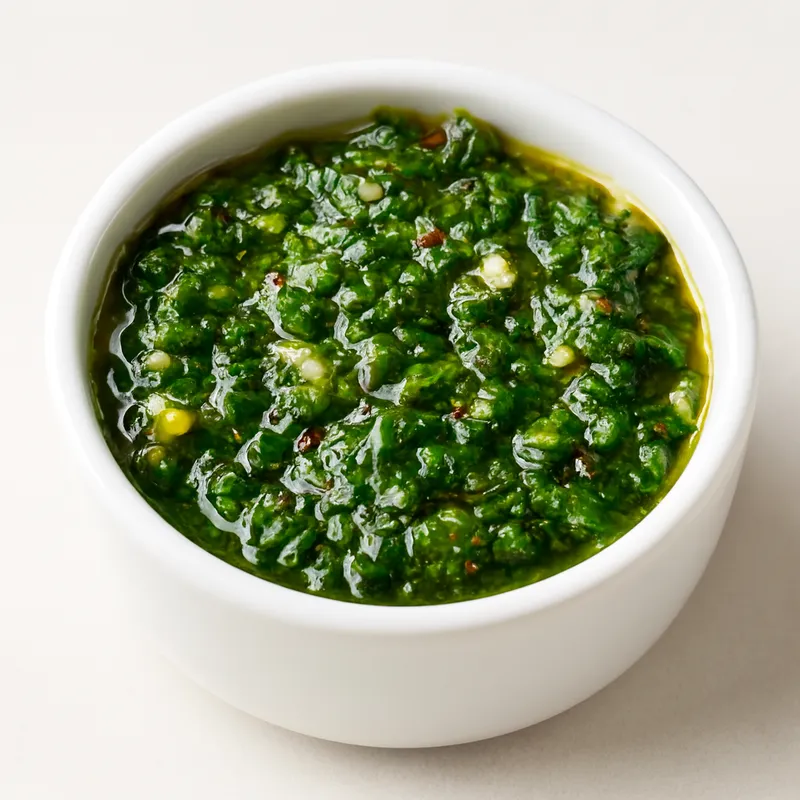
Serve with a generous spoonful of chimichurri.
Archive tool suggestions — not reviewed
These legacy suggestions have not been evidence-reviewed and are not presented as required tools.
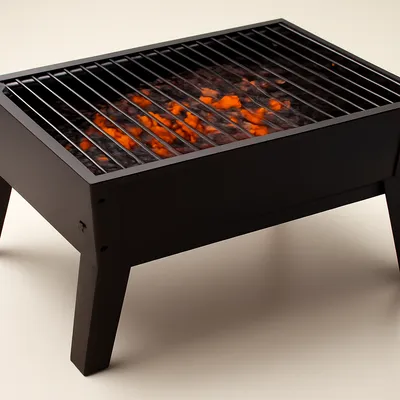
An open or hooded metal frame holding a bed of glowing charcoal embers, with a grate above. Charcoal burns at 700°C+ on the surface and emits short-wave infrared, which cooks proteins faster and with deeper Maillard browning than gas. Hardwood lump charcoal (oak, mesquite, fruitwood) lends its own smoke; cheap briquettes do not. Mastery is mostly heat zoning — direct over coals for searing, indirect off-coals for slow-roasting.

A heavy iron grate set 25-40 cm above a wood-or-charcoal fire, often with handle-cranked height adjustment to dial in the heat. The classic Argentinian asado parrilla cooks tira de asado (cross-cut short ribs), entraña (skirt steak), and chorizo over the embers of quebracho or hardwood — never gas. A real parrilla cooks for 2-3 hours; lifting the grate higher mid-cook is how the asador slows the meat for tougher cuts.