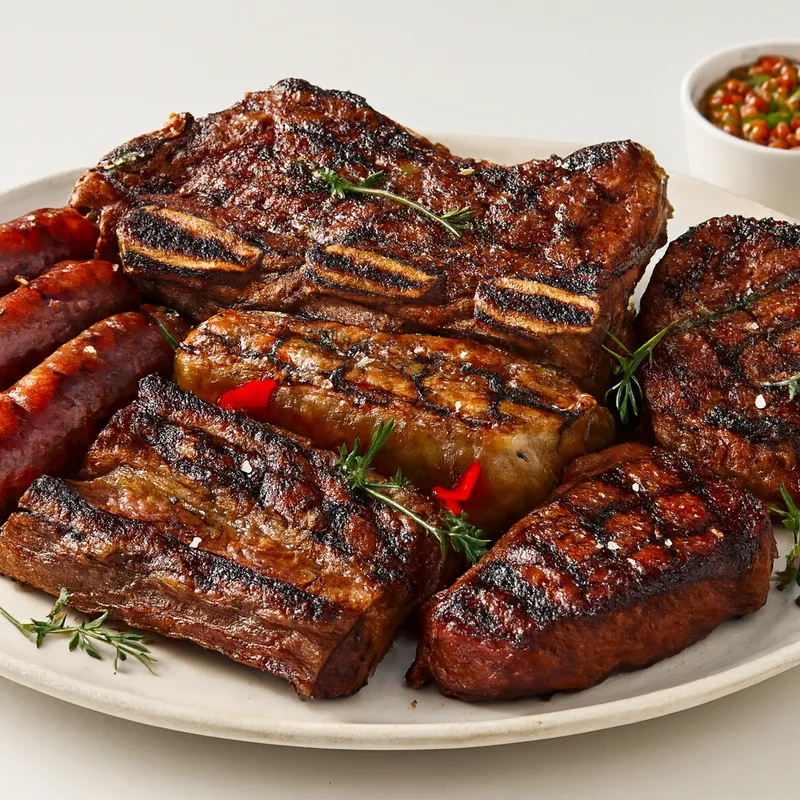
Patagonia's signature whole-lamb feast — a young lamb butterflied open onto a cross-shaped iron spit and slow-roasted over open wood fire for 5 hours, served by hand with chimichurri.






Cordero al palo (literally 'lamb on the cross-stick') is the centerpiece of Patagonian Argentine cooking — the dish that defines the southern provinces of Chubut, Río Negro, Santa Cruz, and Tierra del Fuego. Argentine Patagonia is sheep country: hundreds of thousands of head graze the vast steppe between the Andes and the Atlantic. The technique came from the indigenous Tehuelche and Mapuche peoples (who roasted whole animals over open fire) and was adapted by Welsh, German, and Argentine criollo settlers in the 19th century. The cross-iron spit (in the shape of an actual cross) is planted into the ground at an angle, with the butterflied lamb tied to it, facing the fire embers. The cook tends the fire and rotates the spit slowly over 4-6 hours.
Tear a thick slice from the lamb leg with a knife and fingers: the exterior is mahogany-crusted with smoke and salt; the interior is rose-pink and juicy, the long radiant cook having converted the lamb's collagen to gelatin without drying the muscle. Dip a piece in chimichurri — the parsley-garlic-oregano-vinegar sauce cuts the fat and adds herbal freshness. The setting (open Patagonian sky, wood smoke, malbec) IS the dish. Modern Buenos Aires restaurants have tried to replicate it indoors but always lose the smoke.
Cross-spit / radiant-heat cooking penetrates the lamb evenly via radiation from the side (rather than convection from below). The 4-5 hour cook at 120°C converts the lamb's collagen to gelatin (>140°F sustained for hours), while the salmuera baste keeps the surface moist enough to develop Maillard browning without drying. Without the salmuera, the exterior burns before the interior reaches doneness; with it, the result is restaurant-quality at scale.
Variations
Tradicional Patagonian uses Patagonian lamb under 6 months; tourist asados in Bariloche or El Calafate use older lamb (still good but stronger); modern Buenos Aires restaurants build brick-encased asadores to replicate the cross-spit indoors; family Sunday version uses lamb shoulder only (no whole-animal commitment).
On the Palate
Where Cordero al Palo sits in the Argentinian flavor cloud
Cook the lamb by radiant side-heat, not flame underneath, and baste with salmuera every hour — that's what browns the crust deep without burning it before the inside is done.
Ingredients
Serves 12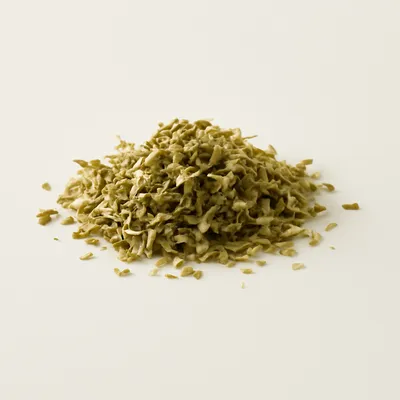


How it's made
5 steps · 40 min active + 5 hours 20 min waiting
- 1245 min
(Home adaptation — replacing whole lamb with hindquarter cuts.) Butterfly 4kg lamb leg or shoulder (bone-in) open. Score the fat caps. Rub all surfaces with 4 tbsp coarse salt, 2 tbsp coarse pepper. Refrigerate uncovered 4 hours.
- 230 min
Build a wood fire (oak or quebracho if available, hickory is fine) in a large outdoor pit or covered grill. Let it burn down to glowing coals (~120°C ambient). The fire should be in a long bed parallel to where the lamb will hang, not directly underneath.
Watch outFire burned down to glowing coals, no open flames — flames char, embers radiate.
- 310 min
Build the cross-iron rig: attach the lamb to a heavy iron stake or spit in a cross pattern, tying with butcher's twine. Plant the spit at a 60-degree angle so the lamb hangs vertically over (not above) the coals, receiving radiant heat from the side.
- 4270 min
Cook the lamb 4-5 hours, rotating every 30 min so all sides develop crust evenly. Baste every hour with a brine of 250ml water + 4 tbsp salt + 2 tbsp red wine vinegar (called 'salmuera'). The exterior should develop a deep-mahogany crust; the interior should reach 65°C for medium-rare.
Watch outSurface builds a deep-mahogany crust; probe reads 65 degrees at the thick part for medium-rare.
- 535 min
Remove from fire; rest 25 min loosely covered. Carve thick slices off the bone, serve on wooden boards with chimichurri sauce, salsa criolla (chopped tomato-onion-pepper), and grilled vegetables. Eaten with hands or pocket-knives, washed down with Malbec or local Patagonian Pinot Noir.
Watch outJuices settle back during the 25-minute rest — the meat firms and stops bleeding when cut.
Archive tool suggestions — not reviewed
These legacy suggestions have not been evidence-reviewed and are not presented as required tools.