The Idea
A cucumber left on the counter rots in a week. Drop it in vinegar, or sink it under a salty brine and wait, and it can last a year — brighter and sharper than the day it was picked. That is the whole of pickling: make the food too acidic for spoilage to take hold, and time stops working against you.
There are two roads to that sourness, and the difference matters. On the quick road you add the acid — pour vinegar over the vegetable and the tang arrives by morning. On the slow road you grow it — pack the vegetable in salt, and wild bacteria turn its own sugars to acid over days or weeks. Both end in the same protective sourness; only one leaves the jar alive. That slow road is where pickling shades into its sibling, fermentation — every sour dill pickle and crock of sauerkraut is a pickle made by microbes rather than poured from a bottle.
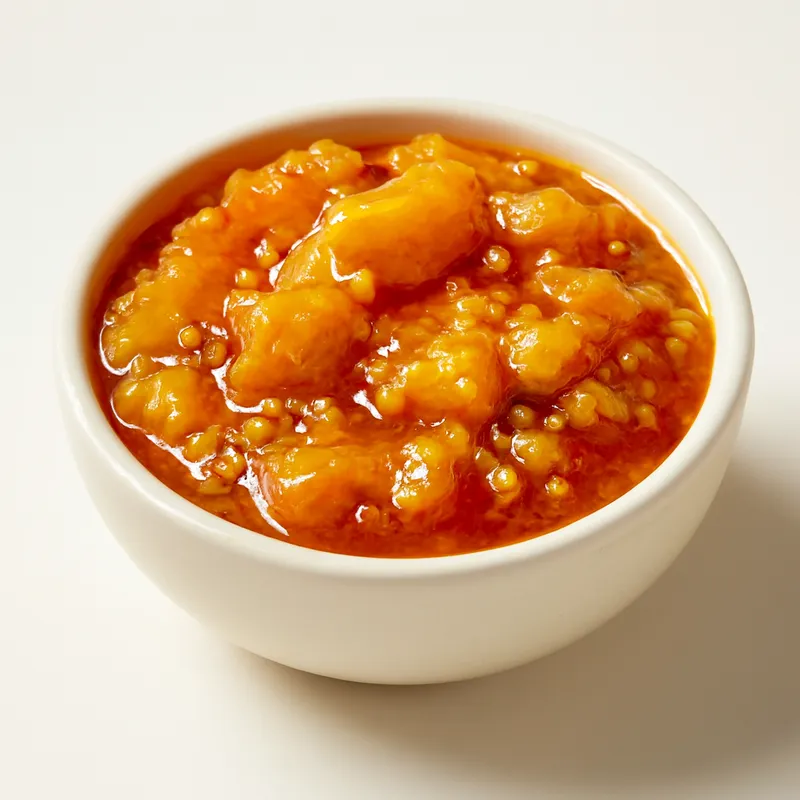
It was discovered wherever the harvest outran the season. A hot Mesopotamian summer, a Roman army on the march, a ship a hundred days from port with scurvy in the hold — each faced the same problem of keeping food from turning, and each reached for acid as the answer. The result is a shelf of national tempers in a jar: the German crock of sauerkraut, the Korean pot of kimchi, the Indian mango achar swimming in oil and spice, the deli barrel of half-sours. Different vegetables, different acids, the same old bargain with time.
There are two ways to make a pickle: pour the sour on, or grow it from within. One is ready by morning; the other is alive.
A Short History
representative milestonesThe earliest evidence of pickling: ancient Mesopotamians preserve food in acidic brine, defeating the spoilage of a hot climate long before anyone could name why it worked.
Cucumbers — carried west as seed from their native India — are pickled in brine in Mesopotamia, the first named vegetable in the record of the craft.
Columella's farming manual De Re Rustica devotes its final book to pickling and preserving, laying out brines and vinegars to carry a garden through winter.
Xu Shen's dictionary Shuowen Jiezi defines the ancient word zu as suan cai — "sour vegetable" — fixing China's long tradition of salt-soured pickles in writing.
James Cook loads tons of sauerkraut against scurvy and loses no man to it; the acid-soured cabbage helps earn him the Royal Society's Copley Medal in 1776.
Louis Pasteur proves that vinegar is made by living bacteria feeding on alcohol — not by chemistry alone — finally explaining where the sour comes from.
Henry Heinz opens the Anchor Pickle & Vinegar Works, and the barrel pickle becomes an industry — pickling scaled from the home crock to the factory line.
What's Happening
Preservation comes down to a single number: pH. Spoilage microbes and the deadly Clostridium botulinum need a near-neutral, watery home; push the acidity below about pH 4.6 and that home collapses — germination and toxin-making simply stop. A quick pickle crosses that line the instant vinegar's acetic acid floods in; a fermented one crosses it days later, as Lactobacillus turns the vegetable's sugars into lactic acid from within. Either way, it is the sourness itself, not the salt or the cold, that stands guard. This is why a tested recipe's vinegar ratio is a safety rule, not a matter of taste.
The reason acid works is subtler than just "low pH." A weak organic acid like acetic or lactic keeps part of itself uncharged, and that neutral form slips straight through a microbe's fatty membrane. Inside the near-neutral cell it splits apart, dumping acid where the cell can least afford it; the microbe must burn its energy pumping the protons back out until it exhausts itself and stalls. Salt lends a second hand on the fermented road — it draws water out of the vegetable and tightens the screws further, holding back spoilers while the acid-makers it favors get to work. Acid and salt together, and the jar keeps.
Two Roads to Sour
the mental modelEvery pickle gets its tang the same way — acid drops the pH low enough that nothing dangerous can grow — but by one of two roads. On one you add the acid and it's done in an hour; on the other, microbes make the acid over days. Knowing which road a jar took tells you its flavor, its keeping, and whether it's alive.