Tunisian sesame confection (halva) made from tahini and sugar syrup cooked to the soft-ball stage, then worked into a dense, flaky-crystalline block; the name 'chamia' (Levantine/Syrian) records its perceived Ottoman-era eastern origin. Soapwort root extract is used in traditional versions to create the signature fibrous texture. Eaten during Ramadan and as a breakfast spread, often studded with almonds or pistachios.
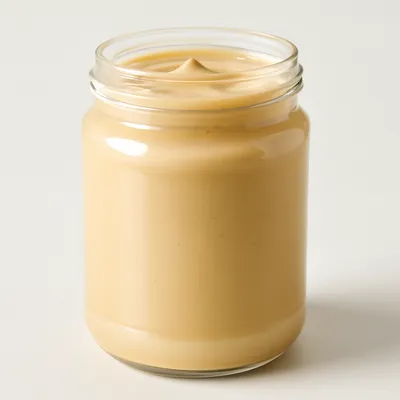


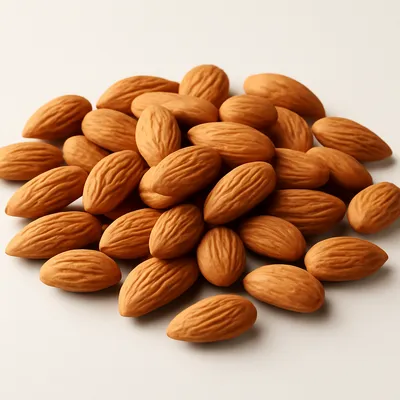
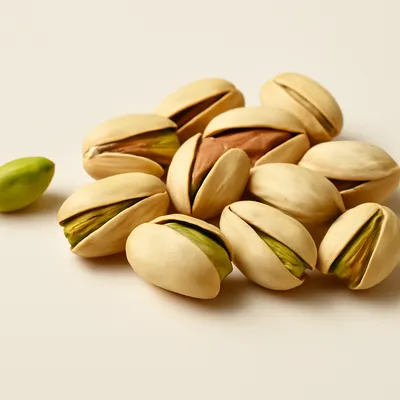
Sesame-and-sugar confections appear in Abbasid Baghdad culinary records from the 8th–9th centuries CE. Ottoman trade routes carried refined tahini-halva westward through the empire; the Tunisian name 'chamia' — meaning Levantine or Syrian — preserves the memory of its perceived eastern point of entry into North Africa. According to Al Adib magazine, commercial tahini-halva factories were established in Beirut as early as 1874, and the product subsequently reached North Africa via Mediterranean trade networks. Today homemade chamia, prepared with soapwort root for authentic texture, and commercial blocks coexist across Tunisia; both are eaten at Ramadan suhoor and iftar and as a morning accompaniment to coffee.
Slightly firm on first contact, then shatters along natural fault lines into sandy, melt-in-mouth shards; deep roasted sesame nuttiness mingles with the faint caramel of the sugar; embedded almonds or pistachios add a clean, contrasting crunch.
Sugar syrup cooked to 117–120°C (soft-ball stage, approximately 86% sucrose concentration) is rapidly incorporated into tahini, which contains about 50% oil by weight. Sesame oils coat the emerging sugar crystal nuclei, restricting their growth to an extremely fine crystalline lattice. Traditional recipes add soapwort root extract: the saponins within the extract are natural surfactants that emulsify sesame oil and trap micro-bubbles within the crystallising sugar matrix, producing the characteristic flaky, fibrous texture. Without soapwort, crystal growth is denser and the result is a smooth, fudge-like block. Vigorous kneading while the mixture cools aligns microcrystals and aerates the mass, further developing the laminar structure.
Variations
Nut-studded versions press whole almonds or pistachios into the surface before setting. A cocoa variant replaces a quarter of the tahini with unsweetened cocoa powder. Black sesame versions use black tahini for a darker, more bitter-roasted flavour. Layered chamia alternates plain and cocoa halva pressed together, revealing a striped cross-section when sliced.
On the Palate
Where Halwa Chamia sits in the Tunisian flavor cloud
Ingredients
Serves 12How it's made
8 steps · 20 min
- 120 min
If using soapwort root, simmer a small handful in 200ml water for 20 minutes; strain and whip the liquid vigorously until thick and foamy. Reserve the foam.
- 25 min
Combine sugar and water in a heavy-bottomed saucepan; bring to a boil over medium heat without stirring.
- 310 min
Cook the syrup to 117–120°C (soft-ball stage), monitoring with a candy thermometer; remove from heat immediately when the temperature is reached.
Watch outCook the syrup exactly to soft-ball, 117–120度 — under and the halva won't set, over and it turns hard and grainy.
- 45 min
Working quickly, pour the hot syrup into the tahini in a thin, steady stream while stirring vigorously with a wooden spoon or heat-resistant spatula.
Watch outPour the hot syrup into the tahini in a thin stream while stirring hard — dump it in and the sugar seizes into coarse crystals instead of fine flakes.
- 58 min
Add the soapwort foam if using; fold and knead the mixture for 5–8 minutes as it cools, turns opaque, and becomes thick and putty-like.
Watch outKnead 5–8 minutes as it cools until it turns opaque and putty-like — that's the point the fine flaky crystal structure forms.
- 65 min
Press whole almonds or pistachios across the surface if desired; pour the mixture into a lightly oiled loaf pan and level firmly.
- 760 min
Allow to cool at room temperature for 1 hour, then refrigerate for at least 2 hours until the block is firmly set.
- 8120 min
Unmould and slice into bars or squares with a sharp knife; wrap individual pieces in baking paper to prevent sticking.
Archive tool suggestions — not reviewed
These legacy suggestions have not been evidence-reviewed and are not presented as required tools.

