A pillowy leavened cake from Mantua, formed by rolling a butter-enriched dough around a sweetened almond filling, cutting it into portions, and standing them upright in a round pan so they expand during proofing into a cluster of soft, blooming spirals that resemble a basket of rosebuds.




Traditionally linked to the 1490 wedding of Isabella d'Este and Francesco II Gonzaga of Mantua, when a court pastry chef associated with the Este kitchen in Ferrara reportedly created this cake for the occasion. An alternative tradition places its origin in the Lower Garda towns historically under Mantuan rule — including Lonato and Calvisano — where modern production regulations also apply. Both Mantua and Brescia provinces claim the recipe, and it is listed in the Lombardy register of traditional agri-food products.
The top of each spiral bakes to a tender golden crust; tearing one open reveals soft, layered coils perfumed with butter and almond. The filling adds sweetness without heaviness, and the crumb is tender enough to pull apart in ribbons.
Long kneading builds a resilient gluten network capable of trapping the CO2 produced by yeast during two successive proofing stages. Softened butter coats the gluten strands, creating a tender, open crumb. In the oven at 180°C, butter in the filling melts and saturates the dough layers while the Maillard reaction browns the exposed spiral tops; as the cake cools, the sugar-almond filling sets back into a lightly firm layer between the spirals.
Variations
Brescia versions often add candied orange peel or apricot jam to the almond filling. Lake Garda bakers prefer Manitoba high-protein flour for a chewier texture and longer shelf life. Some recipes incorporate rum-soaked raisins folded into the almond paste.
On the Palate
Where Torta delle rose sits in the Italian flavor cloud
Ingredients
Serves 8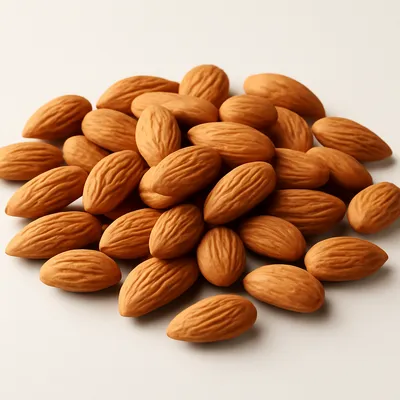

How it's made
7 steps · 20 min
- 110 min
Warm the milk to 38°C; dissolve brewer's yeast with a pinch of sugar and allow to activate for 10 minutes until frothy.
- 215 min
Combine Manitoba flour, eggs, remaining sugar, and salt; gradually add the yeast-milk mixture and mix until a shaggy dough forms.
- 315 min
Knead softened butter into the dough gradually over 12-15 minutes until smooth, elastic, and pulling cleanly from the bowl.
Watch outKnead until the dough pulls cleanly off the bowl and stretches thin without tearing — that gluten is what traps the gas and gives the open crumb.
- 490 min
Place dough in a lightly oiled bowl, cover, and proof at 26°C for about 90 minutes until doubled in volume.
Watch outWait for a true double in volume — under-proofed dough bakes dense; poke it and the dent should spring back slowly.
- 515 min
Turn dough onto a floured surface; roll into a rectangle about 30 by 40 cm; spread the softened butter-sugar-almond filling evenly over the surface.
- 660 min
Roll the dough tightly from the long side into a log; cut into 7 equal portions; stand each piece cut-side up in a buttered round cake pan, leaving gaps between them.
- 730 min
Cover loosely and proof for 60 minutes until the spirals have bloomed and nearly fill the pan; bake at 180°C for 25-30 minutes until deep golden.
Watch outBake to a deep gold, not pale — the caramelized spiral tops are where the flavor is, and pale rolls taste raw and doughy.
Archive tool suggestions — not reviewed
These legacy suggestions have not been evidence-reviewed and are not presented as required tools.


