A refined old Paduan preparation: a capon stuffed with aromatics is sealed inside a pig's bladder with a hollow marsh reed threaded through as a steam vent, then gently poached in barely simmering salted water for three to four hours. The bird never touches the water directly; it cooks sealed in its own steam and aromatic juices. When the bladder is cut open at the table, the concentrated cooking liquor inside is spooned back over the carved meat.




The canevera technique is associated with the Paduan playwright Angelo Beolco (c. 1496–1542), known as Ruzante, whose works reference the local practice of sealing poultry inside bladders for slow cooking, placing the method firmly in Paduan domestic kitchens by the early 16th century. The gastronome Pellegrino Artusi included a closely related enclosed poultry preparation in his 1891 Scienza in cucina e l'Arte di mangiar bene — one of the earliest printed records of the technique in the Italian culinary canon. Today Padua's Chamber of Commerce officially registers Cappone alla Canevera as one of three canonical Paduan dishes, alongside Risotto Ricco and Torta Pazientina.
The capon's breast is extraordinarily tender — muscle fibers saturated with the aromatic steam condensed inside the sealed bladder — with a barely-set texture that verges on silky. The skin, unrendered and soft, has absorbed every note of the herbs and white wine. The poured-back cooking liquor, gelatinous and intensely savory, concentrates the entire flavor of the dish into a few rich spoonfuls.
The pig's bladder creates a sealed, high-humidity environment analogous to a modern sous vide bag: the water bath outside, maintained near 90–95°C (194–203°F), conducts heat slowly through the bladder wall, stabilizing the internal temperature at 70–75°C (158–167°F). At this range, capon collagen hydrolyzes into gelatin — keeping the jus viscous and the connective tissue silky — while myosin has fully denatured but myofibrillar water-holding capacity remains high, preventing the dry texture that results from higher-heat cooking. The hollow reed functions as a pressure-relief valve, releasing accumulated steam before internal pressure can rupture the bladder. Fat-soluble aromatic compounds from herbs and wine dissolve into the subcutaneous fat and drippings during the long sealed cook; sealed from air, they undergo minimal oxidation, yielding a clean, concentrated jus.
Variations
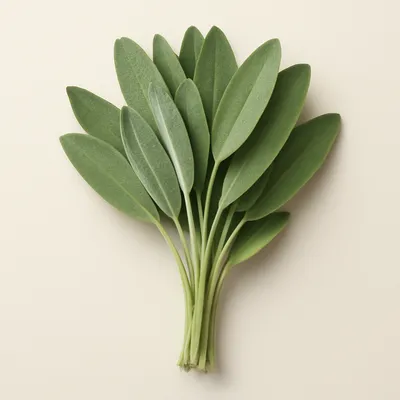
The technique works equally well with hen, turkey, or guinea fowl, with cooking times ranging from 3 to 5 hours depending on the bird's size. Where pig's bladder is unavailable, food-safe oven-roasting bags are the modern substitute, though the bladder's own collagen contributes marginally to the jus. Aromatic fillings vary by cook: the standard Paduan combination is rosemary, sage, garlic, bay leaf, and whole black peppercorn; some versions add lemon zest or a small quantity of Marsala in place of dry white wine.
On the Palate
Where Cappone alla Canevera sits in the Italian flavor cloud
Ingredients
Serves 6

How it's made
7 steps · 45 min
- 115 min
Season the capon inside and out with salt and pepper; stuff the cavity loosely with rosemary, sage, garlic cloves, bay leaves, whole black peppercorns, and a splash of dry white wine.
- 25 min
Thread the hollow marsh reed through the cavity lengthwise — from the neck opening to the tail — so both ends protrude from the bird and allow steam to escape during cooking.
- 315 min
Rinse the pig's bladder under cold water and stretch gently; work the trussed capon fully inside, then tie the open end securely with kitchen twine, leaving both ends of the reed protruding outside the knot.
Watch outSeal the bladder's open end completely, leaving only the reed poking out — any gap lets water in and the juices out, and the bird poaches to nothing.
- 410 min
Lower the sealed capon into a large pot of barely salted water; heat slowly to a very gentle simmer of no more than 85–90°C (185–194°F), never allowing the water to boil vigorously.
Watch outHold the water at a bare, barely-moving simmer — a hard boil swells the bladder until it bursts and spills everything.
- 5210 min
Maintain a very gentle simmer for 3 to 4 hours, turning the sealed bladder once halfway through; adjust heat constantly to prevent the bladder from bursting under pressure.
Watch outWatch the bladder the whole time and back off the heat the instant it looks tight — pressure builds fast and a burst ends the dish.
- 610 min
Lift the bladder from the pot and place on a cutting board; cut carefully open with kitchen scissors, tipping all accumulated juices into a small saucepan to reduce briefly if desired.
- 710 min
Carve the capon and arrange on a warmed platter; spoon the concentrated cooking juices generously over the meat and serve immediately.
Archive tool suggestions — not reviewed
These legacy suggestions have not been evidence-reviewed and are not presented as required tools.